As of 2026-04-20 20:05 UTC, the U.S. infant and cradle swing file has moved into a short implementation window. CPSC published a direct final rule that updates the mandatory federal standard for these products to ASTM F2088-25, with an effective date of July 25, 2026, unless the agency receives a significant adverse comment by May 20, 2026.[1]
That sounds technical, and it is. But the practical point is simple: this is not a new blanket ban on infant swings, and it is not itself a fresh model-specific recall. It is a standards update that changes which version of ASTM F2088 manufacturers and importers must build, test, label, and certify against once the effective date arrives.[1][2][3]
The reason it matters now is timing. The direct-final-rule structure leaves only a narrow comment window, and CPSC says ASTM F2088-25 will become the mandatory consumer product safety standard by operation of law on July 25 if the rule is not withdrawn.[1] For firms, that makes the file less about whether the product category exists and more about which production runs, test reports, labels, registration materials, and compliance certificates line up with the new cutoff.
Facts to anchor the file
| Item | What changed | Confidence note |
|---|---|---|
| Regulatory action | CPSC updated 16 CFR part 1223 to incorporate ASTM F2088-25 for infant and cradle swings.[1] | Direct final rule published in the Federal Register. |
| Effective date | July 25, 2026, unless CPSC receives significant adverse comment by May 20, 2026.[1] | Date is explicit in the rule text. |
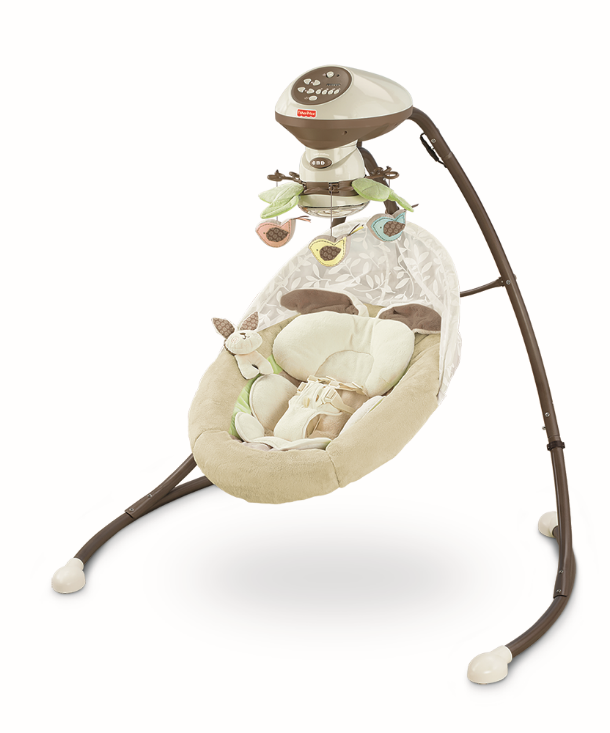
| Product scope | Infant swings, cradle swings, travel swings, and combination swings using a powered mechanism for swinging or gliding motion.[2][3] | CPSC and ASTM descriptions align on powered motion and infant use. |
| Compliance surface | General requirements, performance tests, warning and labeling rules, third-party testing, certification, tracking labels, and registration cards.[2][4] | Existing children's-product rules still apply alongside ASTM F2088. |
| Consumer boundary | The standards file does not turn swings into sleep products. CPSC continues to warn that infants should not sleep in swings or similar inclined seated products.[6] | Recall history keeps the sleep-use distinction central. |
What actually changes
CPSC's rule is best read as a version update with real compliance consequences. The federal infant-swing standard dates back to CPSC's 2012 approval of a mandatory rule built from ASTM F2088-12a, and the agency has updated the incorporated ASTM reference several times since then.[1][5] The current federal standard had incorporated ASTM F2088-24. The April 20 rule replaces that reference with ASTM F2088-25, the version ASTM approved on November 15, 2025.[1] CPSC says it received notice of the revision on January 26, 2026, opened a notice-and-comment step on January 29, and received supportive comments, including one joint comment from consumer-safety organizations that also urged attention to testing while products are in motion.[1]
The standard's scope is still the physical product, not parental advice in isolation. ASTM describes F2088-25 as setting safety performance requirements, test methods, and labeling requirements for swings, and it covers powered products that move an infant seat by battery, AC adapter, wind-up mechanism, or another power source.[3] CPSC's consumer-facing FAQ maps the same category into practical product types: infant swings for seated infants, cradle swings for infants lying flat, travel swings, and combination designs.[2]
That matters because a rule like this is enforced through manufacturing and import channels. A product subject to 16 CFR part 1223 must be tested by a CPSC-accepted third-party lab, and it also has to satisfy other children's-product obligations such as lead, phthalates, tracking-label, certification, and registration-card requirements.[1][4] For retailers and caregivers, the visible parts are warnings, labels, restraint design, and product instructions. For manufacturers, the less visible parts are design files, test samples, lab reports, certificates, and date-of-manufacture decisions.
Why the sleep line stays central
The most important consumer boundary in this file is that a swing is not a crib. CPSC's 2024 Fisher-Price Snuga recall shows why that line keeps appearing in standards and recall language. In that recall, CPSC said the product should never be used for sleep, that bedding should not be added, and that the headrest and body support insert could increase suffocation risk if the swing was used for sleep or with added bedding.[6] The agency reported five infant deaths between 2012 and 2022 involving the recalled product when used for sleep, most involving unrestrained infants and added bedding.[6]
The 2026 direct final rule is not the Snuga recall. Still, the recall helps explain the policy gravity behind swing standards. CPSC's broader FAQ says the regulation is meant to reduce death and injury risks tied to tipping, collapse, structural failure, restraint entanglement, and leg-hole entrapment.[2] Its business guidance lists performance areas such as structural integrity, stability, unintentional folding, restraint systems, cradle swing orientation, seat angles, and tethered strap accessibility for non-occupants.[4]
The common thread is that standards work through foreseeable product use and foreseeable misuse. A warning label cannot turn an inclined or moving product into a safe sleep environment. A performance test cannot replace supervision. But design requirements, restraint tests, stability tests, warning placement, and removable soft-goods decisions can change how much room there is for a dangerous scenario to develop.
Who should care now
Manufacturers and importers have the clearest near-term work. If July 25 remains the effective date, the question becomes whether products manufactured after that date can be certified against ASTM F2088-25 and all applicable CPSC requirements.[1][4] The highest-risk operational mistake would be treating the rule as a paperwork update while leaving test plans, labels, soft inserts, restraint details, or cradle-swing orientation assumptions unchanged.
Retailers and marketplaces should care for a different reason. Direct final rules can look invisible at shelf level, but product compliance turns on manufacturing date, certification, and the version of the incorporated standard. A retailer does not need to become a lab, but it does need clean supplier documentation and a process for separating a standards update from a recall, a stop-sale notice, or an ordinary packaging revision.
Caregivers should read the file through use boundaries, not regulatory mechanics. The agency's continuing message is that swings, gliders, soothers, rockers, and other inclined seated products should not be used for infant sleep, and infants who fall asleep in such products should be moved to a firm, flat sleep surface.[6] The July 25 rule update does not change that home-use rule of thumb.
Scenarios to watch
Base case: no significant adverse comment lands by May 20, so ASTM F2088-25 becomes the mandatory federal standard on July 25. In that case, the main public signal will be quiet implementation: certificates, test reports, labels, and manufacturing runs start referencing the 2025 standard.[1]
Delay case: CPSC receives a significant adverse comment and withdraws the direct final rule before the effective date. That would keep ASTM F2088-24 as the immediate federal reference while forcing a fuller process around the disputed issue.[1]
Enforcement case: the standard takes effect, but the news later moves through recalls or import detentions rather than the Federal Register. That would indicate the problem is no longer standards text. It would be evidence of firms failing to translate the new reference into compliant products, labels, or certificates.
Action checklist
For manufacturers and importers, the practical checklist is to identify products covered by 16 CFR part 1223, confirm whether current designs have been evaluated against ASTM F2088-25, update test plans and Children's Product Certificates, check labels and registration-card materials, and map which units are manufactured before and after July 25.[1][4]
For retailers, the checklist is to ask suppliers for the applicable certification package, confirm the manufacturing date logic, and keep recall-monitoring separate from standards-transition monitoring. A standards update does not automatically mean inventory is recalled, but it does raise documentation requirements around future product flow.
For caregivers, the checklist is simpler: use swings only for awake-time activities under supervision, follow the product's age and weight limits, keep restraints attached as instructed, avoid added bedding, and move a sleeping infant to a firm, flat crib, bassinet, or play yard.[6]
The invalidation point is clear. If CPSC withdraws the direct final rule before July 25, then the July cutoff is no longer the operative compliance event. Until then, the live story is a narrow but consequential standards handoff: ASTM F2088-25 is queued to become the federal rulebook for infant and cradle swings, and the hardest work is turning that reference into manufactured products that match the text.[1][3][4]
Sources
- Consumer Product Safety Commission, Safety Standard for Infant and Cradle Swings, Federal Register direct final rule, 91 FR 20875 (April 20, 2026).
- Consumer Product Safety Commission, "Infant & Cradle Swings" FAQ.
- ASTM International, F2088-25 Standard Consumer Safety Specification for Infant and Cradle Swings.
- Consumer Product Safety Commission, "Infant & Cradle Swings Business Guidance."
- Consumer Product Safety Commission, "CPSC Approves New Federal Safety Standard for Infant Swings" (November 13, 2012).
- Consumer Product Safety Commission, "Fisher-Price Recalls More than 2 Million Snuga Infant Swings Due to Suffocation Hazard After 5 Deaths Reported" (October 10, 2024).