As of 2026-06-16 05:33 UTC, WHO's new dengue item is easy to misread. It is not an approval of a dengue drug. It is not a bedside treatment protocol that clinicians can use tomorrow. The news is earlier in the chain: WHO has published its first Paediatric Drug Optimization Process, or PADO, report for dengue, giving researchers, developers, funders, regulators, and national programmes a clearer map of which child-focused treatment candidates and design questions deserve attention now.[1][2]
That matters because dengue has become a large pediatric problem without a matching therapeutic toolkit. WHO says more than 14 million dengue cases and more than 10,000 dengue-related deaths were reported in 2024, roughly twice the 2023 total, and that children are heavily affected.[1] The broader WHO dengue fact sheet puts the 2024 count even higher, at 14.6 million reported cases and more than 12,000 deaths, while stressing that there is still no specific treatment for dengue or severe dengue.[4]
The practical headline is therefore a pipeline correction. Children are not supposed to arrive at the end of adult drug development as a dosing afterthought. WHO is trying to make pediatric formulation, trial design, safety, acceptability, and access part of dengue therapeutic development while candidates are still moving through the pipeline.[1][2][3]
Facts Now
| Point | What is verified | Confidence note |
|---|---|---|
| New WHO item | WHO announced the first PADO guidance for dengue on 15 June 2026.[1] | High: primary WHO release. |
| Process basis | The PADO report summarizes a WHO-convened meeting held on 23 October 2025 and was published on 10 June 2026.[2] | High: WHO publication page. |
| Immediate output | WHO says the exercise produced the first PADO priority and watch lists for dengue; one monoclonal antibody was placed on the priority list for the next 3-5 years, and four additional candidates were placed on a watch list.[1] | High for WHO's classification; not proof of eventual efficacy or approval. |
| Treatment gap | WHO's fact sheet says there is currently no specific treatment for dengue or severe dengue, and that care depends on early detection and appropriate medical management.[4] | High: WHO disease overview. |
| Clinical risk | CDC says roughly 1 in 4 dengue infections are symptomatic and about 1 in 20 patients with dengue progress to severe, life-threatening disease.[5] | High for CDC clinical framing. |
| Child-medicine platform | GAP-f describes itself as a WHO network created to respond to the persistent pediatric treatment gap and accelerate safer, more effective pediatric formulations.[7] | High: WHO initiative page. |
What Changed
The central change is not therapeutic availability; it is prioritization. Dengue care today still depends on recognition, fluids, monitoring, and escalation when warning signs appear. CDC's clinical-care guidance makes the operational burden plain: patients with warning signs need close monitoring of vital signs, intake, urine output, hematocrit, and careful fluid adjustment, while severe dengue requires intensive-care-level management and frequent hemodynamic assessment.[6]
That is effective when health systems can detect risk early and manage fluids well. It is not the same as having an antiviral, monoclonal antibody, or other dengue-specific therapeutic that can reduce progression or mortality. WHO's target product profile document says the increasing global burden and geographic expansion of dengue, combined with the absence of specific antiviral treatments, creates an urgent need for safe, effective, accessible therapeutics for both non-severe and severe dengue.[3]
The pediatric piece is where the news becomes more specific. Children are not just smaller adults in drug development. A child-appropriate dengue medicine has to fit age, weight, illness phase, formulation, dosing practicality, safety monitoring, health-system capacity, and the settings where dengue is endemic. WHO's PADO report is meant to push those requirements into the early design conversation rather than waiting until an adult product exists and then asking whether it can be adapted.[1][2]
The priority-list signal also matters because dengue has many possible intervention points and limited capital. Developers can work on antivirals, antibodies, host-directed approaches, immunomodulators, or products aimed at severe-disease complications. Funders and regulators need a way to tell which candidates are close enough, relevant enough, and child-ready enough to justify pediatric planning. WHO's answer is not to bless a final winner. It is to create a more disciplined short list and watch list.[1][2]
Decision Impact
For drug developers, the next move is to treat pediatric development as part of the core plan. The WHO release says pediatric studies should be planned early once enough adult data become available, and trial design should reflect the clinical realities of pediatric dengue, including disease-presentation differences and comorbidities such as malnutrition and obesity.[1] That is a design constraint, not a public-relations note.
For funders, the guidance narrows the ask. The report gives a stronger rationale for funding pediatric-enabling work before late-stage development becomes locked around adult assumptions. That can include formulation work, pharmacokinetic planning, age-band strategy, trial-site preparation, and regulatory consultation. The risk is that pediatric dengue again becomes "important but later." The point of PADO is to make "later" less acceptable.[1][2][7]
For regulators and national programmes, the guidance offers a common vocabulary. A country facing repeated dengue surges needs products that can survive real-world constraints: affordability, stability, usable dosing, feasible monitoring, and clarity about which patients should receive the intervention. WHO's target product profiles explicitly include intended use, target populations, efficacy, safety, formulation, dosing, stability, and affordability considerations.[3]
For clinicians and families, the immediate message is narrower: nothing in this announcement changes current care. Warning signs still matter. Hydration still matters. Avoiding aspirin and ibuprofen still matters because bleeding risk is part of dengue management.[4] Severe symptoms still require urgent medical attention. The development pipeline is moving, but today's clinical safety net remains early recognition and supportive care.
Scenarios
Base case: the PADO report improves coordination without quickly changing bedside care. Developers and funders use the priority list to align pediatric work, but dengue treatment still depends on supportive care for the near term. This is the most likely outcome because clinical development, pediatric studies, manufacturing, regulatory review, and country uptake all take time.[1][2][6]
Upside case: the priority-list process pulls a promising candidate into earlier pediatric planning, avoids a late formulation bottleneck, and gives regulators enough common structure to speed responsible review once evidence matures. The strongest sign would be pediatric trial protocols that appear early rather than after adult trials are effectively finished.[1][3][7]
Downside case: the report becomes a citation rather than a coordination tool. In that case, candidates continue to be designed mainly around adult use, funders wait for late-stage certainty, and endemic-country pediatric needs remain under-specified until access negotiations begin. The warning sign would be future dengue candidates reaching advanced development with no practical child formulation, dosing plan, or trial pathway.[1][2]
Action Checklist
- Developers should map every dengue therapeutic candidate against pediatric formulation, dosing, monitoring, and trial-feasibility needs before adult development hardens the product design.[1][3]
- Funders should treat pediatric-enabling studies as pipeline infrastructure, not optional add-ons after adult efficacy signals.[1][2][7]
- Regulators should use the WHO target-product-profile language to clarify what evidence will be needed for children in endemic settings.[3]
- National programmes should keep vector control, surveillance, early diagnosis, and clinical-care capacity in the foreground while the treatment pipeline matures.[4][5]
- Clinicians should continue current dengue management: detect warning signs, monitor closely, maintain hydration, avoid NSAIDs where dengue is suspected, and escalate severe cases rapidly.[4][5][6]
The falsifier is straightforward. If the next wave of dengue therapeutic development still reaches late-stage planning with children treated as a postscript, the PADO report will have failed its real test. If child-appropriate studies, formulations, and access assumptions are built earlier, then WHO's June guidance will have changed the pipeline before it changed the pharmacy shelf.
Sources
- World Health Organization, "WHO issues first ever guidance to advance child-focused dengue treatments" (15 June 2026) - announcement of the dengue PADO process, priority/watch lists, burden figures, and pediatric development rationale.
- World Health Organization, Paediatric drug optimization for dengue: meeting report, 23 October 2025 (10 June 2026) - PADO meeting-report publication page and overview.
- World Health Organization, Target product profiles for treatments for dengue (8 May 2026) - therapeutic-development criteria for non-severe and severe dengue.
- World Health Organization, "Dengue" fact sheet (21 August 2025) - disease burden, transmission, symptoms, prevention, and current treatment limits.
- Centers for Disease Control and Prevention, "Clinical Features of Dengue" (24 February 2026) - progression risk, warning signs, and severe-dengue clinical framing.
- Centers for Disease Control and Prevention, "Clinical Care of Dengue" (2026 clinical guidance) - supportive-care monitoring, fluids, and severe-dengue management details.
- World Health Organization, "Global Accelerator for Paediatric Formulations Network (GAP-f)" - WHO network created to address pediatric treatment gaps and accelerate child-appropriate formulations.
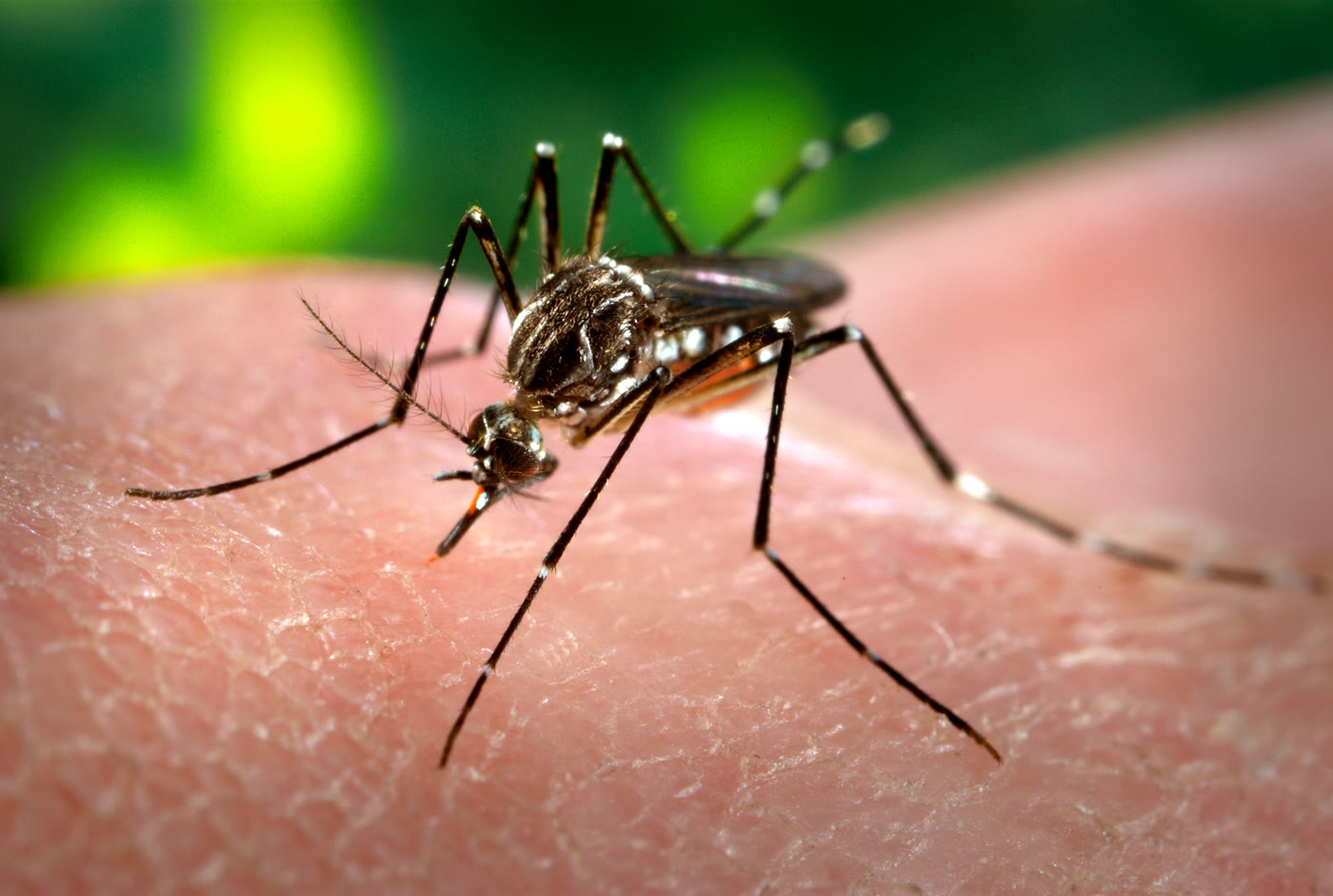
- CDC Public Health Image Library, ID #9258, James Gathany photograph of an Aedes aegypti mosquito taking a blood meal (2006) - source image for the article photograph.