As of 2026-05-02 23:04 UTC, the easy headline on China's new Ministry of Commerce order is that Beijing has hit back at Washington for sanctioning five Chinese refineries over Iranian oil.[1][2][6] That is directionally right, but it is still too shallow. The more useful reading is that China has opened a dual-compliance fork. On one side, the May 2 order says Chinese actors may not recognize, execute, or comply with the U.S. sanctions imposed on five named firms. On the other, the U.S. Treasury spent the same week warning banks that dealings involving China's teapot refineries can still create sanctions exposure, including pressure on correspondent-bank relationships.[1][3][4]
That difference matters because the order does not make a single U.S. designation disappear. It changes what Chinese parties are told to do inside China's own legal system. MOFCOM's announcement says the prohibition applies to U.S. measures taken under Executive Orders 13902 and 13846 against Hengli Petrochemical (Dalian) Refinery, Shandong Shouguang Luqing Petrochemical, Shandong Jincheng Petrochemical Group, Hebei Xinhai Chemical Group, and Shandong Shengxing Chemical, and that the prohibition took effect immediately on May 2, 2026.[1] The ministry's same-day Q&A frames the move as a concrete use of China's blocking-rules system against what it calls unjustified extraterritorial sanctions.[2]
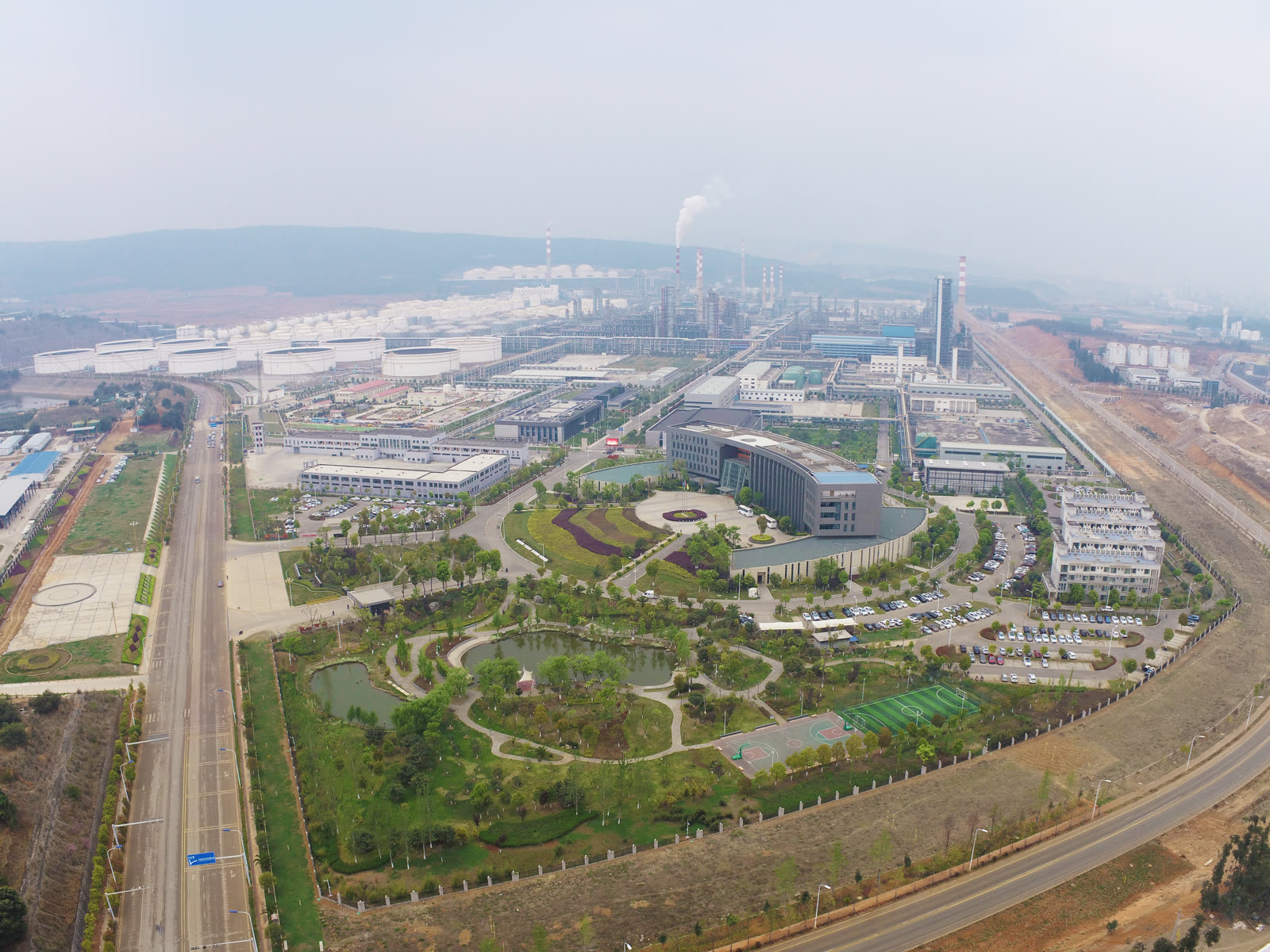
Image context: the cover uses a real refinery photograph from Wikimedia Commons.[7] That is the right visual here because the live issue is not abstract diplomacy. It is the industrial and financial machinery around refinery throughput, shipping, banking, and sanctions compliance.
Fact file
| Item | What is live now | Confidence note |
|---|---|---|
| Blocking order issued | MOFCOM announced a prohibition order on May 2, 2026 covering U.S. sanctions on five Chinese refineries and said it took effect immediately.[1] | Strong. This is the operative Chinese announcement. |
| Named U.S. measures | The Chinese order explicitly references U.S. action under E.O. 13902 and E.O. 13846 tied to Iranian oil transactions.[1] | Strong. Listed directly in the MOFCOM notice. |
| Named companies | The order covers Hengli Petrochemical (Dalian) Refinery and four other Chinese refiners: Luqing, Jincheng, Xinhai, and Shengxing.[1][2][6] | Strong. Identical list across the Chinese notice, Q&A, and Reuters report. |
| Chinese legal mechanism | China's 2021 blocking rules allow MOFCOM to issue a prohibition order after assessment, allow parties to seek exemptions, and provide for penalties if a covered party fails to comply.[5] | Strong. These mechanisms appear in Articles 7, 8, and 13 of the rules. |
| U.S. pressure this week | On April 28, 2026, Treasury warned financial institutions about sanctions risks linked to China-based teapot refineries and told correspondent banks to tighten controls.[3] | Strong. Treasury states this directly. |
| Current U.S. designation lane | Treasury's April 22, 2026 action sanctioned Hengli and said OFAC had previously targeted four other teapot refineries as part of the same pressure campaign.[4] | Strong. This comes from Treasury's own press release. |
| What remains uncertain | Beijing has announced the prohibition, but it has not yet published detailed operating guidance for counterparties far beyond the named firms, while Washington has not relaxed any of the underlying U.S. sanctions.[1][3][4] | Strong on the current state. The inference is limited to what each side has and has not published so far. |
What the blocking order actually does, and what it does not do
China's 2021 rules were built for exactly this kind of conflict. Article 7 allows MOFCOM to issue a prohibition order once the interagency mechanism decides foreign measures are an unjustified extraterritorial application of law. Article 8 allows an exemption application. Article 13 allows warnings and fines for parties that fail to report or fail to comply.[5] The May 2 order is therefore a live instruction inside Chinese jurisdiction, not a symbolic press statement.[1][5]
But the legal effect stops well short of erasing the American side of the ledger. MOFCOM's order says Chinese actors may not recognize, execute, or comply with the U.S. sanctions on the five firms.[1] It does not say the U.S. Treasury has withdrawn the firms from sanctions exposure, reopened dollar clearing, or restored access to U.S.-linked trade services. Treasury's own materials still point in the opposite direction: more scrutiny on teapot refiners, more due diligence for banks, and readiness to use secondary-sanctions tools where appropriate.[3][4]
That is why "blocking order" should not be read as "safe harbor." It is closer to a jurisdictional instruction that forces affected actors to decide which legal system they can afford to upset. A Chinese company, bank, insurer, or trading intermediary that fully obeys the U.S. sanctions may now have a China-law problem. A foreign bank that shrugs off Treasury's warning may still have a U.S.-sanctions problem.[1][3][5]
Why the pressure lands on banks and trading channels before it lands on politics
The Treasury alert from April 28 was aimed squarely at financial institutions. It urged risk-based controls for designated teapot refineries and others that may be importing Iranian oil, enhanced due diligence on refinery-linked transactions, and clear communication of sanctions expectations to correspondent banks.[3] Treasury also said it is prepared to use the full range of available tools, including secondary sanctions against foreign financial institutions that continue to support Iran's activities.[3]
That means the conflict will be felt first in the plumbing: payments, shipping documents, trade finance, insurance, and counterparties deciding whether a refinery-linked cargo is worth the compliance review. Reuters reported that the earlier U.S. sanctions had already created operational hurdles for the targeted refiners, including crude-receipt difficulties and the need to market some refined products under different names.[6] Beijing's new order may strengthen the domestic legal position of the targeted firms. It does not automatically persuade a non-Chinese bank, shipowner, insurer, or commodity trader that U.S. risk has vanished.
This is the central practical point. The Chinese order can shape behavior inside China. Treasury's campaign can still shape behavior around any lane that touches dollars, U.S.-exposed banks, or other compliance-sensitive intermediaries. The commercial result may therefore be partial insulation at home and continued friction abroad at the same time.[1][3][4][5]
Decision impact by horizon
Next 24 hours
Chinese refiners, banks, and traders need to map where they sit in the fork: purely domestic activity, China-only banking and settlement, or cross-border lanes that still depend on U.S.-sensitive institutions.[1][5]
Next 7 days
Watch for implementation detail from both sides. On the Chinese side, the key question is whether MOFCOM or related agencies publish clarifying guidance on reporting, exemptions, or the scope of expected non-compliance. On the U.S. side, the key question is whether Treasury adds more names, issues FAQs, or sharpens expectations for foreign banks.[3][4][5]
Next 30 days
The larger question is whether the order changes real trade behavior or mostly formalizes a legal position Beijing already held. If domestic institutions step in more aggressively, the named refiners may gain room. If global counterparties keep de-risking, the order will look stronger inside Chinese law than in offshore commercial practice.[1][3][6]
Scenarios
Base case: China formalizes non-recognition of the U.S. sanctions at home, while cross-border banks and service providers keep tightening controls, leaving the targeted firms with more domestic cover than international relief.[1][3][5]
Upside case for the named refiners: Chinese financial and trading channels absorb enough of the pressure that the U.S. designations become more costly but not fully disabling, especially in non-dollar and domestic lanes.[1][2][5]
Downside case: the legal fork scares counterparties faster than Beijing can reassure them, pushing more trading, finance, and logistics providers to back away even if the order says Chinese parties should not comply with the U.S. measures.[1][3][6]
Action checklist
- For China-facing commodity and banking teams: separate domestic-Chinese lanes from U.S.-touched lanes, because the legal expectations are no longer aligned.[1][3][5]
- For Chinese parties close to the named firms: review whether the reporting and exemption mechanisms in the 2021 rules need to be used, especially where foreign counterparties demand sanctions compliance as a condition of service.[5]
- For non-U.S. banks and insurers: test whether any refinery-linked exposure could still trigger U.S. sanctions scrutiny through correspondent-account, shipping, or trade-finance channels.[3][4]
- For traders and shippers: do not assume the Chinese order restores ordinary access to dollar, insurance, or documentation lanes unless counterparties have confirmed that position in writing.[1][3][6]
The narrow conclusion is the important one. China's May 2 refinery order does not cancel a single U.S. sanction. It creates a harder legal and operational split around them. Beijing has now told domestic actors to stop recognizing or complying with those measures, while Washington is telling banks and traders to treat the same refining ecosystem as a live sanctions-risk zone. The next phase is no longer about rhetoric. It is about which payment, shipping, and compliance channels decide they can still touch the trade.[1][3][4][5][6]
Sources
- Ministry of Commerce of the People's Republic of China, "Announcement No. 21 of 2026: Publication of the Blocking Prohibition Order Regarding U.S. Sanctions Measures Involving Iranian Oil Against Five Chinese Enterprises" (May 2, 2026).
- Xinhua, republishing MOFCOM website content, "MOFCOM spokesperson answers reporters' questions on blocking U.S. sanctions measures involving Iranian oil against five Chinese enterprises" (May 2, 2026).
- U.S. Department of the Treasury, "Treasury Warns of Sanctions Risks Linked to China-Based Independent 'Teapot' Oil Refineries" (April 28, 2026).
- U.S. Department of the Treasury, "Economic Fury Targets Global Network Fueling Iran's Oil Trade and Shadow Fleet" (April 22, 2026).
- Ministry of Commerce of the People's Republic of China, "MOFCOM Order No. 1 of 2021 on Rules on Counteracting Unjustified Extra-territorial Application of Foreign Legislation and Other Measures" (January 9, 2021).
- Reuters via Investing.com, "China's Commerce Ministry blocks US sanctions against five refineries" (May 2, 2026).
- Wikimedia Commons, "File:PetroChina Yunnan Petrochemical Company Limited.jpg" (source page for the article image).