As of 2026-05-03 01:03 UTC, the United Kingdom has raised its national terrorism threat level from SUBSTANTIAL to SEVERE.[1][3] The most useful way to read that move is not as a public bulletin that an attack is known to be hours away. It is a protective-security shift after the 29 April Golders Green stabbings, with JTAC, MI5, and the Home Office telling police, security managers, and vulnerable institutions to work from a higher-likelihood baseline while the wider threat picture worsens.[1][2][3]
That distinction matters because MI5's own framework separates SEVERE from CRITICAL. Severe means a terrorist attack is highly likely. Critical is the level used when an attack is highly likely in the near future.[3] MI5 also says threat-level changes do not automatically require specific responses from the public and are primarily a tool for security practitioners and the police when deciding protective measures.[3] In practice, that points toward more visible policing, more security around Jewish schools, synagogues, and community sites, and a harder readiness assumption for operators already sitting inside the risk picture.[1][2][3][4]
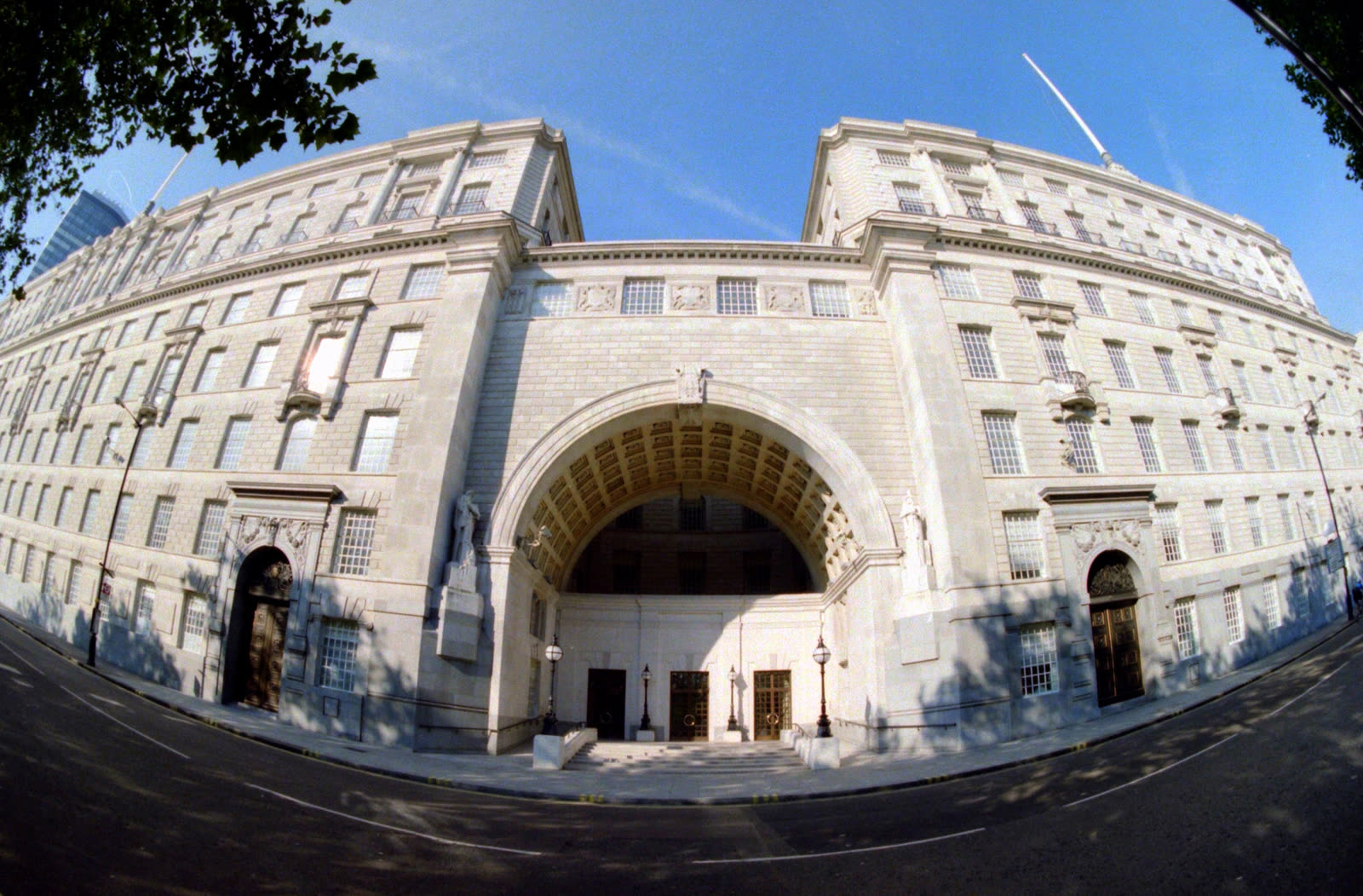
Image context: the cover uses a real photograph of Thames House, MI5's London headquarters.[6] That is the right visual here because the news is institutional rather than symbolic. The live change is in how British security services, police, and protected sites are being asked to posture against risk.
Fact file
| Item | What is live now | Confidence note |
|---|---|---|
| Threat-level change | JTAC raised the UK national terrorism threat level from SUBSTANTIAL to SEVERE on 30 April 2026.[1][3] | Strong. The Home Office and MI5 align on both the date and the categories. |
| Meaning of severe | MI5 says SEVERE means a terrorist attack is highly likely; CRITICAL is the level for an attack highly likely in the near future.[3] | Strong. Direct from MI5's published definitions. |
| Why now | MI5 and the Home Office say the change follows the 29 April Golders Green stabbings, but is not solely a result of that one attack; the broader driver is a gradual rise in Islamist and extreme right-wing threat from individuals and small groups in the UK.[1][2] | Strong. Both agencies use this framing. |
| Community focus | MI5 says the current picture includes an elevated threat to Jewish and Israeli individuals and institutions in the context of the Middle East conflict.[2] | Strong. Direct from MI5's 1 May note. |
| Criminal case status | The Met formally declared the Golders Green attack a terrorist incident, and the CPS has since authorised three attempted murder charges plus a knife-possession charge against the suspect.[4][5] | Strong. Direct from Met and CPS updates. |
| Protective response | The Home Office announced an additional GBP 25 million, bringing annual funding to GBP 58 million, for policing, patrols, synagogue and school security, and expansion of Project Servator.[1] | Strong. Direct from the Home Office announcement. |
| Historical context | MI5's published history shows the UK was last at SEVERE on 15 November 2021 and was lowered to SUBSTANTIAL on 9 February 2022.[3] | Strong. Direct from MI5's threat-level history table. |
Why this is a posture story before it is a panic story
The temptation in any threat-level change is to treat the category as secret knowledge about one imminent plot. The public record supports a narrower reading. The Home Office and MI5 both say the immediate trigger includes Golders Green, and both also stress that the move is not solely about that one case.[1][2] MI5 describes a broader pattern: a high volume and complexity of cases across ideologies, rising extreme-right-wing activity, and heightened risk around Jewish and Israeli people and institutions.[2] That makes the change easier to read as an operating instruction to the security system. It tells police, transport operators, venue managers, schools, faith institutions, and other protective-security actors to behave as though the probability distribution has worsened.
That is why the SEVERE versus CRITICAL boundary matters. If authorities were publishing a specific near-future warning, MI5 already has a category for that.[3] Instead, the public-facing framework says severe is about a high-likelihood environment, and that the practical users of the scale are security practitioners and the police.[3] The state is therefore widening vigilance and protective measures rather than moving civilians into a different legal regime. Readers should expect more visible security effects than legal ones in the short term.
Golders Green still matters directly. The Met says the stabbing was formally declared a terrorist incident the same day, one line of enquiry is whether the Jewish community in London was deliberately targeted, and a significant policing operation was already in place and then further enhanced.[4] The CPS update on 1 May turned the incident from emergency response into an active criminal proceeding with specific charges.[5] The threat-level move is therefore sitting on top of a live case while the government simultaneously increases funding and patrol capacity around the communities it sees as most exposed.[1][4][5]
Decision impact by horizon
Next 24 hours
Synagogues, Jewish schools, community centres, transport hubs, major venues, and other soft targets should expect the most immediate effects in police visibility and site-level security posture rather than in new public rules.[1][3] Businesses and institutions should treat the official signal as a prompt to review access control, suspicious-activity reporting, event staffing, and police liaison rather than waiting for a second notice.
Next 7 days
Watch whether the higher posture remains concentrated around Jewish-community protection or broadens further across other public-facing sectors.[1][2] The important operating question is how much of the SEVERE setting turns into sustained patrol patterns, Project Servator activity, and stronger protective advice rather than a brief reassurance surge.
Next 30 days
The main decision fork is whether the Golders Green case remains an isolated catalyst inside a wider threat upswing, or whether further incidents, arrests, or intelligence developments push the country closer to a CRITICAL-style public picture.[2][3][4][5] If that does not happen, SEVERE may still persist for some time as the new baseline without producing headline legal changes. If more attack plotting or copycat activity surfaces, the UK's security posture could harden further even without a broad national shutdown logic.
Scenarios
Base case: The UK stays at SEVERE for a meaningful period while police visibility, Jewish-community protection, and protective-security measures remain elevated, but daily civilian life continues under a vigilance-first posture.[1][2][3]
Upside case: The Golders Green prosecution advances cleanly, no further serious incidents occur, and the extra policing and protective funding absorb enough immediate risk that the higher level functions mainly as a stabilising precaution.[1][4][5]
Downside case: Further attacks or intelligence discoveries confirm that Golders Green was part of a broader escalation cycle, pushing more sectors into emergency posture and making the distance between SEVERE and CRITICAL matter in a more visible way.[2][3][4]
Action checklist
- If you run or manage a public-facing site in the UK, treat the change as a prompt to revisit entry controls, suspicious-activity reporting, staff escalation paths, and police liaison now, not after another incident.[1][3]
- If you track security or policy risk, separate the public meaning of severe from the operational meaning: this is a higher-likelihood environment and a stronger protective posture, not an official claim that one attack is known to be imminent.[2][3]
- If your work touches Jewish-community institutions or public events in London, assume elevated patrols and added security coordination will remain part of the short-run operating environment.[1][2][4]
- Invalidation condition: if authorities publicly disclose specific near-term attack intelligence or raise the level again, the posture-first reading weakens and the story becomes one of imminent-threat management rather than broad protective adjustment.[3]
Sources
- Home Office, "Threat level increase following antisemitic terror attack" (April 30, 2026).
- MI5, "UK National Terrorism Threat Level Raised To SEVERE" (May 1, 2026).
- MI5, "Terrorism threat levels" (accessed May 3, 2026).
- Metropolitan Police, "Update on investigation into Barnet attack" (April 29, 2026).
- Crown Prosecution Service, "Man charged with attempted murders after double stabbing in Golders Green" (May 1, 2026).
- Wikimedia Commons, "File:Thames house2.jpg" (source page for the article image).