As of 2026-04-06 09:06 UTC, President Donald Trump's April 3 college-sports order has created a new federal pressure point ahead of August 1, 2026. It has not supplied the single national rulebook that universities, athletes, conferences, and the NCAA have been asking Congress to write. What it does instead is put federal grants and contracts in the frame, tell agencies to prepare enforcement, and pressure the governing system to tighten eligibility, transfer, revenue-sharing, and pay-for-play boundaries before summer turns into fall.[1][2][3][6]
This is also the administration's second college-sports executive-order intervention since July 2025, which is why the new document reads less like a debut and more like an escalation into a system that already changed under court and NCAA action.[3][8]
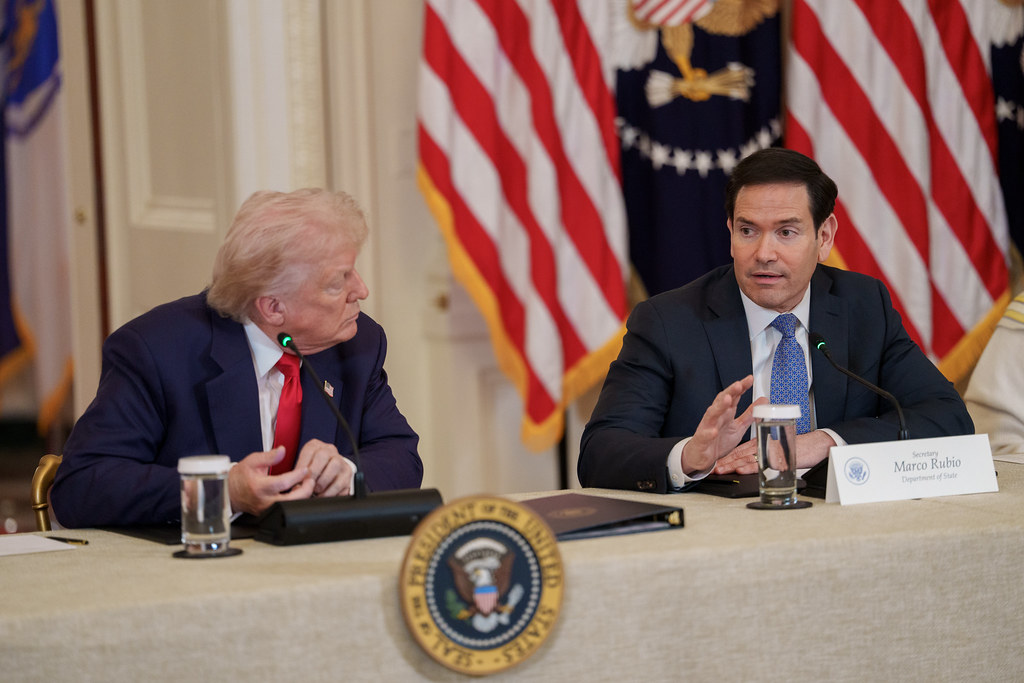
Image context: the header photo shows President Donald Trump participating in a Saving College Sports roundtable at the White House on March 6, 2026. It is the right documentary image because this story is now about a real federal intervention into how college sports will be governed and financed, not a generic NIL debate.[7]
What the order does now
The operative core is narrower and more consequential than the headline. Sections 3 through 6 take effect on August 1, and the order tells agencies to start preparing immediately so the policy machinery is ready by then.[1] Once that date arrives, federal agencies that make grants or contracts are told to evaluate whether violations of the governing body's lawful, operative rules on eligibility, transfers, revenue-sharing, and improper financial activities are serious enough to call a school's present responsibility into question.[1][2]
That is a meaningful escalation because it moves the argument out of conference offices and court filings alone. The White House also tells OMB and GSA to produce guidance, asks the Department of Education to expand reporting on roster spots and athletics-related spending, directs the FTC toward agent-conduct enforcement, and tells the attorney general to advance meritorious actions against state laws that conflict with interstate rules.[1][2] In practical terms, the administration is trying to use federal administrative leverage to shore up a college-sports system that it argues has been destabilized by lawsuits, state-level NIL competition, and a football-and-basketball spending race.[1][2]
Why August 1 matters more than the headline
The key detail is that the order does not itself write a finished transfer code or eligibility manual. It points to the rules that are "lawful" and "operative" on August 1 and then threatens federal consequences around them.[1] That makes the summer rulebook more important than the April signing ceremony.
The post-House landscape explains why. In June 2025, a federal judge approved the $2.8 billion House settlement, clearing the way for schools to begin direct revenue sharing and for former athletes to receive back-pay over the next decade.[5] AP reported that the settlement allows each school to share up to $20.5 million with athletes in the first year, while leaving further litigation risk alive because states still maintain different NIL laws and because athletes continue to challenge other limits.[5] Later that month, the NCAA Division I Board formally adopted roster-limit changes tied to the settlement, removing sport-specific scholarship caps for schools that opt in and creating designated-student-athlete exceptions for athletes whose spots would have been squeezed by immediate roster enforcement.[4]
Put differently, the White House has not replaced the settlement era. It is trying to wrap a federal enforcement threat around it. The order's real target is not only NIL abuse in the abstract; it is the unstable zone where court-approved revenue sharing, state NIL statutes, NCAA rule changes, and conference power politics are all trying to govern the same market at once.[1][4][5]
Where the national rulebook is still missing
That missing rulebook is the article's central reporting fact. The order itself "strongly encourages" Congress to act quickly, which is an admission that executive action alone will not settle the jurisdiction fight.[1][2] NCAA President Charlie Baker said in his January 14, 2026 State of College Sports address that only Congress can address many of the biggest challenges, and he pointed specifically to eligibility, academic standards, transfer rules, and federal guardrails as the narrow areas where legislation could stabilize the system.[6]
AP's April 3 reporting describes the same gap from the outside. Congress has been stuck for more than a year, the NCAA and schools could end up caught between a federal order and existing court rulings, and lawyers already expect new lawsuits challenging the order itself.[3] That matters because the White House is asking the governing system to establish a five-year participation window, allow one immediate transfer plus one more after a four-year degree, and curb sham collective deals, but it is simultaneously conceding that some of those goals must operate within "applicable court orders."[1][2][3] The enforcement threat is real; the stable legal foundation still isn't finished.
Why women's and Olympic sports sit at the center of this file
The administration has chosen a political and policy frame that runs through sports outside the football-revenue core. The order repeatedly argues that the present arms race threatens women's and Olympic programs, and the fact sheet says college athletics support more than 500,000 athletes with nearly $4 billion in scholarships while providing roughly 75% of the 2024 U.S. Olympic Team.[1][2] It also asks the governing system to structure revenue sharing in a way that preserves or expands scholarships and opportunities in women's and Olympic sports.[1][2]
That claim is not made in a vacuum. AP's settlement coverage says Olympic sports remain one of the clearest groups left in limbo as schools redirect money toward football and men's basketball stars and as roster spots are reworked under the new settlement regime.[5] So the White House is not inventing the pressure line from nowhere. What it is doing is choosing to answer that pressure with federal leverage before Congress has produced the durable statutory compromise the NCAA has wanted.[1][2][5][6]
What the next four months will actually tell us
Three signals matter more than the symbolism of the signing.
First, watch what rules are actually in force on August 1. Because the order keys enforcement to operative governing-body rules, the content of those rules matters more than the rhetoric around them.[1][4]
Second, watch for agency guidance. Universities need to know what kind of violation would actually threaten grants or contracts and whether the administration means to make that threat broadly or selectively credible.[1][2]
Third, watch the litigation-and-legislation race. If Congress can narrow the field with a targeted package on eligibility, transfers, and preemption, the order starts to look like a bridge into statute. If lawsuits move faster than lawmakers, the order may simply add one more powerful actor to a governance fight that was already crowded.[1][3][6]
The useful reporting conclusion is narrower than the political theater around it. The April 3 order did not solve college sports. It created an August 1 federal enforcement clock around a system whose final rulebook still depends on Congress, the courts, and whatever rules the governing bodies can keep alive by the time that clock starts.[1][2][3][4][5][6]
Sources
- The White House, "Urgent National Action to Save College Sports" (April 3, 2026).
- The White House, "Fact Sheet: President Donald J. Trump Takes Urgent National Action to Save College Sports" (April 3, 2026).
- Associated Press, "President Trump signs order intended to stabilize college sports, threatens lost federal funding" (April 3, 2026).
- NCAA, "DI Board of Directors formally adopts changes to roster limits" (June 23, 2025).
- Associated Press, "Federal judge approves $2.8B settlement, paving way for US colleges to pay athletes millions" (June 6, 2025).
- NCAA, "NCAA President Charlie Baker's State of College Sports address highlights progress, continued challenges" (January 14, 2026).
- The White House, "President Donald J. Trump participates in a Saving College Sports roundtable" (March 6, 2026, image source).
- The White House, "Saving College Sports" (July 24, 2025).