As of 2026-05-21T09:46:52Z (UTC), the important part of the Justice Department's May 20 Bayer announcement is not that a corporate discount program changed. It is that DOJ is treating the design of an agricultural loyalty program as a competition-control point in corn and soybean seed markets. Bayer CropScience has agreed not to bring back two provisions in its Premier Performance Program for seven years: a corn-soybean sales-target tie and incentives that DOJ says could have discouraged independent seed companies from licensing technology from Bayer's rivals.[1]
That makes this a narrow story with a broad signal. The narrow story is about independent seed companies that license Bayer traits and sell seed onward into farm channels. The broad signal is about how antitrust enforcers now read the agricultural input stack: not only mergers, list prices, or patent cliffs, but also the contractual rewards that shape which products distributors, licensees, and dealers have a reason to carry.[1][3][4]
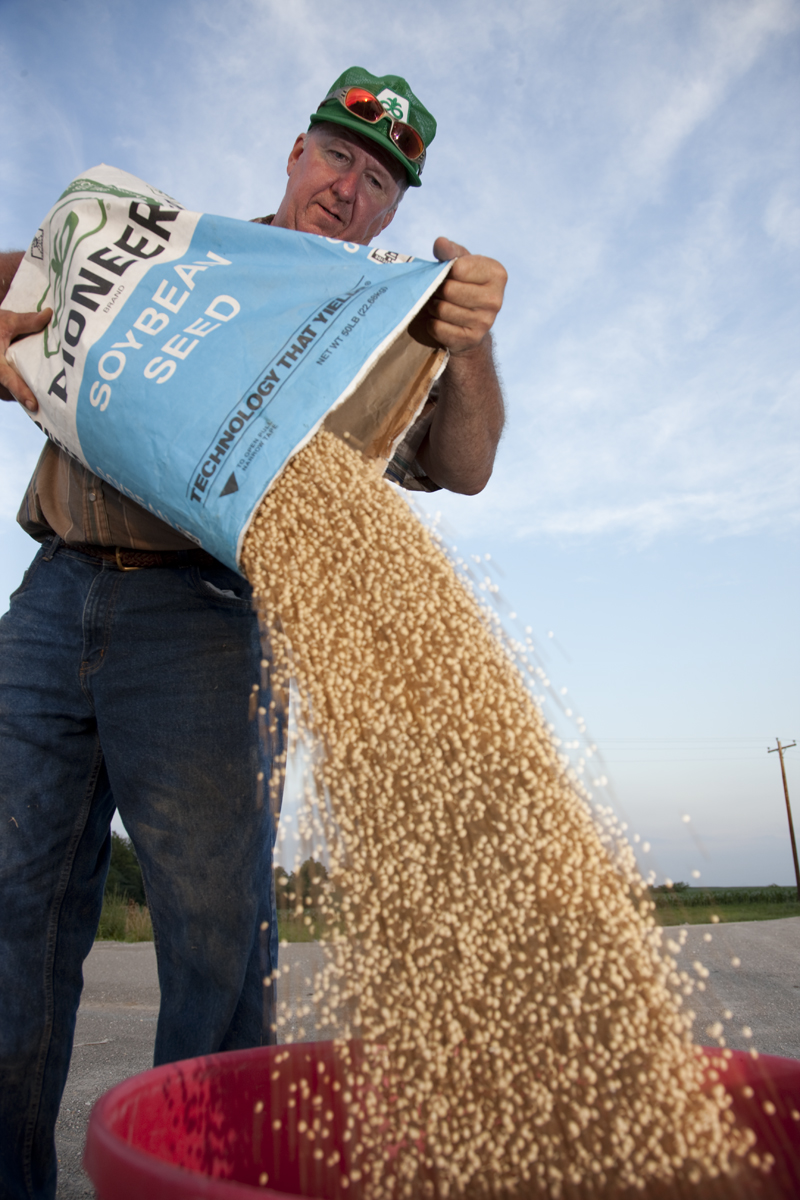
Image context: the cover uses a real photograph of seed being emptied from a bag because the dispute is about practical seed-channel leverage. A courthouse image would make the story look like generic litigation; the more accurate scene is the planting and licensing chain where incentives eventually show up as choice, price, and product availability.[6]
What Changed
DOJ says Bayer's Premier Performance Program previously required independent seed companies to meet sales targets for both corn and soybean seed to receive discounts. In the department's reading, that raised a tying concern: a company seeking better economics on one seed line could be pushed to perform on the other line too. Bayer dropped the corn-soybean tie for the 2025 planting year and has now committed not to reinstate it for seven years.[1]
The second change is less visible but arguably more important. DOJ says the program also contained incentives that could have limited independent seed companies' willingness to license seed technology from Bayer competitors. Bayer eliminated those provisions and committed not to revive them, or a substantially similar incentive program, for the same seven-year period.[1] DTN reported that Bayer told licensees in late February that it would eliminate the "Performance Incentive" element for fiscal 2027, and that the company framed the changes as business decisions it believed made sense for licensees and its licensing operation.[2]
There is a useful boundary here. DOJ did not announce a filed complaint, a divestiture, or a price remedy. It announced commitments made during an ongoing investigation into exclusionary conduct in corn and soybean seed markets.[1] That means the article should not overstate the procedural posture. The enforcement event is a conduct commitment, not a court-tested finding that Bayer violated antitrust law.
Why A Loyalty Program Can Matter
Loyalty programs are not automatically unlawful. A supplier can reward volume, predictability, or joint promotion in ways that lower costs and help customers plan. The antitrust question changes when the supplier has enough market power that the reward begins to act like a penalty for dealing with rivals. That is the theory running through the Bayer announcement: if independent seed companies depend on a major traits supplier, then the structure of a rebate or incentive program can influence whether competing technologies get a fair path to market.[1][4]
The same concern appears in the older FTC case against Syngenta and Corteva, though that lawsuit concerns pesticides rather than seed traits. In 2022, the FTC and state partners alleged that those companies used loyalty programs to pay distributors in ways that blocked cheaper generic pesticide rivals from reaching farmers.[4] Those allegations are disputed in litigation, but they explain why the Bayer commitments matter beyond Bayer itself. Agricultural-input enforcement is increasingly interested in the layer between the manufacturer and the farmer: distributors, licensees, seed companies, and the incentive terms that decide which alternatives are practical to stock or promote.[3][4]
That is also why the USDA-DOJ memorandum from September 2025 is relevant. The agencies said their farm-input coordination would cover markets such as feed, fertilizer, fuel, seed, equipment, and other essential goods, with regular communication among lawyers, economists, and technical experts.[3] Bayer's May 20 commitments look like one of the first concrete seed-market examples of that coordination showing up in a public enforcement result.
Why The Numbers Point To Stakes, Not A Price Cut
Bayer's own first-quarter reporting shows why a seed-loyalty file matters commercially. In Q1 2026, Bayer reported Crop Science sales of EUR 7.558 billion, with currency- and portfolio-adjusted growth of 6.8%. Corn Seed & Traits produced EUR 3.151 billion of sales, while Soybean Seed & Traits rose to EUR 972 million, up 106.3% on a currency- and portfolio-adjusted basis.[5] Those numbers do not prove competitive harm. They do show that corn and soybean traits are large enough business lines for incentive architecture to matter.
The right consumer reading is therefore indirect. Farmers will not see a new seed price cap because DOJ announced a seven-year non-reinstatement commitment. Independent seed companies also do not automatically become unconstrained buyers of every rival technology. The mechanism is softer: remove a cross-crop tie and a rival-licensing disincentive, then see whether independent companies gain more room to choose technology based on agronomic fit, local demand, and price rather than rebate preservation.[1][2]
That makes enforcement success hard to judge quickly. A meaningful change would show up in licensing behavior, product menus, dealer recommendations, and perhaps the bargaining terms offered to independent seed companies. A weak change would leave the visible language cleaner while preserving the same economic pressure through other incentive forms. DOJ's own announcement anticipates that problem by barring not only the removed incentives but also any "substantially similar" incentive program for seven years.[1]
What To Watch
The first watch item is whether DOJ closes the underlying investigation or uses Bayer's commitments as a marker for further scrutiny of seed-market conduct. The May 20 release says the changes came during an ongoing investigation, which leaves open whether this is the endpoint or a public checkpoint.[1]
The second watch item is whether independent seed companies actually license more rival technology over the next two planting cycles. That is the operational test. If the program changes matter, the signal should be visible before the full seven-year term expires: more flexible portfolios, fewer cross-crop constraints, or a cleaner ability to choose between Bayer and non-Bayer trait packages.[1][2]
The third watch item is spillover. FTC's Syngenta-Corteva case and the USDA-DOJ farm-input MOU both point to a wider enforcement theory: agricultural competition can be shaped by channel incentives as much as by headline consolidation.[3][4] Bayer is now the current seed-market example. If regulators keep following that path, the next question will not be whether loyalty programs exist. It will be whether their economics make rival products practically available to farmers or only theoretically available on paper.
The narrow conclusion is the most useful one. As of May 21, 2026, Bayer's commitments are not a farm-cost cure and not a full seed-market reset. They are a live test of whether antitrust enforcement can make agricultural input markets more open by changing the quiet terms that sit between technology owners, independent seed companies, and the farmers who need real choices at planting time.[1][3][4]
Sources
- U.S. Department of Justice, "Antitrust Division Secures Seed Tying and Loyalty Program Commitments from Bayer" (May 20, 2026).
- DTN/Progressive Farmer, Chris Clayton, "DOJ: Bayer Changes Its Seed Loyalty Program Over Possible Anticompetitive Provisions" (May 20, 2026).
- U.S. Department of Justice, "Justice Department and USDA Coordinate to Protect Competition in Agricultural Inputs" (September 29, 2025).
- Federal Trade Commission et al., FTC v. Syngenta Crop Protection AG et al. amended complaint, public lesser-redacted version filed October 5, 2023.
- Bayer, "Crop Science - Bayer Quarterly Statement Q1 2026" (published May 2026).
- Wikimedia Commons, "File:Emptying a Seed Bag (9632914264).jpg" - source page for the cover photograph.