As of 2026-05-02 17:33 UTC, the useful way to read USTR's April 30, 2026 Special 301 release is not as another annual naming ritual.[1][2] The live change is sequencing. Vietnam has been elevated into the Priority Foreign Country category, which means USTR now has 30 days to decide whether to open a Section 301 investigation.[1][2][5] At the same time, the European Union has been added to the lower Watch List, while Argentina and Mexico have been moved down from the Priority Watch List after improvements USTR says were material.[1][2] The report also lands after a formal public-comment and hearing process that ran through the spring, so the current 30-day window is a second-stage policy fork rather than the first moment this file became public.[1][4]
That matters because the report now reads less like a flat list of complaints and more like a tiered pressure map. Vietnam sits in the only lane that can quickly become a separate trade case. The EU has entered a bilateral-pressure lane tied to pharmaceutical legislation, geographical indications, and digital copyright implementation.[2] Mexico and Argentina, by contrast, have been marked as partial improvement stories rather than immediate escalation files.[1][2] The official document still concerns intellectual-property protection and market access, but its near-term policy consequence is about what kind of follow-up each jurisdiction now faces.[2][3]
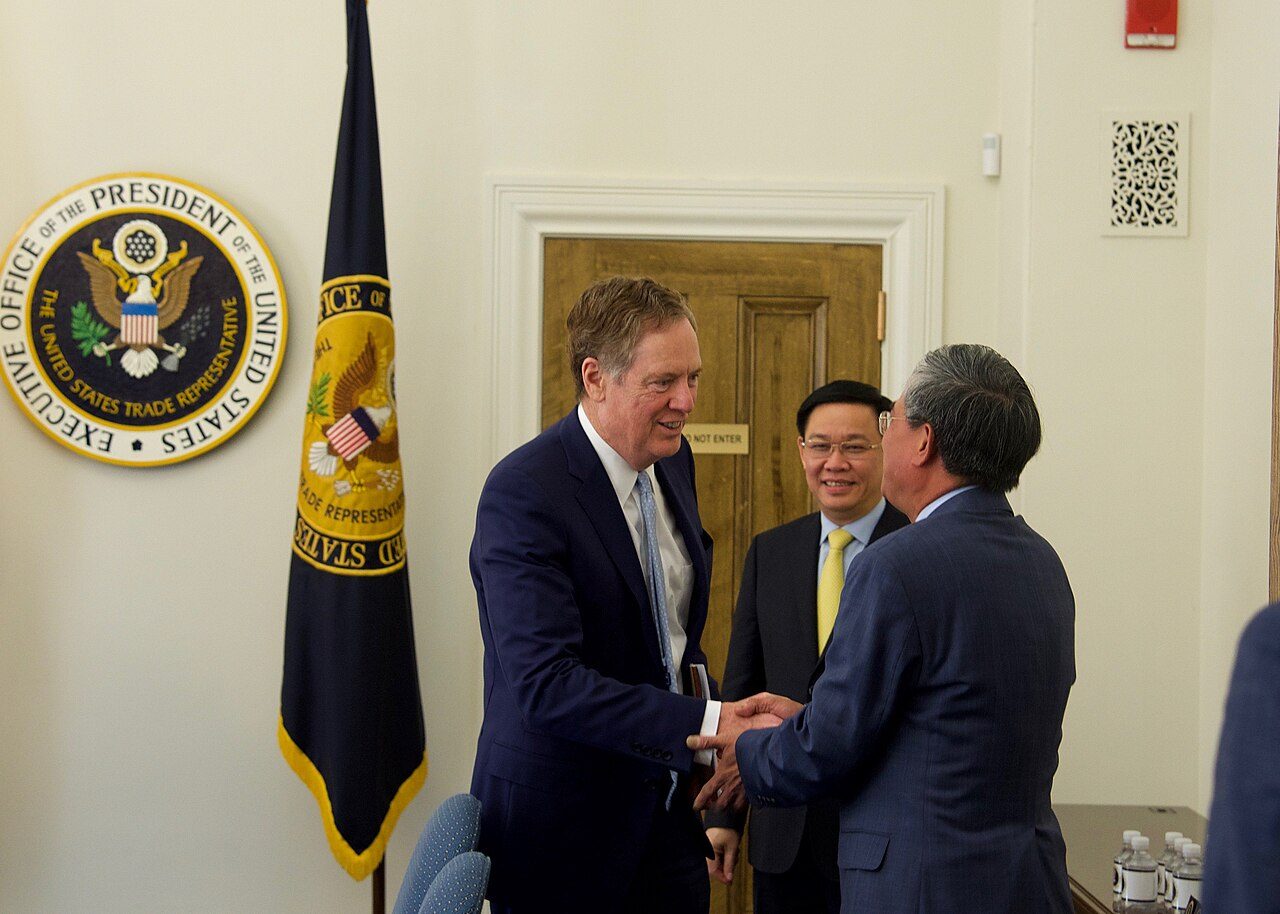
Image context: the cover uses a real USTR meeting photograph from a 2019 session with Vietnamese deputy prime minister Vuong Dinh Hue.[6] That works better here than a cropped portrait, a flag collage, or a trade diagram because this story turns on an institutional U.S.-Vietnam process, a statutory review mechanism, and a 30-day decision window.
Fact file
| Item | What is live now | Confidence note |
|---|---|---|
| Release date | USTR released the 2026 Special 301 Report on April 30, 2026.[1] | Direct from USTR's press release. |
| Vietnam's status | Vietnam is the only Priority Foreign Country in this year's report, the first such designation in 13 years.[1][2][5] | Strong. USTR states the designation; Reuters notes the 13-year gap. |
| Immediate clock | Because of that designation, USTR says it will decide within 30 days whether to initiate a Section 301 investigation.[1][2][5] | Strong. This appears in both the press release and the report. |
| EU's status | The European Union has been added to the Watch List.[1][2] | Strong. Stated directly by USTR. |
| Why the EU was added | USTR cites concern over the EU's provisional agreement on General Pharmaceutical Legislation, plus issues tied to geographical indications and digital copyright implementation.[2] | Strong. This language appears in the report. |
| Who moved down | Argentina and Mexico were moved from the Priority Watch List to the Watch List after actions USTR judged as meaningful improvement.[1][2][5] | Strong. USTR and Reuters align on the direction of change. |
| Scale of the review | USTR says it reviewed over 100 trading partners, identified 1 PFC, listed 6 Priority Watch List countries, and placed 19 on the Watch List.[1][2] | Strong. Stated in the press release and report. |
Why this is more than a naming exercise
The annual Special 301 file always has some reputational effect, but the Vietnam move is different because it creates a short statutory fork. USTR's own release says that a Priority Foreign Country designation requires a decision within 30 days on whether to initiate a Section 301 investigation.[1] The report then explains why Vietnam reached that level: persistent failures, in USTR's view, on online piracy, counterfeiting enforcement, border enforcement, unlicensed software use, and criminal measures against cable and satellite signal theft.[2] Once a country enters that category, the story stops being mainly about diplomatic embarrassment and becomes a question of whether the United States converts the report into a separate enforcement track.
The EU move matters for a different reason. The report does not put Brussels into the same immediate-escalation bucket as Vietnam.[2] But adding the EU to the Watch List still changes the tone of the U.S. file. USTR is signaling that pharmaceutical rules, GI policy, and digital-copyright implementation have become active trade-friction items, not just background complaints.[1][2] For European policymakers, that means the Special 301 report is now part of the wider transatlantic negotiation environment rather than an easily ignorable annual appendix.
Argentina and Mexico show the opposite side of the mechanism. USTR chose to acknowledge improvement rather than keep both on the harsher priority tier.[1][2] That makes the document look more like a pressure-and-response instrument than a one-way naming ceremony. If Washington sees movement, it may downgrade. If it sees stagnation, it may intensify. That interpretation is an inference from the official record, but it is the operational inference that matters most for companies, trade counsel, and foreign ministries reading what comes next.[1][2][3]
Decision impact by horizon
Next 24 hours
Trade lawyers, IP-intensive companies, software-rights holders, and pharmaceutical policy teams should read the report as a process trigger, not just a policy signal.[1][2] The practical question right now is whether Vietnam's designation starts drawing immediate consultation activity, public lobbying, or pre-investigation positioning ahead of the 30-day decision point.
Next 7 days
Watch whether USTR, industry groups, or Vietnamese officials begin describing the file as negotiable or as enforcement-bound.[1][5] On the EU side, the meaningful signal is whether Brussels treats the Watch List addition as a narrow Special 301 complaint or as part of a broader U.S. push against the pharmaceutical-legislation package and copyright implementation choices.[2]
Next 30 days
The key binary is explicit: either USTR opens a Section 301 investigation on Vietnam or it does not.[1][2] If it does, the report becomes the launch platform for a live trade-enforcement file. If it does not, the report remains a high-pressure diplomatic instrument, but one whose peak leverage may already have been used. The EU and Mexico/Argentina stories are slower-moving, but they will matter as evidence of whether this year's report produces concrete bilateral bargaining rather than just rhetorical aftershocks.[1][2][3]
Scenarios
Base case: USTR uses the 30-day window to maximize leverage on Vietnam, whether or not a formal Section 301 investigation is ultimately opened, while the EU remains in a pressure-without-immediate-probe lane.[1][2]
Upside case: Vietnam makes visible enough movement, or bilateral engagement becomes credible enough, that USTR keeps the file in a negotiation-first mode; meanwhile the EU, Mexico, and Argentina treat their status changes as prompts for targeted policy repair rather than as symbolic gestures.[1][2][5]
Downside case: USTR opens a Section 301 investigation on Vietnam and the EU addition hardens into a broader transatlantic IP fight over pharmaceutical exclusivity, GIs, and copyright implementation, turning one annual report into several live trade disputes.[1][2][5]
Action checklist
- For companies with Vietnam manufacturing, licensing, or enforcement exposure: map where a Section 301 investigation could affect public submissions, compliance narratives, or bilateral operating assumptions in the next month.[1][2]
- For EU policy watchers: treat the Watch List entry as a targeted warning on pharmaceutical legislation, GI treatment, and digital copyright execution, not as a generic anti-EU headline.[2]
- For Mexico and Argentina stakeholders: read the downgrade as conditional credit, not closure; USTR's own text still describes remaining IP issues even while acknowledging progress.[1][2]
- Invalidation condition: if USTR declines to open a Section 301 investigation within the 30-day window, the "imminent escalation" reading weakens materially and the file reverts to a slower diplomatic-pressure track.[1][2]
Sources
- United States Trade Representative, "USTR Releases 2026 Special 301 Report on Intellectual Property Protection and Enforcement" (April 30, 2026).
- United States Trade Representative, 2026 Special 301 Report (April 30, 2026 PDF).
- United States Trade Representative, "Special 301" background page (accessed May 2, 2026).
- United States Trade Representative, "Public Hearing Regarding the 2026 Special 301 Review" (February 13, 2026).
- Reuters via Investing.com, "US names Vietnam as top concern country in intellectual property rights report" (April 30, 2026).
- Wikimedia Commons, "File:Robert Lighthizer and Vuong Dinh Hue at USTR (2).jpg" (source page for the article image).