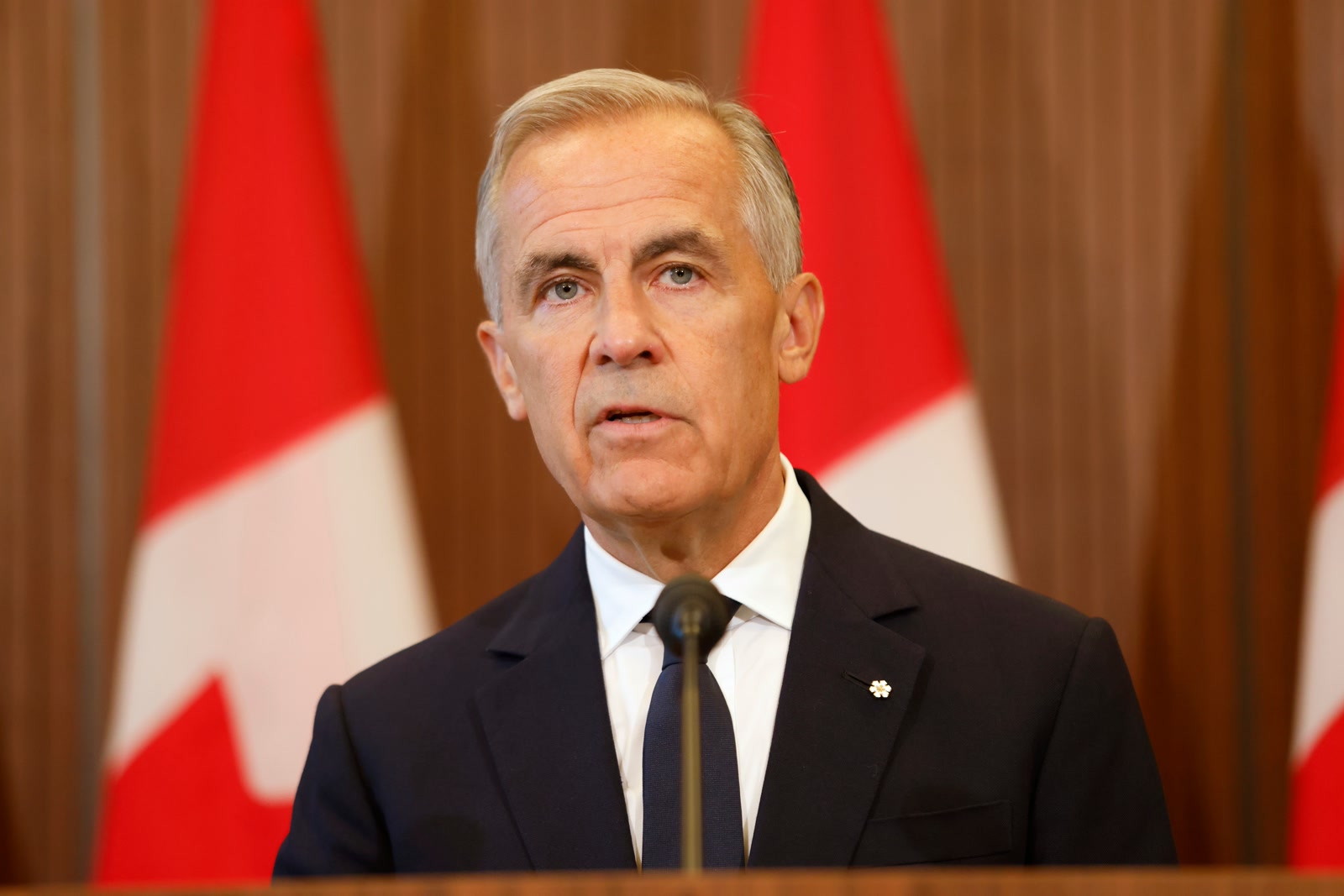
As of 2026-08-22 20:37 UTC, an additional 50% U.S. tariff was in force on specified Canadian products. The legal clock started at 12:01 a.m. EDT (04:01 UTC), after a three-day suspension expired without a trade agreement.[3][7]
Canada has promised a dollar-for-dollar response beginning September 8. Prime Minister Mark Carney named steel, dairy, appliances, agricultural equipment, pulp and paper, and electronics as target sectors. But Ottawa had not yet published the tariff lines, rates, exemptions or customs instrument that would turn that promise into a charge at the border.[1][2][6]
That implementation gap is the immediate story. U.S. importers already have an operative entry rule; Canadian importers have a date and a political commitment, but not yet a list they can price.
What is verified
| Timestamp and source | Verified signal | Confidence boundary |
|---|---|---|
| July 20, White House and USTR | President Donald Trump signed three Section 338 proclamations imposing additional 50% duties on covered Canadian goods in disputes over alcohol, dairy and motor vehicles.[4][5] | High on the legal action. The White House's account of Canadian discrimination is the administration's stated rationale, not a neutral finding accepted by both governments. |
| August 18, White House | A follow-up proclamation moved the effective time for all three measures to 12:01 a.m. EDT on August 22.[3] | High on the entry clock. Product treatment still depends on the relevant tariff code and annex, not the headline rate alone. |
| August 21, Canadian government | Carney suspended negotiations, recalled Canada's team and said the U.S. would tariff roughly C$28 billion in Canadian goods; he pledged to match the measures dollar for dollar.[1] | High on Canada's announcement. Each side blamed the other for late changes, and the cited record does not independently resolve that dispute.[1][7] |
| August 22, AP and Reuters | The duties took effect and covered roughly US$20 billion, a little over 5% of Canada's annual exports to the United States.[6][7] | High on approximate scale. The U.S.- and Canadian-dollar figures describe roughly the same trade footprint in different currencies; they should not be added together. |
| August 22, Canadian government | Ottawa set the response for the Tuesday after Labour Day—September 8—and named broad sectors.[2] | High on timing and sector direction; low on company- or product-level exposure until the tariff schedule is published. |
The 50% headline is not a tariff on all Canadian trade
The new charge is an additional ad valorem duty on goods listed in the three proclamations, not a 50% wall around every shipment from Canada. The White House says the measures apply to covered goods even when they qualify as originating under the U.S.-Mexico-Canada Agreement. It also identifies carve-outs including energy, potash, goods already subject to Section 232 tariffs, fish and critical minerals.[4]
That distinction matters twice. First, the estimated footprint—about US$20 billion—is large for the firms inside it but only a little over 5% of Canadian exports to the United States.[6][7] Second, “50%” does not by itself tell an importer the final landed cost. Classification, the applicable annex, existing duties, entry timing and any exclusion all matter. A product description in a news story is not a customs determination.
The July actions also broke with the protective assumption many Canadian exporters had been using during the wider trade dispute: that qualifying under USMCA would shield a product from this particular tariff. The White House fact sheet explicitly says origin under the agreement does not exempt covered goods from the Section 338 duties.[4] For a company that had invested in origin documentation as its main defense, that is a material rule change.
The measures are narrow in aggregate and potentially severe in concentration. A tariff affecting 5% of national exports can still dominate the economics of a small manufacturer whose product appears on an annex and whose customer base sits mostly south of the border. National trade share is therefore the wrong risk measure for an individual hockey-equipment maker, furniture producer, winery or specialized supplier.
“Dollar for dollar” is not yet an administrable policy
Canada's commitment now has three known elements: a value-matching principle, a September 8 start date and a set of sectors. Carney said the response would be concentrated in steel, dairy, appliances, agricultural equipment, pulp and paper, and electronics, including some products already subject to U.S. Section 232 and Section 338 measures.[2]
What remains unknown is more important for the next transaction: which tariff lines Canada will select, what rate each will carry, whether current contracts or goods in transit receive transitional treatment, and what exclusions, remissions or drawback rules will apply. Carney said details would arrive “in the coming days.”[2] Until they do, “dollar for dollar” describes the intended aggregate value of retaliation, not the invoice facing any one Canadian importer.
The distinction also keeps the cost boundary honest. Retaliation may protect a Canadian producer from a newly disadvantaged position in its home market, but the tariff is collected on imports. Carney acknowledged that the measure will raise costs and reduce choice for Canadians.[2] That does not settle whether retaliation is justified; it identifies who can bear part of its immediate price.
September 8 creates a 17-calendar-day policy window. Ottawa can use it to choose goods for leverage while limiting self-harm, publish support measures for exposed workers and firms, and leave room for another negotiation. Importers, however, cannot responsibly pre-price that balance from a sector list. An “electronics” label can encompass inputs with no easy Canadian substitute as well as finished goods with several alternatives. The tariff schedule is where the tradeoff becomes visible.
The breakdown is attributed, not adjudicated
Carney said last-minute U.S. terms were unfair, uneconomic and unreliable; his August 22 remarks said Canada would not compromise sovereignty, language protections or key industries.[1][2] U.S. Trade Representative Jamieson Greer gave the opposite account, saying Canada declined terms reached earlier and sought further concessions.[7]
Those accounts establish a live disagreement, not its answer. The defensible fact is that talks stopped, the Canadian delegation returned to Ottawa, and no additional meeting was scheduled at the reporting cutoff.[1][6][7] “No talks scheduled” is not the same as “talks cannot restart.” A new meeting, a partial suspension or a customs modification could change the position before September 8.
The most consequential damage may therefore be to planning rather than to today's aggregate trade total. The two governments appeared close enough on August 18 to justify a three-day legal suspension; by late August 21, each said the other had changed the bargain.[1][3][7] A company can model a known tariff. It is harder to model whether an apparent agreement will survive until its customs notice is issued.
Decision impact: 24 hours, seven days, 30 days
Next 24 hours — classification outranks commentary. U.S. importers of Canadian goods need to verify the relevant tariff code, annex, exclusion and entry time with their customs advisers. Canadian exporters need to identify who bears the duty under the contract and which shipments crossed the legal cutoff. Neither side should apply 50% to its entire Canada trade book.[3][4]
Next seven days — the missing Canadian list becomes the key document. Ottawa's tariff schedule should reveal the actual rate and exposure by product, while promised worker and business support will show which industries the government expects to absorb the largest shock.[1][2] Watch as well for CBP or Federal Register implementation material in the United States and for a formally announced negotiating channel—not anonymous optimism about one.
Next 30 days — retaliation moves from signal to collection. If no off-ramp appears, Canada's measures are due to begin September 8. The first useful evidence will not be the face value of the list alone, but supplier repricing, substitution options, exemptions, delayed orders and whether either government adds another layer of duties. The dispute also complicates the wider USMCA relationship, but one failed round does not by itself terminate the agreement.[6][7]
Three conditional paths
Base path — two unequal clocks keep running. The U.S. duties remain in force; Canada publishes a targeted schedule and begins collecting it on September 8; talks stay paused or resume without immediate relief. Trigger: a Canadian customs instrument appears while the U.S. proclamations remain unchanged.
Upside path — the 17-calendar-day window produces a bounded off-ramp. Negotiators return, the United States suspends or narrows specified duties, and Canada correspondingly delays or reduces its list before collection begins. Trigger: signed legal or customs notices on both sides, not a statement that talks were constructive.
Downside path — retaliation becomes a new escalation rung. Canada's list reaches deeply into inputs with few substitutes, the United States answers with additional measures, or both governments extend the dispute into more sectors. Trigger: a new proclamation, order or tariff schedule that increases the covered value beyond the announced matching response.
These are observable branches, not probability forecasts. A published Canadian list could contain elements of more than one path—for example, broad nominal coverage with generous exclusions and a delayed collection rule.
Action and invalidation check
- U.S. importers: map products to the actual proclamation annexes and entry rules; confirm contractual duty allocation before repricing.
- Canadian exporters: separate exposure to the live U.S. measure from possible support programs and from Canada's future retaliation, which taxes imports into Canada rather than exports to the United States.
- Canadian importers: do not assign a rate from the named sector alone; wait for the tariff-line schedule, then test substitutes, goods-in-transit treatment and remission rules.
- Governments: publish machine-readable tariff lists, effective-time instructions, exclusions and a contact point for classification questions; state whether negotiations have a next date.
- Reporters: label C$28 billion and US$20 billion correctly, describe the 50% as applying to covered goods, and distinguish a promised response from a tariff already being collected.
Invalidate the central implementation-gap finding if Canada had already published a complete, operative tariff schedule by the stated cutoff. Update the brief as soon as that list appears, if either country changes collection through a binding notice, or if negotiations resume with a documented suspension. Until then, the asymmetry is plain: one border has a live additional duty; the other has a date, sectors and a promise.
Sources
- Prime Minister of Canada, “Statement by Prime Minister Carney on Canada-U.S. trade negotiations” (August 21, 2026) — suspension of talks, C$28 billion scope, dollar-for-dollar pledge and support commitment.
- Prime Minister of Canada, “Prime Minister Carney delivers remarks on Canada-U.S. trade negotiations” (August 22, 2026) — target sectors, September 8 timing, publication gap and acknowledged consumer tradeoff.
- The White House, “Temporary Suspension of Additional Duties to Offset Canadian Discrimination Against the Commerce of the United States With Respect to Alcoholic Beverages, Dairy, and Motor Vehicles” (August 18, 2026) — operative 12:01 a.m. EDT August 22 entry time.
- The White House, “Fact Sheet: President Donald J. Trump Imposes Additional Tariffs on Canada” (July 20, 2026) — covered-goods framing, USMCA treatment, carve-outs and administration rationale.
- Office of the United States Trade Representative, “Ambassador Greer Issues Statement on President Trump Imposing Section 338 Tariffs on Canada” (July 20, 2026) — official U.S. account of the legal action and disputes over alcohol, dairy and vehicles.
- Paul Wiseman and Rob Gillies, Associated Press, “US and Canada fall deeper into a trade war with new tariffs as talks collapse and blame is spread” (August 22, 2026) — current scope, September 8 response, negotiation status and source page for the Patrick Doyle photograph.
- Promit Mukherjee and Bhargav Acharya, Reuters via Internazionale, “Canada to impose retaliatory tariffs on US steel, electronics, other products, Carney says” (August 22, 2026) — live U.S. duties, approximate trade share, Canadian response and negotiation status.