As of 2026-05-27 07:03 UTC, the U.S. Small Business Administration has announced that its second 2026 Supplier Matchmaking Expo will take place on June 5 at MotorCity Casino in Detroit, with General Motors as co-host.[1][2] The news is narrow, but the signal is useful: Washington is trying to turn domestic-supply-chain policy into buyer meetings that small manufacturers can actually attend.
The test is not whether another supplier fair can fill a ballroom. The test is whether small firms can leave with specific buyer leads, documentation requirements, capital options, and follow-up channels. SBA says the Detroit event will offer one-on-one matchmaking sessions with prospective buyers and access to federal, state, and local resources for small manufacturers.[1][2] That makes the event a live execution point for a broader manufacturing push that includes higher SBA-backed loan capacity and expanded SBIC leverage treatment.[3][4]
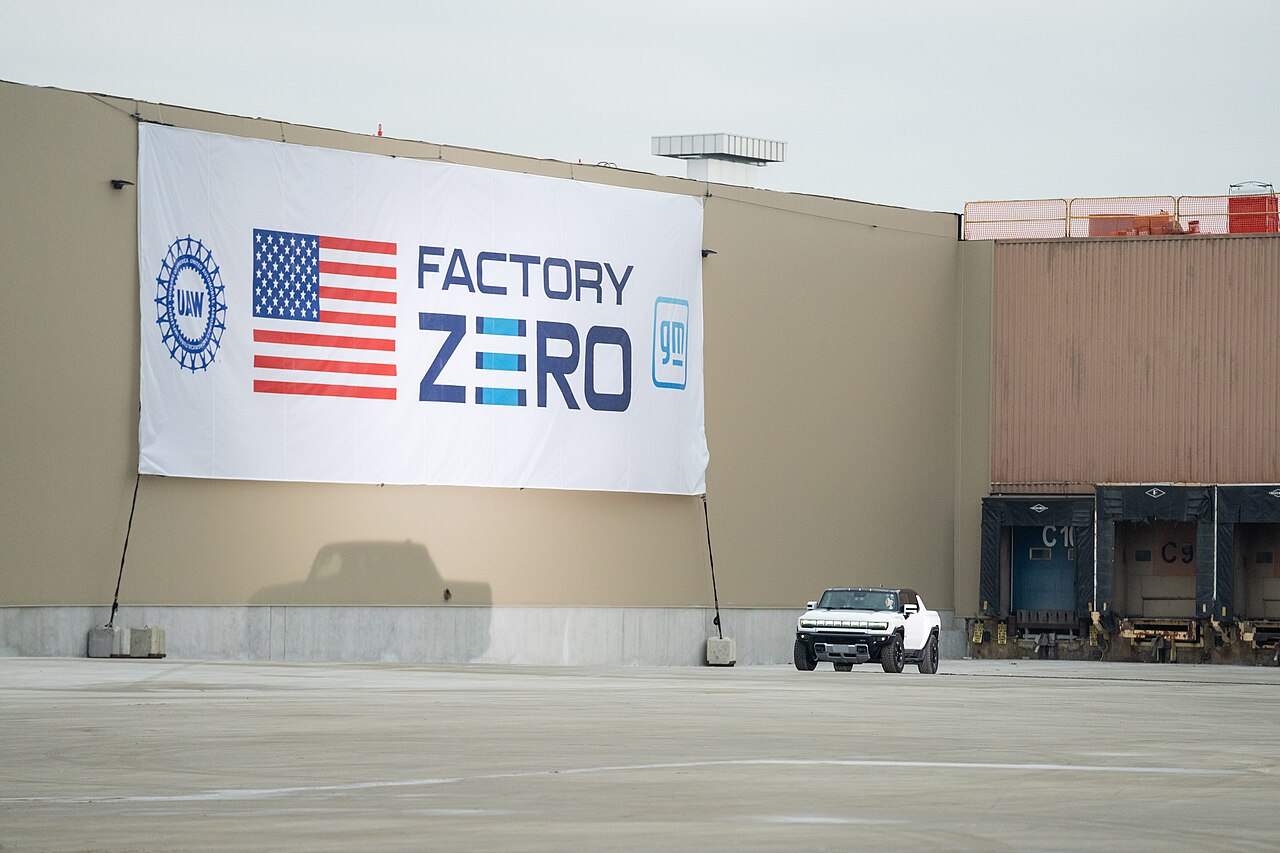
Image context: the cover is a real photograph from GM Factory ZERO in Detroit, not a generated manufacturing illustration or a symbolic supply-chain graphic.[6] It is included because the event's practical value depends on whether small suppliers can move from networking into the disciplined production, compliance, quality, and logistics world that large manufacturers require.
Fact file
| Item | What is live now | Confidence note |
|---|---|---|
| Event | SBA says the Michigan Supplier Matchmaking Expo will run on Friday, June 5, 2026, from 10:00 a.m. to 3:00 p.m. ET at 2901 Grand River Avenue in Detroit.[1][2] | High; direct SBA release and event page. |
| Co-host | The event is co-hosted by General Motors and organized by SBA in collaboration with GM and the New American Industrial Alliance.[1][2] | High; direct SBA pages. |
| Format | Suppliers can participate in one-on-one matchmaking meetings and meet public-sector support resources.[1][2] | High; details are explicit, but outcomes are not guaranteed. |
| Buyer list | SBA lists confirmed buyers including Boeing, Defense Logistics Agency, Department of the Air Force, DTE Energy, Google, NASA Office of Small Business Programs, U.S. Army Corps of Engineers, and U.S. Nuclear Regulatory Commission.[1] | High for the announced list; attendance and procurement follow-through remain uncertain. |
| Prior event benchmark | SBA says its inaugural March expo in Charlotte connected more than 675 small businesses with 35 large industrial buyers, with more than 170 businesses successfully matching.[1] | Medium-high; direct SBA number, but "match" is not the same as a signed contract. |
| Capital backdrop | SBA separately announced that, effective July 4, eligible borrowers can combine 7(a) and 504 loans up to $10 million, double the prior combined limit.[3] | High; direct SBA release. |
| Large-buyer hurdle | GM's Supplier Code of Conduct frames supplier participation around responsible sourcing, legal compliance, safety, environmental expectations, and cascading requirements through sub-tier chains.[5] | High for GM expectations; not every expo participant will be ready to meet them. |
What changed
The immediate change is calendar-based. Registration is open, the event is dated, the location is public, and the buyer roster is no longer hypothetical.[1][2] For small Michigan-area manufacturers, logistics firms, component shops, professional-service providers, and other suppliers, June 5 is now a concrete deadline to decide whether they have a credible buyer-facing package.
The more important change is sequencing. SBA is not announcing the Detroit expo in isolation. It comes after a March matchmaking event that SBA describes as producing more than 170 matches, after a May 18 rule change that raises the combined 7(a) and 504 loan ceiling, and after a May 21 SBA statement backing the Investing in All of America Act's SBIC changes for rural communities, manufacturing, and critical industries.[1][3][4]
That sequence matters because supplier development usually fails when introductions, financing, and buyer requirements sit in separate rooms. A small machining, tooling, packaging, logistics, or services company can get a promising buyer conversation and still fail the next stage if it lacks working capital, quality documentation, cyber hygiene, insurance, or a clear ability to scale. The Detroit event is useful only if it compresses that gap.
Decision impact
For small manufacturers, the next 24 hours should be about fit, not optimism. A supplier should read the buyer list, identify two or three realistic procurement lanes, and prepare a one-page capability statement that names capacity, certifications, lead times, quality systems, past customers, geographic reach, and constraints. The goal is not to sound broadly "manufacturing-ready." The goal is to make it easy for a buyer to route the conversation to the right category manager.
Over the next 7 days, the highest-value preparation is evidence. Firms that want GM-adjacent or large-buyer work should assume that procurement teams will ask about compliance, sourcing, safety, and sub-supplier controls. GM's supplier code is a reminder that large buyers do not simply buy output. They buy a chain of conduct, documentation, traceability, and risk management.[5] A small firm that cannot explain those basics may still get a meeting, but it will struggle to convert it.
Over the next 30 days, capital planning becomes part of the story. SBA's July 4 loan-limit change does not put cash in every supplier's account, but it changes the ceiling for eligible borrowers who need to pair working capital with fixed-asset financing.[3] For a small manufacturer, the practical question is whether a new buyer opportunity would require equipment, inventory, hiring, tooling, or facility changes before revenue arrives.
What remains uncertain
The main uncertainty is conversion quality. SBA's March benchmark reports matches, not purchase orders, contract values, delivery performance, or repeat-business rates.[1] That does not make the benchmark meaningless. It does mean readers should treat the Detroit event as a funnel opening, not proof that domestic supply chains have already been rebuilt.
The second uncertainty is whether buyer demand and supplier readiness line up. The confirmed buyer list is broad, crossing automotive, defense, energy, technology, transit, and federal infrastructure.[1] A broad room can create opportunity, but it can also create mismatch. A supplier that is strong in local fabrication may not be ready for defense documentation. A services firm may be useful to a large manufacturer but irrelevant to a component buyer. The event's value depends on matching specificity.
The third uncertainty is follow-up. Supplier fairs can create promising introductions that die in email. The stronger version of this program would track whether participants receive requests for information, site visits, pilot orders, financing applications, or later contracts. Without that follow-through, the expo risks becoming a policy photograph rather than an industrial mechanism.
Scenarios
Base case: the Detroit expo generates a meaningful set of qualified introductions, especially for firms that arrive with clear capabilities and realistic buyer targets. The event helps some suppliers enter procurement conversations, but only a smaller share advances to contracts after documentation and capacity review.[1][2][5]
Upside case: SBA, GM, and participating buyers use the expo as a disciplined pipeline: matching meetings lead to defined next steps, SBA capital tools help suppliers solve expansion bottlenecks, and buyers report real purchase-order or pilot-contract movement later in 2026.[1][3][4]
Downside case: the room fills, but the funnel is too loose. Suppliers leave with contacts rather than commitments, buyers find too few procurement-ready firms, and the policy story rests on attendance counts instead of conversion. The warning trigger would be a later SBA update that highlights participation but gives no evidence of buyer follow-up.
Action checklist
- For suppliers: register only after mapping your offer to specific buyer categories. Bring a concise capability statement, NAICS codes, certifications, capacity limits, insurance status, and a plain explanation of what size order you can handle now.[1][2]
- For lenders and local support organizations: treat June 5 as a pre-underwriting moment. If suppliers get serious leads, they may need working capital, equipment finance, bonding, or accounting help before a buyer can rely on them.[3]
- For buyers: make the ask specific. Small firms need to know whether the opportunity is parts, maintenance, packaging, logistics, software, facilities, professional services, or federal subcontracting support.[1][2]
- Invalidation condition: if the event produces attendance but no documented post-event buyer actions, the case for calling this an industrial-policy execution tool weakens sharply.
Sources
- U.S. Small Business Administration, "SBA, General Motors to Host Michigan Supplier Matchmaking Expo" (May 27, 2026).
- U.S. Small Business Administration, "2026 Supplier Matchmaking Expo" event page (accessed May 27, 2026).
- U.S. Small Business Administration, "SBA Doubles Cumulative 7(a) and 504 Loan Limit to $10 Million" (May 18, 2026).
- U.S. Small Business Administration, "Administrator Loeffler Applauds Signature of Investing in All of America Act" (May 21, 2026).
- General Motors, Supplier Code of Conduct (PDF, accessed May 27, 2026).
- Wikimedia Commons, "File:General Motors Factory ZERO Detroit plant, 2021 (51845515837).jpg" - photographic file page for the GM Factory ZERO image used in this article.