As of 2026-05-27 16:02 UTC, Mahmoud Khalil's case has not become simpler. It has become more temporally precise. The 3rd U.S. Circuit Court of Appeals has paused the effect of its ruling while Khalil seeks U.S. Supreme Court review, giving him more time before the government can use that ruling as a path toward re-arrest or deportation.[1] That stay is meaningful, but it is not a merits win. It keeps the clock from running out while a larger question moves upward: when a lawful permanent resident alleges that detention and removal are retaliation for political speech, must he wait until immigration proceedings finish before a federal court can meaningfully hear the constitutional injury?
That is the point easy headlines blur. The latest order does not decide whether the Trump administration's foreign-policy theory for removing Khalil is constitutional. It does not decide whether the government retaliated against protected speech. It does not decide whether the immigration court process has handled the record correctly. It creates time for Supreme Court review after the 3rd Circuit declined, by a 6-5 vote, to rehear the case en banc and left in place a January panel ruling that channeled Khalil's challenge away from the New Jersey district court and toward the immigration-review path.[2][3][4]
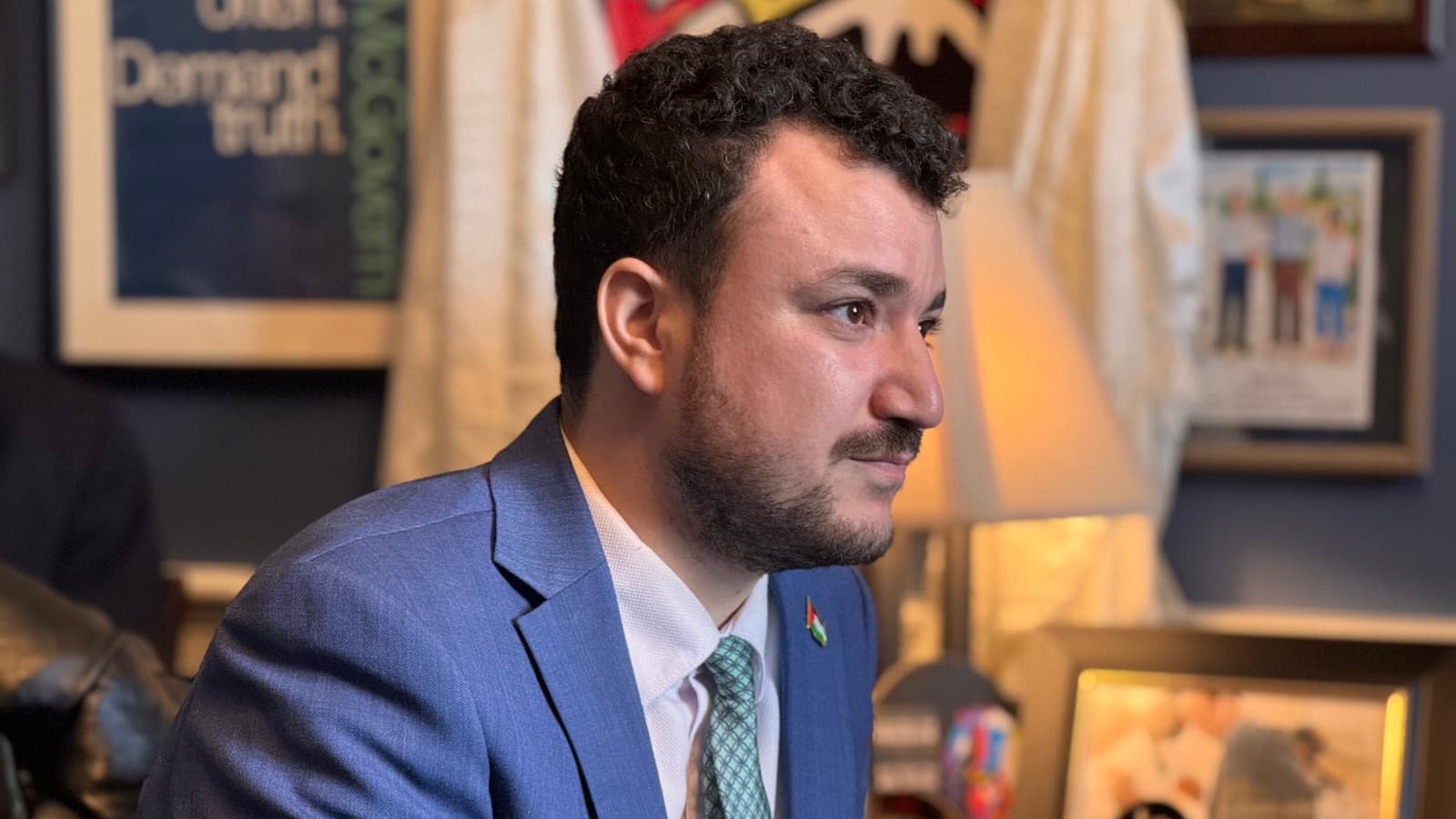
Image context: the cover uses a real photograph of Khalil from July 2025, published through Wikimedia Commons from Representative Jim McGovern's office. It is archival and person-specific, which is stronger for this story than a courthouse facade or generic protest image.[7]
What changed now
The immediate change is procedural insulation. AP reported that the 3rd Circuit said it would hold its ruling while Khalil appeals to the Supreme Court; if no timely petition is filed, the parties must notify the court.[1] In practical terms, that gives Khalil's lawyers a window to ask the justices to review the jurisdiction question before the 3rd Circuit mandate takes full effect. It also buys time while a separate petition tied to the immigration proceedings is pending in the 5th U.S. Circuit Court of Appeals, because Khalil's immigration case was handled in Louisiana.[1][4][5]
The uncertain item is the Supreme Court's posture. An emergency stay and a later certiorari petition are different procedural animals, and the public record does not yet show whether the justices will treat the case as a narrow immigration-jurisdiction dispute or as a broader speech-and-detention case. The stay makes that question possible; it does not answer it.
The live legal mechanism
The 3rd Circuit panel's January opinion turned on where Khalil's claims belong. The panel held that the New Jersey district court should not have reached the case because federal immigration law channels claims "arising from" removal proceedings into the petition-for-review process after immigration adjudication.[3] Khalil's lawyers and the dissenting judges view that framing as too broad. Their concern is that some injuries, especially detention allegedly imposed to punish speech, cannot be repaired later by a court reviewing a final removal order.[2][4][6]
That is why the May 22 rehearing denial matters more than a normal denial order. Five active judges voted for rehearing, and Judge Cheryl Ann Krause's dissent argued that the panel had interpreted the jurisdiction-stripping statute in a way that weakens habeas review for lawful permanent residents alleging detention-specific constitutional violations.[2] The dissent's warning is not simply that Khalil may lose. It is that the federal courts may arrive too late to address the alleged injury in the form in which it occurred: arrest, confinement, family separation, and chilled political speech before a final removal order is reviewed.[2]
The government's side, as reflected in the panel result and AP's summary of the litigation, is that Khalil's challenge should proceed through immigration channels first, not through a district-court habeas case in New Jersey.[3][4] That position treats the removal process as the proper lane and worries about parallel litigation. The counterposition treats detention and speech retaliation as injuries that stand partly apart from the validity of any eventual removal order.[2][6]
Why the stay matters politically
Khalil is not an ordinary low-visibility immigration litigant. He became a national test case because the administration sought to remove him after his role in pro-Palestinian demonstrations at Columbia University, while saying his presence harmed U.S. foreign-policy interests.[1][4] His lawyers have argued that the case is retaliation for advocacy; federal officials have denied that framing and have invoked immigration-law grounds.[4][5][6]
The Board of Immigration Appeals has already rejected one bid to terminate the removal case, AP reported in April.[5] The ACLU's case page frames the litigation as a challenge to arrest, detention, transfer, and threatened deportation based on protected expression.[6] The ACLU is part of Khalil's legal coalition, so its description should not be treated as a neutral finding. It is still important because it defines the constitutional theory Khalil is trying to put before Article III courts.
This is the reason the stay has practical force beyond one person. If the Supreme Court takes the case, it could clarify how fast federal courts must be able to respond when a noncitizen with established U.S. ties alleges that immigration detention is being used as a speech-control tool. If the Court declines, the January 3rd Circuit ruling remains a powerful signal that some constitutional objections must wait for the immigration-review track, even when the alleged harm is detention itself.[2][3]
Decision impact
For Khalil, the next phase is about filing on time and keeping overlapping appellate lanes from collapsing into confusion. The 3rd Circuit stay gives him a bridge toward the Supreme Court; the 5th Circuit track remains tied to the immigration order itself.[1][4][5]
For universities and protest movements, the live issue is not whether every demonstration participant receives the same protection. It is whether the government can use immigration status and foreign-policy language in a way that creates a stronger deterrent for noncitizen activists than for citizens. That question remains unresolved, and claims about future enforcement should be treated as uncertain until the courts say more.[2][3][6]
For immigration lawyers, the case is a jurisdiction map. The risk is that district courts may have less room to separate detention-specific constitutional claims from removal challenges when both arise from the same enforcement campaign. The opportunity, from Khalil's side, is that a Supreme Court petition can present that exact timing problem while the stay prevents the mandate from making the issue effectively moot for him.[1][2][3]
Scenarios
Base case: Khalil files at the Supreme Court in the coming months, the stay remains in place during the petition window, and the case continues on two tracks: Supreme Court review of the 3rd Circuit jurisdiction issue and 5th Circuit review of the immigration-order path.[1][4][5]
Upside case for Khalil: the Supreme Court treats the timing question as important enough to review, preserving space for federal habeas claims when detention is alleged to be punitive or retaliatory before a final removal order can be meaningfully reviewed.[2][3][6]
Downside case for Khalil: the Court declines review or acts narrowly, leaving the 3rd Circuit's channeling rule in place and forcing most of the fight into the immigration-review process. That would not prove the government's constitutional theory right, but it would make the procedural path harder and slower for Khalil and similarly situated litigants.[2][3][4]
What to watch
The first watch item is the Supreme Court filing deadline and whether Khalil seeks emergency relief, certiorari, or both. The second is whether the 5th Circuit sets a schedule on the immigration appeal. The third is whether the government tries to narrow the case to forum and timing, while Khalil's lawyers keep foregrounding speech retaliation and detention harm. The invalidation condition is clear: if the Supreme Court quickly takes the case and grants broad interim protection, the story shifts from "timing test" to "national merits test." Until then, the stay is best understood as a pause button on a procedural race, not a final ruling on the constitutional stakes.[1][2][3][4]
Sources
- Associated Press, "Court gives Mahmoud Khalil more time to fight Trump administration's efforts to deport him" (May 27, 2026).
- U.S. Court of Appeals for the Third Circuit, Mahmoud Khalil v. President United States of America, denial of rehearing en banc and dissent, No. 25-2162, PDF via Courthouse News (May 22, 2026).
- U.S. Court of Appeals for the Third Circuit, Khalil v. President United States of America, panel opinion, No. 25-2162, PDF via Courthouse News (January 15, 2026).
- Associated Press, "Pro-Palestinian activist Mahmoud Khalil wants Supreme Court to weigh in on deportation fight" (May 22, 2026).
- Associated Press, "Immigration board denies Mahmoud Khalil's appeal, bringing activist one step closer to deportation" (April 10, 2026).
- American Civil Liberties Union, "Khalil v. Trump" case page, including litigation timeline and filings.
- Wikimedia Commons, "File:Mahmoud Khalil (2025).jpg" - July 22, 2025 photograph from the Office of Representative Jim McGovern.