As of 2026-04-25 06:35 UTC, the Transportation Department's new $1.1 billion railroad-crossing announcement is best read as a grant-opening story rather than an already-delivered safety outcome. DOT said on April 24 that the Federal Railroad Administration has made funds available for projects such as overpasses, underpasses, upgraded warning technology, track relocation, and crossing-safety education, while the live application deadline sits on June 8, 2026.[1][2]
That distinction matters because the federal government has not yet announced a new list of selected communities. The current milestone is a competitive application window for states, local governments, Tribes, MPOs, and port authorities, not a finished round of crossings that have already been separated or closed.[2] In practical terms, the April 24 move opens a race to turn local safety problems into complete, eligible project files.
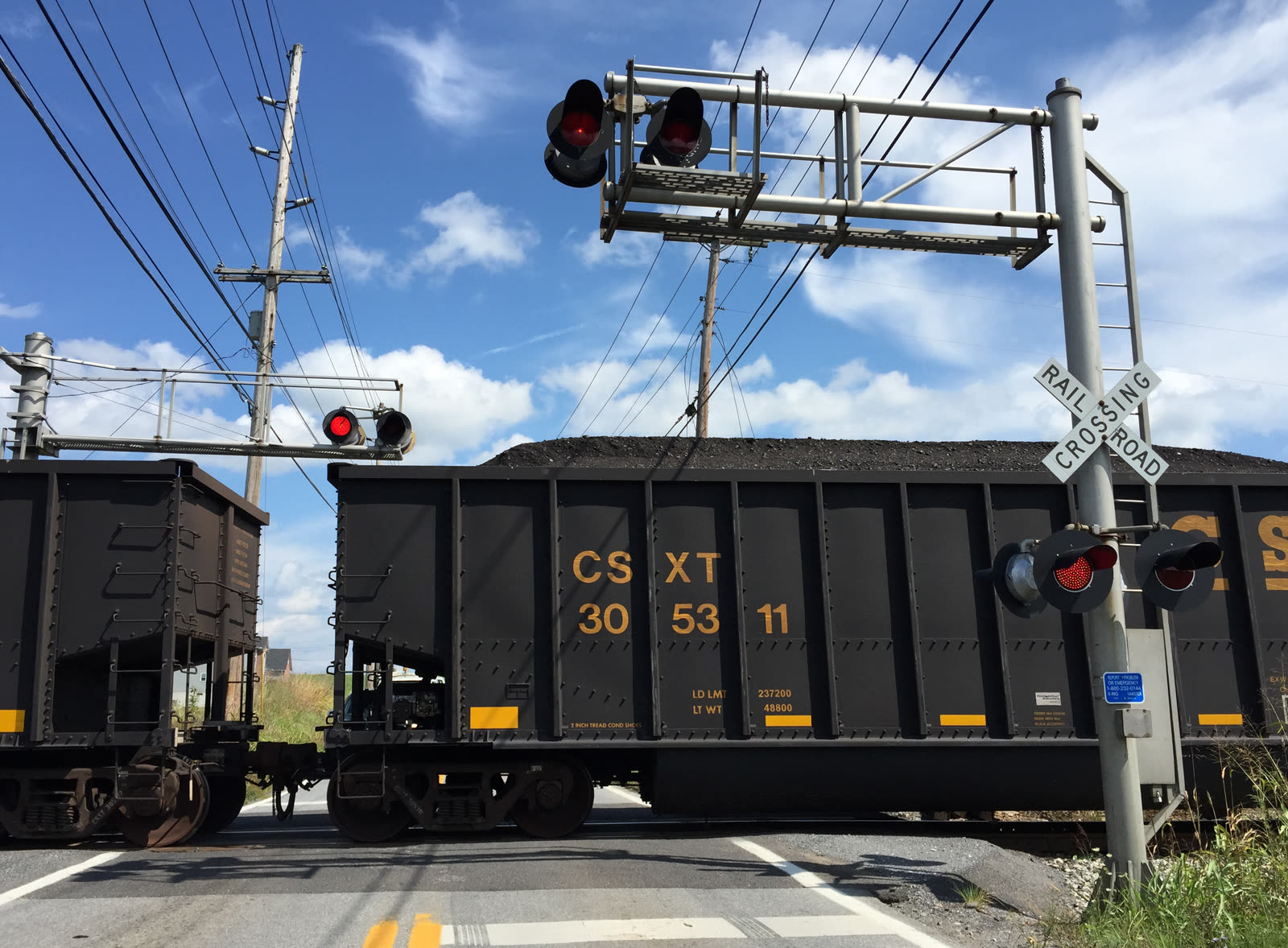
Image context: the cover photo shows a real highway-rail crossing in West Virginia because the policy file is about physical conflict points between trains and roads, not a symbolic transportation graphic.[6]
Facts on the file
| Item | What is live now | Confidence note |
|---|---|---|
| Announcement | DOT announced the funding availability on April 24, 2026 and framed it as a railroad-crossing safety investment.[1] | High; stated directly in the department press release. |
| Current deadline | FRA's program page says applications for the FY 2025-2026 Crossing Safety / Railroad Crossing Elimination round are due by June 8, 2026, 11:59 PM ET.[2] | High; stated directly on the FRA program page. |
| Funding size | FRA lists $1,146,528,000 available for award under the FY 2025-2026 NOFO.[2] | High; stated directly on the FRA program page. |
| Eligible project types | Eligible uses include grade separation or closure, track relocation, protective devices and signs, related safety measures, technology solutions, plus planning, environmental review, and design.[2] | High; stated directly on the FRA program page. |
| Baseline risk | FRA says grade-crossing accidents are the second leading cause of rail-related deaths in the United States, with more than 2,000 incidents and 200 fatalities each year.[3] | High; stated directly on FRA's safety page. |
| Previous award cycle | In January 2025, FRA announced more than $1.1 billion in awards to 123 projects in 41 states, improving or studying more than 1,000 crossings; FRA also said it had received more than 26,000 blocked-crossing complaints over the prior twelve months.[4] | High; stated directly in the prior award announcement. |
Why this is an application race, not a completed safety project
The April 24 headline sounds immediate because DOT used the language of investment.[1] The operative document, though, is the open FRA program page: money is available, eligible applicants are defined, project types are broad, and the deadline is fixed.[2] That is a meaningful development, but it is earlier in the sequence than an award list and much earlier than an overpass opening to traffic.
That sequencing matters most for the biggest-ticket fixes. A grade separation can eliminate the collision point entirely, but it also requires a locality to have a credible project concept, a governing applicant, a plan for review and design, and enough administrative readiness to compete before the June deadline.[2][4] Smaller signal and warning-device upgrades can move faster, yet they still have to be nominated, scored, and selected first.
The emergency-access emphasis is the clearest shift to watch. DOT says the revamped criteria will prioritize safety, improve access to emergency services, and improve the mobility of people and goods.[1] That means the strongest applications are likely to be the ones that can show more than generic danger. A blocked crossing that repeatedly slows ambulances, isolates neighborhoods, or traps traffic near schools has a cleaner federal story than a vague argument that rail congestion is annoying.[1][3][4]
What changed from the last round
The easiest way to read the new announcement correctly is to compare it with the last completed cycle. The January 10, 2025 release came with named recipients, project descriptions, and dollar amounts: 123 projects, 41 states, and more than 1,000 crossings improved or studied.[4] That was an award file.
The April 24, 2026 file is different. DOT is telling applicants that a new funding lane is open and that the criteria now foreground safety, emergency access, and mobility.[1][2] What is missing, because it has not happened yet, is the selection list. So the real near-term question is not which crossings have been fixed. It is which jurisdictions can convert a dangerous or frequently blocked crossing into a competitive federal application before June 8.[2]
That is why the April announcement should not be mistaken for a same-summer safety reset. FRA's own safety materials still describe grade crossings as a persistent national risk area, and they note that blocked crossings remain a live problem even though there is no federal law directly regulating them.[3] The federal grant can fund solutions. It does not, by itself, remove the crossing gate from any one street.
What to watch before June 8
First, watch whether applicants lean toward large separations or toward smaller planning and device packages. FRA's eligible-use list is wide enough to support both, which means the eventual portfolio will say a lot about local readiness and match capacity.[2]
Second, watch whether the strongest public arguments revolve around emergency access. DOT has already pointed applicants in that direction, and the previous award round repeatedly tied projects to blocked-crossing delays and safety exposure.[1][4]
Third, watch how heavily the cycle fills. The railroad-crossing problem is not hypothetical: FRA says the country still sees more than 2,000 incidents and 200 fatalities a year at grade crossings, and the agency maintains a dedicated safety-data and inventory system because the problem is recurring rather than episodic.[3][5] If the new round draws deep demand again, the announcement will look less like a communications flourish and more like another bottleneck test in local project development.
The narrow takeaway is the useful one. DOT has opened a real $1.146 billion application window for crossing-safety work. As of April 25, though, the live federal action is still competitive project intake through June 8, not a completed buildout of safer crossings on the ground.[1][2]
Sources
- U.S. Department of Transportation, "Trump's Transportation Secretary Sean P. Duffy to Invest $1.1 Billion into Safety Infrastructure at Railroad Crossings to Protect American Families" (April 24, 2026).
- Federal Railroad Administration, "Crossing Safety Program / Railroad Crossing Elimination (RCE) Grant Program" (page updated April 24, 2026).
- Federal Railroad Administration, "Highway-Rail Grade Crossing Safety" (safety baseline, blocked-crossing note, and national incident context).
- U.S. Department of Transportation, "Biden-Harris Administration Announces Over $1.1 Billion in New Rail Grants to Reduce Train-Vehicle Collisions and Blocked Railroad Crossings" (January 10, 2025).
- Federal Railroad Administration, "FRA Safety Data" (highway-rail crossing data, inventory, and prediction tools).
- Wikimedia Commons, "2016-08-25 14 58 14 A freight train using a railroad crossing along eastbound West Virginia State Route 901 ..." (cover image source).