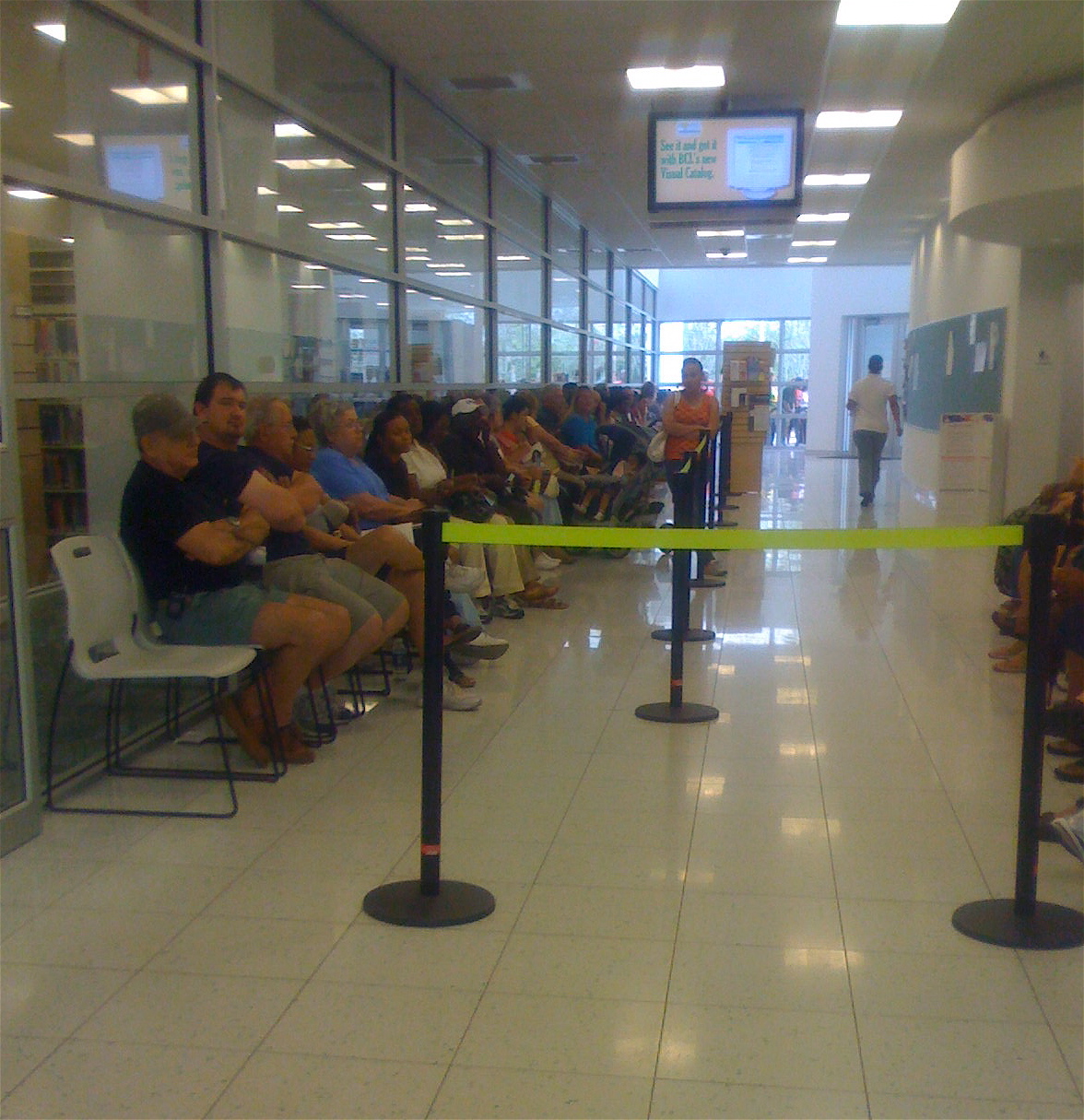
As of 2026-08-16 12:36 UTC (8:36 a.m. EDT), Florida’s August 18 primary has entered its county-by-county last mile. The statewide mandatory early-voting period ended Saturday, but state law lets counties add Sunday hours. Miami-Dade scheduled voting from 8 a.m. to 4 p.m. today, Broward from 10 a.m. to 7 p.m., and Duval from 10 a.m. to 6 p.m.; many other counties ended early voting on August 15.[2][6][7][8]
The larger deadline now sits with mail ballots. Florida’s official activity portal, in a snapshot compiled at 8:05 a.m. EDT, listed 1,076,932 voted vote-by-mail ballots, 729,550 early votes, and 853,693 vote-by-mail ballots provided but not yet returned.[1] The first two categories sum to 1,806,482 recorded pre-Election Day voting records. The third is an administrative status, not a forecast that 853,693 more people will vote: some recipients will choose not to return a ballot, some may switch to in-person voting, and recent returns may not yet appear in a county file.
For a domestic voter holding a completed ballot, the legal rule is simpler than the reporting caveat: the county Supervisor of Elections must receive it by 7 p.m. local time on Tuesday. A Tuesday postmark does not make a late-arriving primary ballot timely.[3]
Five signals at the cutoff
| Signal | Verified position | Boundary |
|---|---|---|
| Pre-Election Day activity | The state portal listed 1,076,932 voted mail ballots and 729,550 early votes at its 8:05 a.m. EDT compilation.[1] | The files are cumulative county reports, generally reflecting prior-day activity. They are neither a live statewide counter nor an election result. |
| Mail ballots still open | The portal listed 853,693 ballots as provided but not yet returned.[1] | “Not yet returned” does not identify whether a ballot is at home, in transit, recently delivered but not yet reflected, spoiled, or simply unused. |
| Sunday voting | Florida’s mandatory window was August 8–15; optional days depend on the county.[2] Miami-Dade, Broward and Duval all scheduled August 16 voting, with different hours.[6][7][8] | Those three counties are examples, not a statewide schedule. A county Supervisor’s current page controls the local answer. |
| Election Day | Assigned precincts are open from 7 a.m. to 7 p.m. local time on August 18. A voter already in line at 7 p.m. may still vote.[5] | Florida spans Eastern and Central time. “7 p.m.” means local time in the voter’s county. |
| Primary access | Florida is a closed-primary state for party nominations, while nonpartisan contests and certain universal primaries can remain open to all registered voters.[4] | Party affiliation does not reveal the full contents of an individual ballot. County sample-ballot and voter-lookup tools do. |
The confidence level is high on the statutory dates, receipt rule and published county schedules. It is moderate on any statewide activity total treated as current to the minute, because counties report on a daily cycle and the portal says early-voting schedules vary.[1] No source cited here establishes final turnout, a candidate’s lead or an election outcome.
Sunday is an option, not one statewide shift
Florida’s state calendar labels August 8–15 as the mandatory early-voting period and tells voters to contact their county about optional days.[2] That sentence has practical consequences today.
Miami-Dade opened 23 listed early-voting sites from 8 a.m. to 4 p.m. on Sunday.[6] Broward’s published flyer lists 21 early-voting sites from 10 a.m. to 7 p.m., with secure ballot intake stations at those sites during voting hours.[7] Duval lists Sunday hours from 10 a.m. to 6 p.m. and says registered county voters may use any of its open early-voting sites.[8]
These schedules should not be blended into “Florida polls are open Sunday.” In a county whose optional period ended earlier, the next in-person opportunity may be the voter’s assigned Election Day precinct. In a county still voting today, early voting may allow any open site in that county, while Election Day returns the voter to one assigned location.[5][8]
The safest lookup sequence is therefore county, method, place, hours. A statewide date answers only the first question: when the election occurs.
The mail-ballot decision has changed
The deadline to ask for a primary ballot to be mailed was August 6.[2] At this stage, ordinary outbound mail is no longer the useful frame; delivery to the election office is.
Florida says a voted mail ballot may be delivered in person to a Supervisor of Elections office. Secure ballot intake stations at supervisors’ main and branch offices may accept ballots until 7 p.m. local time on Election Day, while boxes at early-voting sites operate only at the county’s designated places, dates and hours.[3] That distinction matters after a local early-voting site closes: a library that accepted ballots on Sunday is not automatically an Election Day drop point.
A voter who requested a mail ballot may instead vote in person. The state advises bringing the requested ballot—marked or unmarked—to the polling place, surrendering it and voting a regular ballot. If the voter arrives without it, election workers check whether the ballot has already been received. A regular ballot is available if it has not; if receipt cannot be determined, the voter may cast a provisional ballot.[3]
That is a switch of voting method, not a way to deposit a completed mail-ballot envelope at any precinct. The two routes have different destinations:
- Return the completed mail ballot: use an officially listed Supervisor of Elections office or secure intake station and meet its posted hours.[3]
- Vote in person on Tuesday: go to the assigned precinct, surrender the requested mail ballot if available, and follow the in-person check-in process.[3][5]
Voters should track a returned ballot through their county’s official lookup rather than infer receipt from a mailbox collection time.[3] If the certificate signature is missing or does not match the record, Florida allows a cure affidavit with identification until 5 p.m. local time on the second day after the election—Thursday, August 20 for this primary.[3]
Closed primary does not mean an empty ballot
Only voters registered with a party may normally choose that party’s nominees in Florida’s primary. The registration and party-change deadline for this election was July 20.[2][4] But voters without a party affiliation can still have choices: judicial or school-board races, special-district contests, local questions, and a primary in which every candidate for an office has the same affiliation and the winner faces no general-election opposition can be open beyond that party.[4]
The useful question is not “Can an independent vote in the primary?” as a statewide yes-or-no. It is “What appears on this voter’s county-issued ballot?” An official sample-ballot lookup resolves that before a trip to the polls.
In-person voters must use their assigned precinct on Election Day and bring a current, valid photo identification with a signature. The state lists several acceptable forms. A voter without qualifying identification can still cast a provisional ballot; lack of an ID at check-in is not, by itself, an instruction to leave.[5]
Three horizons, three conditional paths
Next 24 hours — local schedules dominate. Sunday voting continues only where a county added it. A voter with an unreturned mail ballot should check its status, confirm an official hand-delivery site and hours, or prepare for in-person voting. The trigger for changing plans is simple: if the county tracker does not show the ballot received, a postmark is not proof that it will meet Tuesday’s deadline.[3]
Through Tuesday — two 7 p.m. rules converge. Polls close and mail ballots are due at 7 p.m. local time. A voter in the polling-place line by then may vote, but a ballot envelope still in transit has no comparable line protection.[3][5]
Over the following 7 to 30 days — status becomes canvass. Signature cures and provisional-ballot evidence come first; county and state reporting then replace the activity snapshot with unofficial and ultimately certified results. The 1.81 million figure in this brief should remain labeled as pre-Election Day activity, not silently reused as final turnout.[1][3][5]
These are operational branches, not probability forecasts:
Base path: county Sunday voting ends as scheduled, Election Day absorbs most remaining in-person demand, and the mail-ballot portal continues to move ballots from “provided” to “voted.” Trigger: county notices remain stable and trackers update without a broad service interruption.
Better path: voters use tracking and official hand-delivery locations early enough to correct a destination or signature problem. Trigger: the “not yet returned” total declines while cure notices are resolved before Thursday’s deadline.[1][3]
Worse path: voters rely on a postmark, assume every early-voting site remains a Tuesday drop point, or arrive at the wrong Election Day precinct. Trigger: county advisories report misdirected voters or ballots, and the unreturned category stays elevated after ordinary return options narrow.
A final-route checklist
- Open the county Supervisor of Elections voter lookup; confirm registration, assigned Tuesday precinct, sample ballot and mail-ballot status.[2][3][5]
- If the county still offers Sunday voting, use its exact site list and hours—not another county’s schedule.[6][7][8]
- If returning a completed mail ballot, choose an officially listed Supervisor office or secure intake station and allow margin before its closing time.[3]
- If switching to Election Day voting, take the requested mail ballot to surrender if it is available and bring current photo-and-signature identification.[3][5]
- If a provisional ballot is required or a mail-ballot signature needs curing, get the county’s instructions immediately; the evidence deadline is 5 p.m. local time Thursday.[3][5]
- Treat election-night totals as preliminary and keep the state activity dashboard’s categories separate from results.[1]
Update or invalidate this brief if Florida issues an emergency order changing voting rules, a county replaces a listed site or schedule, or the state revises the receipt and cure guidance. The Sunday schedules expire when their posted hours end. The voter-action portion expires at 7 p.m. local time on August 18, except for cure and provisional-evidence steps that remain open through the applicable post-election deadline.
Sources
- Florida Division of Elections, “Vote-by-Mail Request & Early Voting Statistics” (2026 Primary snapshot compiled August 16, 2026, 8:05 a.m. EDT) — statewide voted-mail, early-vote and provided-not-returned totals, plus reporting-cycle caveats.
- Florida Division of Elections, “Election Dates” — August 18 primary date, July 20 registration and party-change cutoff, August 6 mailed-ballot request deadline, and mandatory versus optional early-voting dates.
- Florida Division of Elections, “Vote-by-Mail” (updated January 14, 2026) — receipt deadline, return locations, ballot tracking, method-switching, emergency pickup and signature-cure rules.
- Florida Division of Elections, “Closed Primary Election” — party-primary eligibility and the nonpartisan and universal-primary exceptions.
- Florida Division of Elections, “Election Day Voting” — assigned-precinct rule, 7 a.m.–7 p.m. local hours, line protection, identification and provisional-ballot process.
- Miami-Dade County Elections Department, “Early voting schedule is set for the 2026 August 18th Primary Election” — August 16 hours and the county’s listed early-voting sites.
- Broward County Supervisor of Elections, “Early Voting & Drop Boxes” — August 16 hours, location resources and intake-station guidance.
- Duval County Supervisor of Elections, “Early Voting” — August 16 hours, countywide early-voting-site access and mail-ballot return guidance.
- Wikimedia Commons, “Early voters seated inside the polling place waiting” — provenance, date, location and author record for the archival Plantation, Florida, cover photograph.