As of 2026-04-17 05:04 UTC, the European Commission's new Pan-European reporting 2026 call should be read less as a broad media-freedom slogan and more as a concrete operating clock for newsrooms. The headline number is EUR 16.6 million, but the practical file is narrower: applicants have until June 2, 2026, they can apply as single organisations or consortia, they must be established in EU member states, and the selected projects are supposed to start between October and December 2026.[1][2]
That distinction matters because EU media policy is easy to misread from the outside. A funding announcement can sound like a content initiative, or like Brussels trying to manufacture a preferred editorial line. The source record points in a different direction. The Commission is funding distribution capacity, language reach, and professional reporting volume through a standing Multimedia Actions programme, while also requiring that media beneficiaries operate in full editorial independence.[1][2][3] The closer analogy is not an editorial memo. It is a competitive financing window for cross-border newsroom infrastructure.
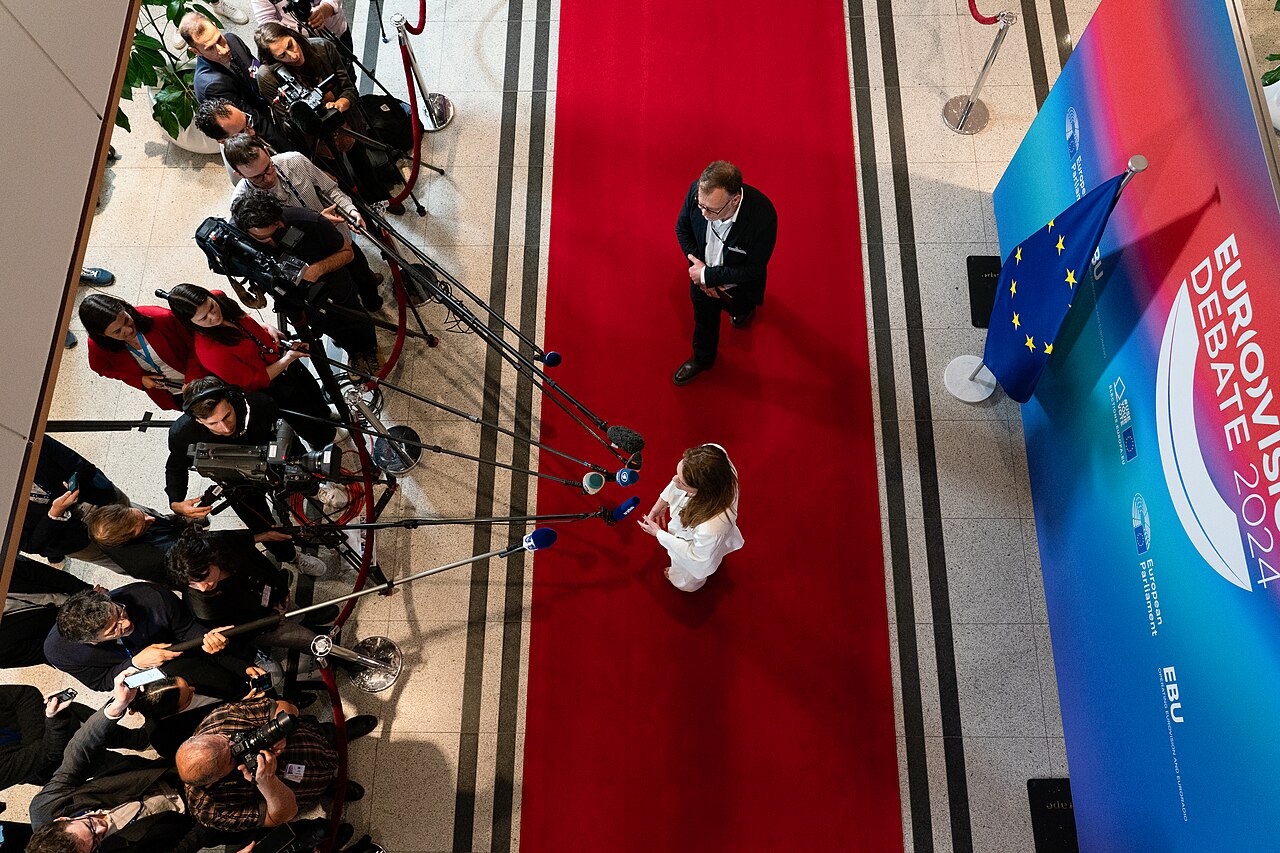
Image context: the cover image shows a European Parliament press conference with journalists, cameras, and microphones in the room. That is the right documentary frame for this article because the live question is not abstract "support for democracy" language by itself. It is whether EU-based media organisations can assemble enough reporting, production, and distribution capacity to cover EU affairs across languages and markets without collapsing editorial autonomy into the funding mechanism.[5][6]
Fact file
- Budget: EUR 16.6 million across three topics.[1][2]
- Deadline: the call closes on June 2, 2026.[1][2]
- Applicant shape: both single applicants and consortia are eligible.[1][2]
- Eligibility floor: organisations and activities must be established in EU member states.[1][2]
- Project timing: selected projects are expected to start between October and December 2026.[2]
- Programme context: this sits inside the Commission's 2026 Multimedia Actions work programme, which allocates EUR 21.1 million across two calls and frames the broader goal as improving access to trusted EU-affairs reporting and contributing to a stronger European public sphere.[3]
The money split is also more specific than the headline suggests. One EUR 8.5 million lot is for increasing the coverage and availability of audiovisual news on EU affairs. A EUR 3.1 million lot is for developing international audiovisual news offers in specific EU countries, with an explicit pluralism and market-diversity rationale. The final EUR 5 million lot is for reporting that improves access to trustworthy, professionally produced online information.[1][2]
Why this is a funding clock, not an editorial instruction
The clearest signal sits in the mismatch between what the Commission is financing and what it says it will control. The call is openly designed to increase the volume, quality, and impact of independent reporting on EU affairs.[3] That is a production-and-reach objective. At the same time, the call text says media beneficiaries must operate in full editorial independence.[1][2] Those two points together define the actual boundary: Brussels is trying to shape the reporting ecosystem's capacity, not dictate the line that funded outlets must take.
That boundary also fits the wider legal setting. The European Media Freedom Act entered into force on May 7, 2024, with most provisions applying from August 8, 2025.[5] The Commission describes the act as a set of rules protecting media pluralism and independence, and it says editorial decisions are better shielded from undue interference. For public-service media in particular, the act stresses the value of adequate, sustainable, and predictable funding.[5] Read in that context, the reporting call is consistent with a broader EU attempt to stabilise media conditions without formally collapsing reporting into state direction.
That does not mean the politics disappear. The Commission's own 2026 financing decision says Multimedia Actions are meant to increase the visibility of the Union institutions' work and report on decision-making, while helping build a better European public sphere.[3] That creates an obvious tension: a public body is underwriting coverage of public institutions. The practical safeguard, according to the source documents, is the combination of open competition, topic-specific grants, and the explicit editorial-independence condition.[1][2][3] The useful question is therefore not whether the call is political in a broad sense. It plainly sits inside EU democracy and information policy. The sharper question is whether the grant design leaves enough distance for real journalism. On paper, that distance is exactly what the Commission says it is buying.
What changes next
For editors and producers, the next live step is simple: consortium design and application quality now matter more than commentary about the press release. The June 2 deadline creates a short runway for outlets that want to combine multilingual production, cross-border distribution, and enough legal and financial structure to satisfy an EU call.[1][2]
For readers and policy watchers, the real evaluation point comes later. The strongest signal will not be the announcement itself. It will be the winning project mix. If the funded slate broadens language reach, supports weaker national markets, and still produces recognisably independent reporting, the Commission will have strengthened reporting capacity without blurring the editorial line it says it wants to preserve. If the results cluster too heavily around incumbents or feel administratively safe, the criticism will shift from censorship fears to pluralism and market-entry questions. That is the file to watch from June through the award phase.
Sources
- European Commission, "Commission invests €16 million in pan-European reporting" (April 16, 2026).
- European Commission, "Pan-European reporting 2026" call page (accessed April 17, 2026).
- European Commission, "2026 Financing Decision on Multimedia Actions" (March 23, 2026).
- European Commission, "Multimedia actions - support for news on EU affairs" (policy page, accessed April 17, 2026).
- European Commission, "European Media Freedom Act" (accessed April 17, 2026).
- Wikimedia Commons, "File: Press conference (2024).jpg" (European Parliament press-conference photograph).