As of 2026-05-16 02:30 UTC, the sharpest reading of WHO's World Health Statistics 2026 release is not that global health has stopped improving. The report's own headline gains are real: new HIV infections are down sharply since 2010, tobacco and alcohol use have declined, neglected tropical disease intervention need has fallen, and hundreds of millions of people have gained access to safer water, sanitation, hygiene, and cleaner cooking since 2015.[1][2]
The warning is more specific, and more useful: the current pace does not close the 2030 gap. WHO says the world is off track for the health-related Sustainable Development Goals, with some indicators slowing, stalling, or reversing even after a decade of visible progress.[1][2] That makes the release a progress-quality story, not a despair story. The question now is whether governments can protect gains that were hard to win while repairing the systems that are failing to move fast enough.
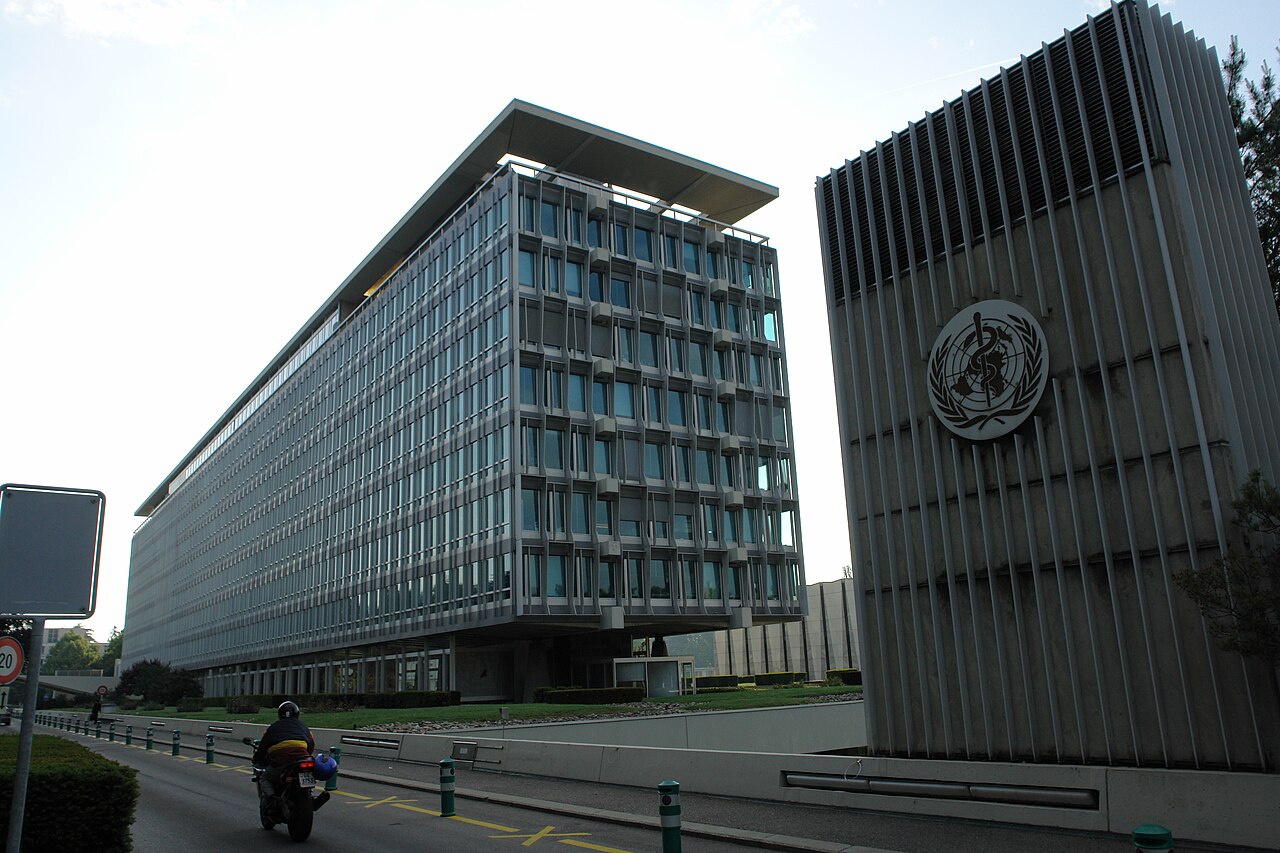
Image context: the cover uses a real 2007 photograph of the World Health Organization headquarters in Geneva by Yann Forget.[7] The image is deliberately institutional rather than clinical. This story is about how WHO's annual statistical machinery converts scattered country data into a public accountability signal for governments, funders, health systems, and the 2030 agenda.
Fact file
| Item | Verified now | Confidence note |
|---|---|---|
| Release | WHO published the World Health Statistics 2026 report and accompanying news release on May 13, 2026.[1][2] | High; direct WHO pages. |
| Core message | WHO says health gains are meaningful but fragile, uneven, and insufficient for the health-related SDGs by 2030.[1][2] | High; direct WHO framing. |
| Positive anchors | New HIV infections fell 40% between 2010 and 2024; neglected tropical disease intervention need fell 36% over the same period.[1] | High; direct WHO release. |
| Reversal pressure | Malaria incidence increased 8.5% since 2015; universal health coverage progress slowed, with the service coverage index rising only from 68 to 71 between 2015 and 2023.[1] | High; direct WHO release. |
| Financial burden | WHO says one quarter of the global population faced financial hardship from health costs, and 1.6 billion people were living in or pushed into poverty because of out-of-pocket health spending in 2022.[1] | High; consistent with WHO/World Bank UHC monitoring.[4][6] |
| Data weakness | As of the end of 2025, only 18% of countries were reporting mortality data to WHO within one year; nearly one third had never reported cause-of-death data.[1] | High; direct WHO release. |
What changed this week
The immediate news is the annual statistical readout. WHO's report consolidates the latest health-related Sustainable Development Goal indicators and explicitly says the world is falling short on every health-related SDG target.[1][2] That is a broader claim than a disease-specific alert. It pulls together infectious disease, maternal and child survival, universal health coverage, financial protection, noncommunicable disease mortality, environmental risks, vaccination gaps, and the quality of mortality data.
The timing matters because the report lands just before the 79th World Health Assembly, when member states are setting priorities under financial and political strain.[3] Scientific American's coverage notes that the 2026 report largely reflects data through 2024, meaning the effect of more recent disruptions to foreign aid and global-health financing is not fully captured yet.[3] That boundary is important: the warning is already serious before the newest funding shocks show up clearly in the indicator series.
This is why the release should not be read as a generic "bad news" package. WHO is identifying a measurement-and-velocity problem. Some programs are still delivering measurable gains, but the gap between incremental improvement and target achievement is widening in the places where systems are weaker, risks are compounding, or coverage is uneven.[1][2]
The progress is real
The report would be easier to dismiss if it contained only decline. It does not. HIV prevention and treatment continue to show large long-run gains. Neglected tropical disease programs are reaching fewer people because intervention need has fallen. Access to water, sanitation, hygiene, and clean cooking has expanded at enormous absolute scale.[1]
Those gains matter because they prove the health-related SDG agenda is not imaginary. They also make the reversal warning sharper. When a global dashboard contains both real improvement and a missed-target trajectory, the policy question changes. The issue is not whether public-health investment works. The issue is whether current systems can keep delivering under demographic pressure, climate and environmental risk, vaccine gaps, conflict, fiscal stress, and weak primary care.
The UHC numbers show the tension. WHO and the World Bank reported in December 2025 that most countries had made some progress toward universal health coverage, but major challenges remained: billions still lacked essential service coverage and billions faced financial hardship from care costs.[4][6] WHO's 2026 statistical release carries that same signal forward. Coverage improved, but not enough; financial protection improved in some readings, but the burden remains massive; the service index moved, but too slowly.[1][4][6]
The weak points are not random
Three weak points define the release. First is disease control where progress has moved backward or become too slow. WHO highlights malaria incidence rising since 2015, childhood vaccination coverage below target, and premature noncommunicable-disease mortality progress slowing significantly after 2015.[1] These are not the same problem clinically, but they share an operational pattern: prevention systems have to stay boringly reliable for years, and the penalty for drift is visible only after immunity, treatment, or risk-control gaps accumulate.
Second is financial protection. A health system can expand services and still fail households if payment happens at the point of illness. The 2025 WHO-World Bank UHC monitoring report put the issue plainly: out-of-pocket costs continued to impose financial hardship on a large share of the world's population.[4][6] WHO's 2026 release keeps that point at the center by tying health progress to the ability to receive care without being pushed into poverty.[1]
Third is data quality. WHO says only a small minority of countries report timely mortality data, nearly one third have never reported cause-of-death data, and only about one fifth of the estimated 61 million deaths in 2023 had meaningful ICD-coded cause information.[1] That is not a bureaucratic footnote. If deaths are not counted well, countries cannot reliably see which interventions are working, which risks are moving fastest, or where financing should go next.
What remains uncertain
The biggest uncertainty is not whether WHO's warning is directionally credible. The source base is strong: the annual report, the WHO release, the UN's SDG Goal 3 monitoring, and the WHO-World Bank UHC work all point to a similar conclusion.[1][2][4][5][6] The uncertainty is how quickly the newest funding and political changes will show up in measured outcomes.
There is also a lag problem. Many indicators in a 2026 statistical report necessarily refer to earlier years. WHO can tell governments that the world is already off pace, but it cannot yet fully quantify every consequence of current budget cuts, disrupted vaccination campaigns, emergency response pressure, or lost surveillance capacity.[1][3] That means the dashboard may be conservative in one uncomfortable sense: some of the damage now being created will only become visible later.
The report's own data warning should therefore change how readers interpret the numbers. Weak measurement does not make the problem smaller. It makes the problem harder to target. A country with incomplete cause-of-death data may appear statistically quiet while preventable risks are shifting below the surface.[1]
Decision impact
- Next 24 hours: health ministries, funders, and global-health teams should treat the release as a dashboard triage exercise: identify which indicators are improving too slowly, which are reversing, and which cannot be trusted because reporting is too weak.[1][2]
- Next 7 days: World Health Assembly watchers should separate speeches about recommitment from concrete moves on primary care, immunization, malaria control, financial protection, and mortality-data systems.[1][3][5]
- Next 30 days: country teams should look for budget and implementation plans that protect proven gains while narrowing the worst measurement gaps. A pledge to "get back on track" is not meaningful unless it names the system bottleneck and the financing path.[1][4][6]
Base reading
The base case is that WHO's 2026 warning becomes a pressure document for the next phase of SDG health work. It does not say the last decade failed. It says the last decade's gains are not self-protecting. HIV, neglected tropical diseases, water access, and other improvements show what sustained systems can deliver.[1] Malaria, maternal mortality, financial hardship, vaccination gaps, noncommunicable disease trends, and mortality-data weakness show where the same systems are underpowered.[1][4][5][6]
The upside case is a practical one: governments use the report to fund primary health care, prevention, immunization recovery, financial protection, and civil-registration systems with the same seriousness they bring to emergency response. The downside case is more familiar: the report is cited for a week, then the data systems and frontline services that would change the curve remain underfunded.
The falsifier for this analysis would be a near-term policy response that turns the 2026 report into measurable acceleration: faster mortality reporting, stronger vaccination catch-up, malaria control gains, better financial protection, and clear financing commitments before the 2030 window narrows further. Without that, the report's central message holds: the world is still moving, but not fast enough, and in some places not in the right direction.
Sources
- World Health Organization, "Global health gains face threat of reversal" (May 13, 2026).
- World Health Organization, World health statistics 2026: monitoring health for the SDGs, sustainable development goals (publication page, May 13, 2026).
- Claire Cameron, "The world is falling short of-and even reversing-its health targets, WHO warns," Scientific American (May 13, 2026).
- World Health Organization, "Most countries make progress towards universal health coverage, but major challenges remain, WHO-World Bank report finds" (Dec. 6, 2025).
- United Nations Statistics Division, "Goal 3: Ensure healthy lives and promote well-being for all at all ages" (2025 SDG reporting page).
- World Bank, "Tracking Universal Health Coverage (UHC): 2025 Global Monitoring Report" (2025 report page).
- Wikimedia Commons, "File:WHO headquarters.jpg" - source page for the cover photograph by Yann Forget.