As of 2026-05-16 05:32 UTC, the useful way to read the May 22 EU-Mexico summit is not as a surprise trade breakthrough. The breakthrough happened earlier: negotiations were politically concluded, the text was transmitted, and on May 11 the Council of the EU authorised signature of both the Modernised Global Agreement and the interim Trade Agreement.[2][4] The news this week is procedural, but not minor. The May 15 travel announcement puts the ceremony, press conference, and political framing on the calendar, with António Costa and Ursula von der Leyen due to meet Claudia Sheinbaum in Mexico City.[1][3]
That distinction matters because modern trade politics often hides in the gap between a headline agreement and a usable legal instrument. The summit can give the EU and Mexico a strong photograph and a clear strategic message: diversify partnerships, update a framework that dates to 2000, and signal support for open trade while global politics keeps fragmenting.[1][2] But the practical question is what starts after signature. The Council release is explicit that European Parliament consent is still needed before formal conclusion, and that full entry into force of the broader Modernised Global Agreement requires ratification by EU member states.[2]
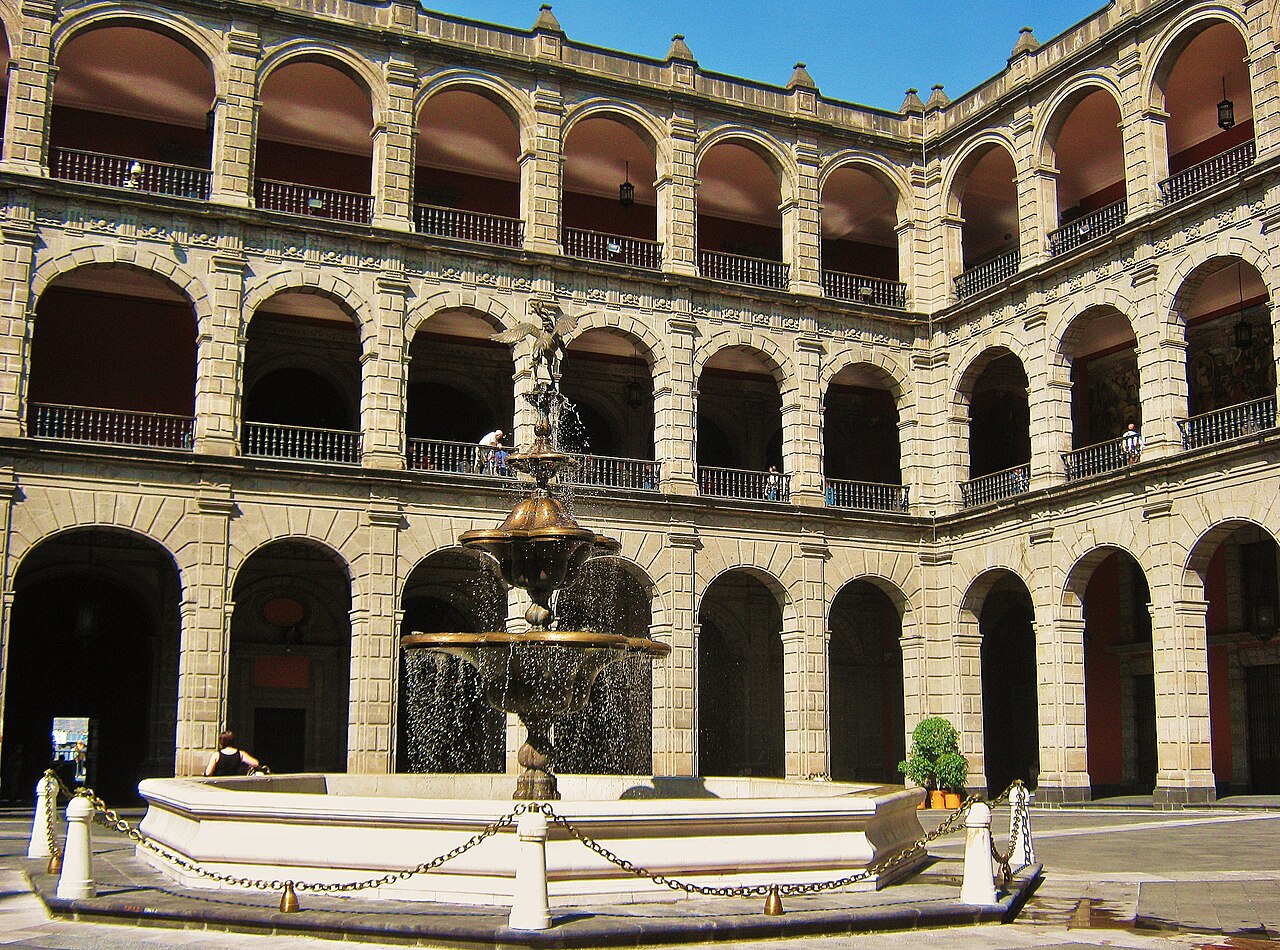
Image context: the lead image is a documentary photo of Mexico City's National Palace courtyard, not a stylised map, flag montage, or economic infographic.[7] That is the right visual register because this article is about institutional sequence: a scheduled summit, a signing ceremony, and the long legal corridor that follows.
Facts on the File
| Item | What is known | Confidence note |
|---|---|---|
| Immediate trigger | On May 15, 2026, the European Council announced Costa's travel to Guatemala and Mexico, including the May 22 EU-Mexico summit in Mexico City.[1] | High; direct institutional notice. |
| Summit schedule | The summit is scheduled to start at 10:30 Mexico City time on May 22, followed by a signature ceremony and press conference around 13:50 local time.[1] | High; official programme, though timing can shift on the day. |
| Legal package | The summit is expected to feature signature of the EU-Mexico Modernised Global Agreement and the interim Trade Agreement.[1][3] | High for expectation; final signature remains an event to verify after May 22. |
| Council clearance | On May 11, the Council adopted decisions authorising signature of both agreements.[2] | High; completed Council action. |
| Economic baseline | The Council's summit page says 2025 EU-Mexico trade was over EUR86 billion, with roughly EUR53 billion in EU exports and over EUR34 billion in EU imports.[3] | High for the Council's published figures; trade statistics can later be revised. |
| Remaining gates | European Parliament consent is still needed, and full entry into force of the broader agreement requires member-state ratification.[2][4] | High for the EU procedure; timing is uncertain. |
What Changed This Week
The May 15 announcement moved the agreement from "approved for signature" into a fixed diplomatic week. Costa is due in Guatemala on May 20, in Mexico's Senate on May 21, and at the summit on May 22.[1] That sequence is politically deliberate. The EU is presenting the Mexico deal not only as a tariff arrangement, but as part of a wider Latin America posture: democracy support in Guatemala, strategic partnership with Mexico, and a visible answer to what the Council calls a more volatile international environment.[1]
The agreement itself is broad. The Commission's trade page says the existing relationship is governed by the trade pillar of the 2000 Global Agreement, while the modernised version would replace it after ratification.[4] The legal architecture is split into two instruments: a Modernised Global Agreement covering political, cooperation, trade, and investment elements, and an interim Trade Agreement covering trade parts that fall under exclusive EU competence.[4] That split is the mechanism to watch. It is designed to let trade provisions move faster than the full partnership agreement, but it also means readers should not treat "signed" and "fully in force" as the same status.
The economic claims are substantial but bounded. The Council says the package benefits more than 45,000 EU companies exporting to Mexico, most of them small and medium-sized enterprises.[2] The summit page frames the trade improvement around removing Mexican tariffs on almost all existing EU imports and reducing technical barriers.[3] The European External Action Service's summary of the political conclusion adds concrete sectoral hooks: services, digital trade, public procurement, intellectual property, investment, critical raw materials, and agri-food access.[5] Mexico's own embassy material, meanwhile, presents the agreement as a comprehensive legal framework for political, cooperation, economic, and commercial relations with the EU's 27 member states.[6]
Why It Matters Now
The first impact is strategic. Mexico already sits in North America's production system, but the EU is trying to keep a deeper lane into the country that is not simply a derivative of U.S.-Mexico trade politics. The Council's framing is openly about diversification.[2] That does not mean the EU can displace the United States in Mexico's economy. It means Brussels wants a more durable legal and political channel into a country it describes as one of its two strategic partners in Latin America and the Caribbean.[1]
The second impact is procedural. The headline risk after May 22 is over-reading the ceremony. Signature will matter because it shows both sides are prepared to move. It will not, by itself, settle European Parliament consent, national ratification, or the exact calendar for provisional trade application.[2][4] For companies, investors, and policy watchers, the relevant question is not "is there a deal?" but "which parts can be relied on, from which date, and under what ratification condition?"
The third impact is domestic on both sides. For EU exporters, the agreement is being sold through tariff removal, public procurement access, services, digital trade, geographical indications, and simpler procedures.[3][5] For Mexico, the embassy's official informational page stresses diversification, investment, supply chains, energy, technology, and access to a market of roughly 450 million people.[6] Those are compatible claims, but they are not identical constituencies. The political work after signature will be to keep both stories coherent.
The 24-Hour, 7-Day, and 30-Day Impact
In the next 24 hours, the story is preparation rather than implementation. The key updates would be changes to the summit programme, publication of additional legal or briefing documents, or a Mexican government confirmation of the ceremony's format.
Over the next 7 days, the verification point is simple: did the May 22 signature occur, and did the leaders describe the interim trade instrument as ready for faster use? If the ceremony happens as scheduled, attention should move immediately from diplomatic language to the European Parliament and Council timetable.[1][2][4]
Over the next 30 days, the signal to watch is whether the EU and Mexico publish a more precise implementation calendar. A clean post-summit package would distinguish the interim Trade Agreement's near-term route from the broader Modernised Global Agreement's slower full-ratification path.[4] A vague package would still be politically useful, but less operationally useful for firms trying to plan around tariff, procurement, or services provisions.
Scenarios
Base case: the summit signs both instruments, leaders frame the package as a strategic upgrade, and the next phase moves into Parliament consent and ratification. Trade provisions may move faster than the full agreement, but implementation details remain staged.[1][2][4]
Upside case: the post-summit documents give a crisp timetable for provisional or interim trade use, making the package easier for exporters, procurement teams, and investors to translate into planning.[3][5]
Downside case: the ceremony happens, but political opposition or procedural congestion slows the consent-and-ratification path. In that case, the agreement remains a strong diplomatic signal while the economic impact stays partly deferred.[2][4]
Action Checklist
For readers tracking the summit, separate three statuses: authorised for signature, signed, and in force. The EU-Mexico package has cleared the first gate, is scheduled for the second, and still has legal steps before the third.[1][2][4]
For companies, watch the interim Trade Agreement first. It is the instrument meant to cover the trade elements within exclusive EU competence, so it is likely to matter before the wider political and cooperation agreement is fully ratified.[4]
For analysts, the falsifier is clear. If the May 22 signature does not happen, or if post-summit documents retreat from the two-instrument sequence, the "signature-to-ratification clock" reading weakens. If signature proceeds and the split legal path remains intact, the real story is the mechanics after the photo.[1][2][4]
Sources
- European Council, "President Costa to travel to Guatemala and Mexico" (May 15, 2026).
- Council of the EU, "EU-Mexico relations: Council endorses agreements to boost cooperation and trade" (May 11, 2026).
- European Council, "EU-Mexico summit, 22 May 2026" (meeting page, last reviewed May 13, 2026).
- European Commission, "EU-Mexico agreement: Text of the agreement" (legal instruments and publication status).
- European External Action Service, "Negotiators conclude on modernised Global Agreement with Mexico" (January 17, 2025).
- Embassy of Mexico in Belgium, "Acuerdo Global Modernizado" (official Mexican overview of the agreement).
- Wikimedia Commons, "File:Palacio Nacional Main Courtyard (6383854087).jpg" - source page for the cover photograph.