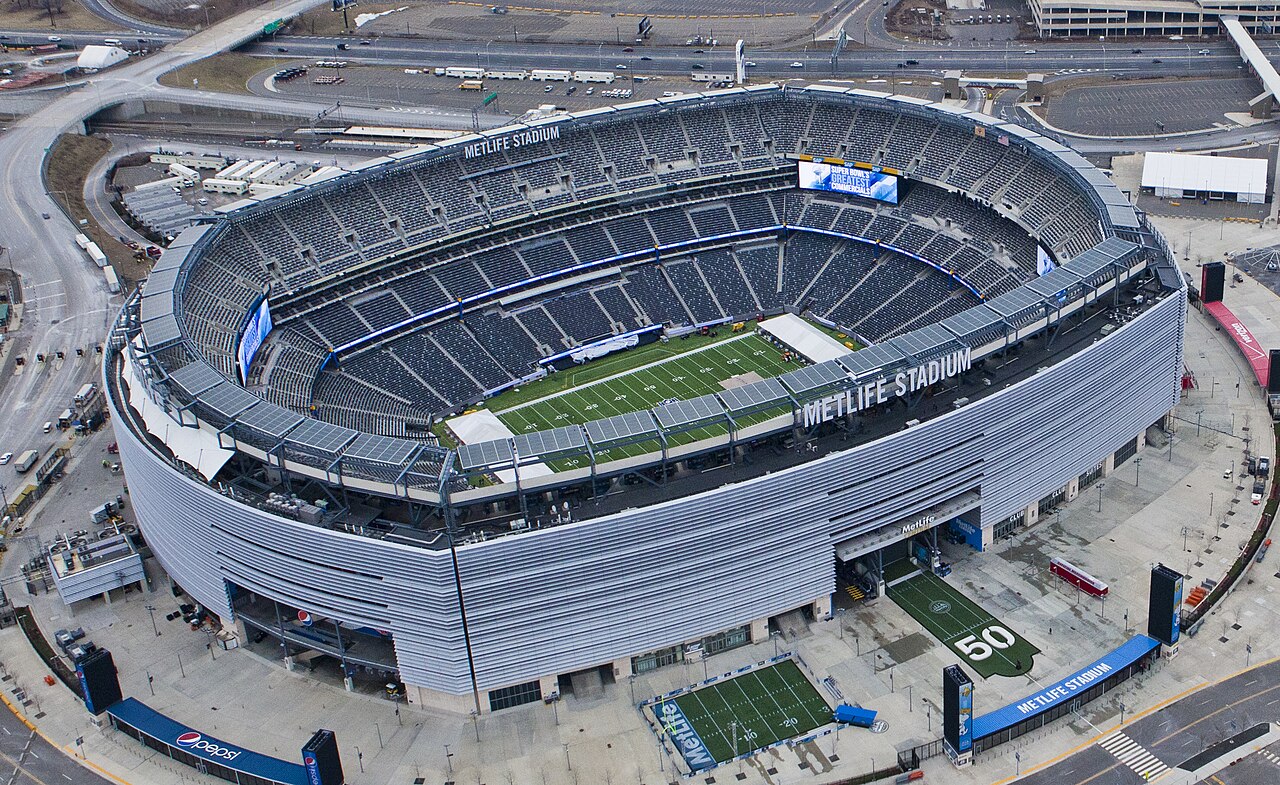
As of 2026-05-14 19:01 UTC, FIFA's first World Cup final halftime show has become a concrete booking, not just an event-industry idea. AP reported Thursday that Madonna, Shakira, and BTS will headline a Super Bowl-style concert during the July 19, 2026 final at MetLife Stadium in East Rutherford, New Jersey, with Coldplay's Chris Martin curating the show and Global Citizen tied to the education-fund campaign around it.[1]
The news matters because it changes the shape of the most conservative broadcast window in world sport: the pause between two halves of a World Cup final. FIFA and Global Citizen had already said they wanted a first-ever World Cup final halftime show, plus a Times Square fan-and-broadcast activation around finals weekend.[3][4] The headliner announcement makes the plan harder to treat as decoration. FIFA is trying to turn soccer's short interval into a global pop-culture asset while still preserving the match rhythm that players, coaches, referees, and viewers expect.[1][6]
Image context: the cover uses a real Wikimedia Commons photograph of MetLife Stadium from January 2014, when the venue was being prepared for Super Bowl XLVIII. It fits this story because FIFA is now asking the same stadium to carry a soccer final and a halftime entertainment format associated with American event production.[5][7]
Facts on the File
| Item | What was reported | Confidence note |
|---|---|---|
| Announcement | AP reported that Madonna, Shakira, and BTS will headline the first World Cup final halftime show.[1] The Guardian also reported the same three acts and the July 19 setting.[2] | Strong. Confirmed by multiple news reports and consistent with FIFA's prior partnership language. |
| Venue | The final is scheduled for New York New Jersey Stadium, the tournament name for MetLife Stadium in East Rutherford, New Jersey.[3][5] | Strong. FIFA and MetLife Stadium both identify the venue and date. |
| Charity frame | Global Citizen says the FIFA Global Citizen Education Fund aims to raise $100 million to expand access to education and football for children.[4] | Strong for the stated goal; future fundraising totals remain unknown. |
| Broadcast ambition | FIFA's March 2025 page described the halftime show as a first for a World Cup final and cited a target global audience of 2 billion for the broader finals-weekend moment.[3] | Strong for FIFA's stated ambition; actual audience will not be known until after the final. |
| Time constraint | IFAB Law 7 says players are entitled to a halftime interval "not exceeding 15 minutes" unless competition rules and referee permission alter the interval.[6] | Strong for the laws baseline; FIFA has not publicly explained the detailed production timing. |
What Changed Today
Before Thursday, the halftime-show plan was mostly a structural announcement: FIFA and Global Citizen wanted to import a large entertainment layer into the first expanded 48-team World Cup, using the final and Times Square as linked global stages.[3][4] That was already significant, but it was easy to imagine the idea shrinking into a symbolic performance or a pre-match entertainment package.
The named lineup changes the expectation. Madonna brings Super Bowl precedent and decades of stadium-scale pop spectacle. Shakira is already closely tied to World Cup music through past tournament songs and global football audiences. BTS brings one of the largest organized fan communities in contemporary music. Together, they make the halftime show a separate appointment-viewing product, not merely a sponsor bumper around the match.[1][2]
That creates the central tension. FIFA wants the cultural reach of an American-style halftime event, but the World Cup final is not built like the Super Bowl. The football law baseline is a compact interval: two 45-minute halves with halftime normally capped at 15 minutes.[6] AP noted that it was not yet known how long the show would last.[1] That uncertainty is the operational story. The biggest unanswered question is not whether the artists can fill a stadium. It is whether FIFA can make the entertainment feel large without making the match feel interrupted.
Who Should Care
Fans should care because the final-day experience is becoming more expensive in attention, travel, and broadcast time. MetLife Stadium has a listed capacity of 82,500 and will host eight World Cup matches, including the final, under its tournament name.[5] A halftime show with this lineup will likely make the July 19 final feel less like a match ticket and more like a combined sports-and-entertainment event.
Broadcasters should care because the announcement creates a rare new inventory window. A World Cup final already commands a giant audience; a star halftime show gives rights holders and advertisers another segment to package, preview, and recap. FIFA's own language around a multibillion-viewer opportunity shows that the commercial logic is explicit, not incidental.[3]
Teams and coaches should care for the opposite reason. Halftime is where staff compress medical checks, tactical instructions, hydration, emotional reset, and substitution planning into a short controlled period. If the show remains inside the ordinary interval, the sporting rhythm is protected but the production must be brutally efficient. If the interval expands, FIFA will have to explain why the spectacle does not distort the competitive environment.[6]
Global Citizen and FIFA's social-impact partners should care because the performer list gives the education fund a sharper fundraising hook. Global Citizen's page frames the partnership around education and football access for children, and AP reported the same $100 million fundraising goal.[1][4] The credibility test will be whether the campaign turns the enormous audience into measurable giving rather than just attaching a cause label to a broadcast moment.
What Is Still Unclear
The first unknown is duration. The public reports identify the headliners and the final date, but they do not yet specify the exact running order, performance length, field setup, or how quickly the stage can appear and disappear.[1][2] That matters because even a world-class stadium crew has to protect the playing surface for the second half of the most important match in football.
The second unknown is whether FIFA will treat this as a one-off North American experiment or as a new World Cup norm. The 2026 tournament is unusually suited to the idea: it is co-hosted by the United States, Canada, and Mexico, and the final venue is an NFL stadium familiar with American halftime production.[3][5] A future final in a more traditional football stadium may not offer the same logistics, culture, or tolerance for a long entertainment break.
The third unknown is audience reaction. A meaningful slice of football supporters will see the show as a harmless expansion of the event. Another slice will see it as needless Americanization of a final whose drama normally comes from the match alone. The booking of three massive acts guarantees attention, but it also guarantees that the halftime format itself becomes part of the debate.
Scenarios
Base case: FIFA keeps the show tightly produced, uses the star power for global promotion, and avoids extending halftime in a way that becomes the story. The final feels more commercially packaged, but the match rhythm survives.
Upside case: the show becomes a genuinely memorable, short, globally legible set that raises real money for the education fund and gives the first 48-team World Cup a coherent cultural signature rather than just a bigger fixture list.[3][4]
Downside case: production demands push against halftime limits, the field reset becomes visibly awkward, or players and coaches complain that the spectacle interfered with match preparation. In that case, the first World Cup final halftime show would be remembered less for its artists than for testing a boundary soccer did not need to move.[6]
Action Checklist
For readers tracking the story, watch for FIFA's next operational details: show length, staging design, whether the interval is formally altered, and how the second-half restart is protected.
For travel planners, treat the July 19 final as a larger event-day operation than an ordinary match. The same ticket now carries the final, the first World Cup halftime show, and likely additional Times Square programming in the region.[3][5]
For anyone evaluating the social-impact claim, separate announcement value from measured outcome. The useful follow-up number is not only the stated $100 million goal, but how much the fund raises, where grants go, and how FIFA and Global Citizen report results after the broadcast.[1][4]
The falsifier is straightforward: if FIFA later confirms that the performance will fit cleanly inside a standard halftime interval with no material effect on the match operation, the concern about competitive rhythm weakens. If FIFA announces an expanded break or players object after the final, today's booking will look like the moment soccer accepted a much larger entertainment tradeoff.
Sources
- Associated Press, "FIFA announces Super Bowl-style World Cup final halftime show featuring Madonna, Shakira and BTS" (May 14, 2026).
- The Guardian, "Shakira, Madonna and BTS to headline first World Cup final half-time show" (May 14, 2026).
- FIFA, "First ever FIFA World Cup half-time show 'an unmissable event', says FIFA President Gianni Infantino" (March 6, 2025).
- Global Citizen, "FIFA and Global Citizen" partnership page, including the education fund and World Cup halftime-show overview.
- MetLife Stadium, "MetLife Stadium Selected as Host Venue for FIFA World Cup 26 Final" (February 9, 2024).
- The IFAB, "Law 7: The Duration of the Match" (2025/26 Laws of the Game).
- Wikimedia Commons, "File:Metlife stadium (Aerial view).jpg" - Anthony Quintano photograph, January 20, 2014.