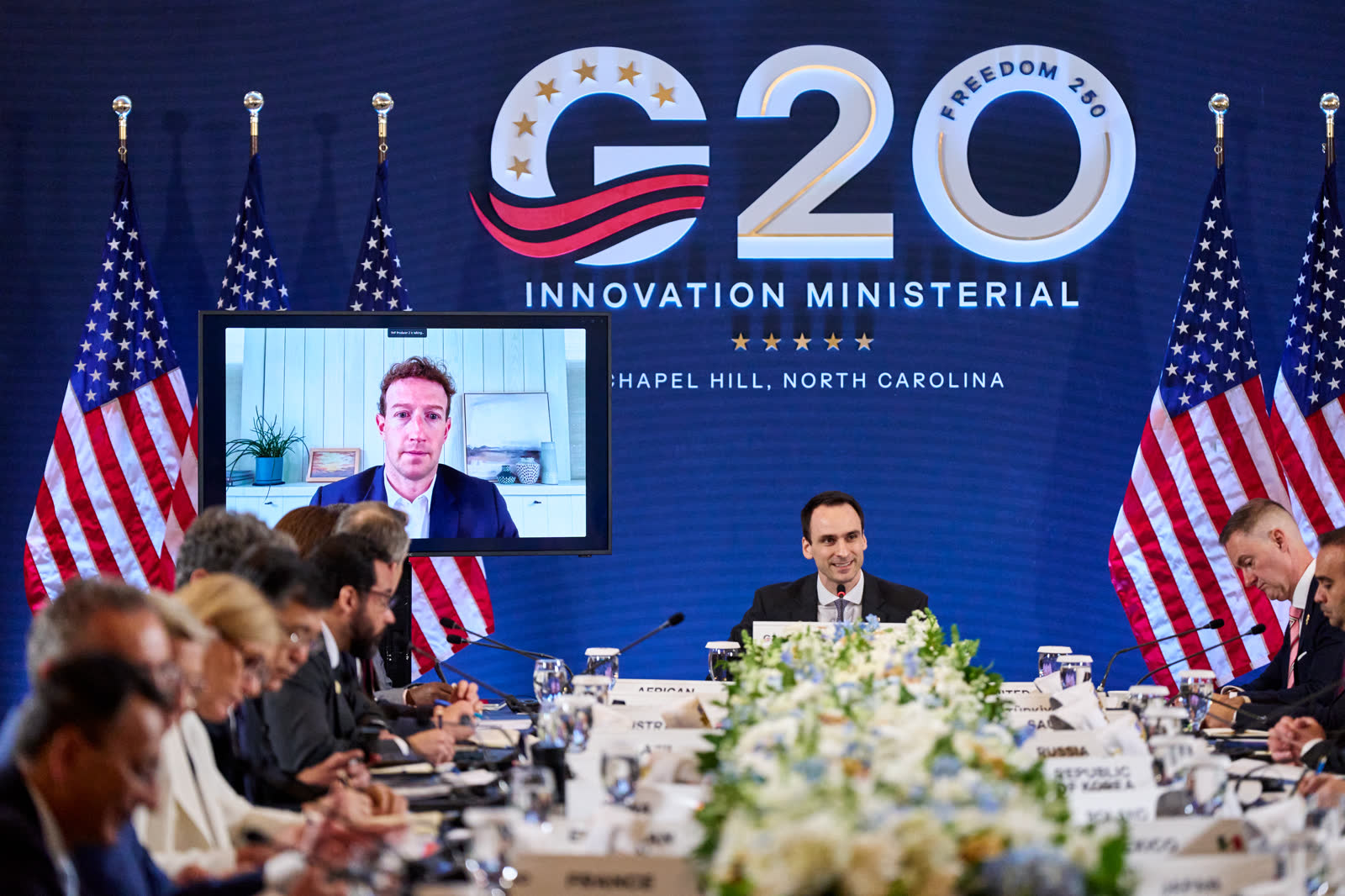
As of 2026-09-04 17:34 UTC, G20 ministers had ended their Chapel Hill innovation meeting with consensus language across artificial intelligence, intellectual property, technical standards, public-sector adoption, workforce training and supply chains, despite the sharply different US and EU regulatory approaches visible at the opening.[1][2][7][9]
The agreement is real. It is also narrower than either “the world chose light-touch AI regulation” or “the G20 created global AI rules.” The documents say members will build their own sovereign frameworks, use existing sector rules where appropriate and reserve new regulation for gaps those rules cannot address. The workforce compact is voluntary. No common regulator, enforcement process, budget or implementation calendar appears in the published texts.[2][3][4][5]
That makes the result a map of possible coexistence, not a single route. Washington can claim support for flexible regulation; Brussels can keep the EU AI Act; Seoul can emphasize standards, copyright and industrial deployment.[2][3][6][8] The first test is not whether governments repeat the word “consensus.” It is whether they publish measurable national actions—and whether those actions still protect people when the regulatory forms differ.
What the record establishes
| Time and source | Verified development | Confidence and boundary |
|---|---|---|
| September 1 — Reuters | The United States opened the ministerial by urging members to avoid AI-specific bodies and to use new rules only for genuinely novel gaps.[7] | High for the US negotiating position. It was an opening pitch, not yet the agreed text. |
| September 2 — ministerial statement | Ministers agreed on six pillars covering policy frameworks, public services, skills, IP, standards and supply chains.[1][2] | High for the published consensus. The statement does not create one transnational code. |
| September 2 — Carolina Principles | The principles organize policy around research, real-world validation and adoption, including sandboxes, public procurement and sector-specific regulation.[3] | High for the shared framework. Most operative verbs are commitments to aim, support, encourage or consider—not dated deliverables. |
| September 2 — skills documents | Nine AI Prosperity Objectives outline education and workforce pathways; a separate compact invites voluntary training, hiring and institutional partnerships.[4][5] | High for the text. At the cutoff, the reviewed documents provide no consolidated signatory roster, funding total or target number of workers. |
| September 3 — South Korean government | Seoul described the meeting through AI-and-IP policy, international standards, manufacturing and supply-chain resilience.[6] | High for Korea's stated emphasis. It illustrates national implementation, not a G20-wide work programme. |
| September 4 — Axios | EU technology chief Henna Virkkunen said US and European systems often address similar safety concerns through different legal routes.[8] | Medium-high as a reported interview. It does not erase substantive US–EU disputes or alter either jurisdiction's law. |
The cover photograph shows the political setting behind those documents: US science adviser Michael Kratsios speaking in the room while Meta chief Mark Zuckerberg appears on a screen. It documents the actual ministerial, not an abstract “AI governance” concept.[9]
The compromise is in the architecture
The Carolina Principles divide the technology lifecycle into three jobs. Governments should fund discovery, make testing and commercialization easier, then govern adoption. In the last stage, they should first use existing sector-specific rules and add regulation where a new technology creates a gap those rules cannot cover.[3]
That sequence carries the US preference for avoiding a new regulator every time a technology changes. Reuters reported that American officials explicitly sold it that way before consensus was reached.[7] Yet the final language is not a blanket prohibition on new AI law. It repeatedly pairs innovation with secure and trustworthy deployment, fundamental freedoms, privacy, data protection and risk management. It also says new rules can address novel considerations and that members retain their own legal frameworks.[2][3]
This is why both a lighter US model and the EU's broader statute can fit beneath the same political roof. Consensus was achieved by agreeing on questions and policy sequence while leaving the answers largely national. That is not meaningless: a shared preference for supervised testing, outcome-oriented standards and evidence from real-world pilots can shape procurement and diplomacy. But it is not harmonization. The package does not displace applicable national or regional law; developers still need jurisdiction-specific legal analysis.
The distinction matters most in high-stakes sectors. A health agency, school system or transport ministry cannot infer from a G20 statement that an AI deployment is safe or lawful. The ministerial text itself calls for use-case metrics, high-quality data, secure infrastructure, privacy, implementation capacity and transparent accountability before public-service pilots scale.[2] Those are evaluation headings, not completed evaluations.
Six pillars, three different levels of commitment
The package mixes policy direction, implementation ideas and voluntary mobilization. Treating every sentence as the same kind of promise would overstate it.
The clearest direction is regulatory method. The texts favor adaptable frameworks, supervised sandboxes, streamlined pilot permitting and consideration of expedited review in lower-risk supervised settings, innovation-focused procurement and performance-based standards.[2][3] Governments now have a common vocabulary for arguing that rules should follow risk and deployment context rather than technology labels alone.
The most testable work is in public services. Members say they will identify high-value AI uses, design use-specific metrics, evaluate pilots and track applications as they scale.[2] This can produce auditable evidence: a procurement notice, a benchmark, an error threshold, an impact assessment or a decision to stop a pilot. None of that evidence exists merely because the statement was signed.
The loosest layer is workforce mobilization. The nine prosperity objectives cover credentials, apprenticeships, educator literacy, employer-paid training and early-career routes.[4] The compact asks companies and educational or research institutions to support that agenda voluntarily.[5] At this cutoff, the public texts do not attach a global budget, deadline, hiring floor or named beneficiary count. The honest headline is therefore “framework available,” not “training delivered.”
Intellectual property demonstrates the same compromise. The statement recognizes both protection for creators and the importance of AI development, then leaves questions such as consent, exceptions and remedies to established legal processes in each jurisdiction.[2] Korea's account shows how a member can translate that language into its own priorities: patent reliability, copyright guidance, industrial standards and manufacturing AI.[6]
What changes in 24 hours, seven days and 30 days
Next 24 hours: no company's compliance obligations change simply because the ministerial concluded. Government policy teams should compare their public descriptions with the actual documents. The quickest credibility gain would be publication of a complete compact-participant list and any commitments already made by companies, universities or research institutions.
Next seven days: watch for national readouts that name an owner, programme or budget. A ministry announcing an existing AI course under the new banner is not the same as funding additional seats. A standards pledge is stronger if it identifies ISO, IEC or another forum and specifies the work item. Korea's release is useful because it names application areas—autonomous manufacturing, future vehicles and robotics—even though it does not yet create a G20 implementation scorecard.[6]
Next 30 days: procurement and pilot design become the meaningful evidence layer. Look for published use cases, baseline measures, security requirements, appeal routes and stop conditions in public services. For workforce claims, look for paid training places, hiring commitments and access to computing resources. Thirty days is an accountability window for first receipts, not a deadline promised by the G20 documents.
Three paths from the Chapel Hill consensus
These are conditional scenarios, not probability forecasts.
Base case — parallel national implementation. Members cite the principles while continuing different legal models. Cooperation concentrates on standards, workforce partnerships and public-sector pilots because those areas do not require identical statutes. Trigger: several governments publish named programmes, but no common monitoring framework or cross-border conformity route appears.
Upside — voluntary language acquires measurable receipts. Compact participants, budgets, training places and hiring pathways are disclosed; public agencies report pilot baselines and outcomes; standards bodies receive concrete proposals that improve interoperability without weakening safety. Trigger: a public ledger connects each promise to an owner, date, metric and result.
Downside — consensus becomes a deregulatory slogan. Governments invoke innovation while omitting the statement's safeguards, or they relabel old programmes without adding resources. Divergent laws then continue, but without the evaluation evidence that could make divergence manageable. Trigger: national plans cite flexibility yet publish no risk tests, accountability route, workforce inputs or measured outcomes.
The action test
- Governments: publish a crosswalk from each announced initiative to the relevant pillar, legal authority, owner, budget, metric and review date. State plainly which protections remain mandatory.
- Companies: do not treat the Carolina Principles as a compliance safe harbor. Map deployments to sector law in every jurisdiction, and separate participation in a voluntary compact from proof of model safety or worker benefit.
- Public buyers: require baselines, failure thresholds, incident reporting, human review and exit terms before scaling a pilot. The ministerial's pro-adoption language does not remove those duties.[2][3]
- Educators and workers: ask how many paid places, credentials and jobs are new; who can access them; who supplies the computing resources; and whether a training partner has made a hiring commitment.[4][5]
- Newsrooms: call the outcome a consensus framework, not a global AI law. Ask for the compact roster, money, delivery dates and results before converting ambition into accomplishment.
The central analysis should be updated if the US presidency publishes an implementation annex, participant ledger, budget or monitoring framework. It is invalidated if an authoritative legal instrument shows that the Chapel Hill package itself creates binding, uniform obligations across G20 members. Nothing in the reviewed public texts does so at this cutoff.[1][2][3]
Chapel Hill's achievement is that governments with sharply different regulatory instincts accepted the same table of contents. The next argument begins one level down: what each government writes under those headings, what it measures, and what happens when an AI system fails. Consensus supplied the nouns. Implementation now has to supply the verbs.
Sources
- The White House, “G20 Innovation Ministerial Concludes with Consensus Statement” (September 2, 2026) — official account of the meeting, six pillars, participants and associated deliverables.
- G20 Research Group, University of Toronto Library, “G20 Innovation Ministerial Statement” (September 2, 2026) — full consensus text on sovereign frameworks, public-sector pilots, IP, standards and supply chains.
- G20 Research Group, University of Toronto Library, “The Carolina Principles for Emerging Technologies” (September 2, 2026) — full principles covering research, validation, sandboxes, procurement and adoption policy.
- G20 Research Group, University of Toronto Library, “The G20 AI Prosperity Objectives” (September 2, 2026) — nine workforce, education and training objectives.
- G20 Research Group, University of Toronto Library, “The AI Prosperity Compact” (September 2, 2026) — voluntary pledge framework for training, education, reskilling, upskilling and hiring pathways.
- Republic of Korea Ministry of Trade, Industry and Resources, “G20 Members Discuss Multilateral Cooperation to Advance AI Innovation” (September 3, 2026) — national account of the IP, standards, manufacturing and supply-chain sessions.
- Courtney Rozen, “US urges hands-off approach to AI regulation at G20 tech meeting,” Reuters (September 1, 2026), republished by Investing.com — pre-consensus US position and meeting context.
- Maria Curi, “EU tech chief: AI guardrails inevitable for U.S.,” Axios (September 4, 2026) — post-meeting interview on different US and European routes to similar safety concerns.
- Al Jazeera, AFP and Reuters, “US pushes looser approach to AI regulation, while EU pushes new law” (September 2, 2026) — contemporaneous reporting and source page for the Matt Ramey/AFP photograph used as the cover.