As of 2026-05-11T11:03:58Z (UTC), the Food and Drug Administration's latest nicotine moves are easy to misread in two opposite ways. One reading says the agency has finally opened the door to flavored vapes. The other says the May 8 guidance quietly relaxes enforcement for a large swath of unauthorized products. Put the May 5 authorization, the May 8 guidance, the standing import-alert policy, and the youth-use data side by side, and a narrower picture comes into focus. FDA is building a supervised lane: a small lawful path for specifically reviewed products, plus a limited non-priority category for some pending-application products, while keeping a broader border-and-retail enforcement posture against the rest.[1][2][3][6][7]
That distinction matters because the May 5 and May 8 actions only make sense together. On May 5, FDA authorized four Glas pods and called them the agency's first authorization of non-tobacco and non-menthol ENDS products.[1] The authorization turned on product-specific controls, especially age-and-identity verification through a phone-linked device system and related marketing restrictions aimed at adults 21 and older.[1] Three days later, FDA published a guidance saying it does not intend to prioritize enforcement against certain unauthorized ENDS and nicotine pouch products in limited circumstances, such as when a product has a pending application that has been accepted and filed, or an accepted supplemental PMTA with the data FDA says it needs to evaluate a non-tobacco flavored ENDS product.[2][3] That is a meaningful shift in operating posture. It is still far short of a broad retail thaw.[1][2][3]
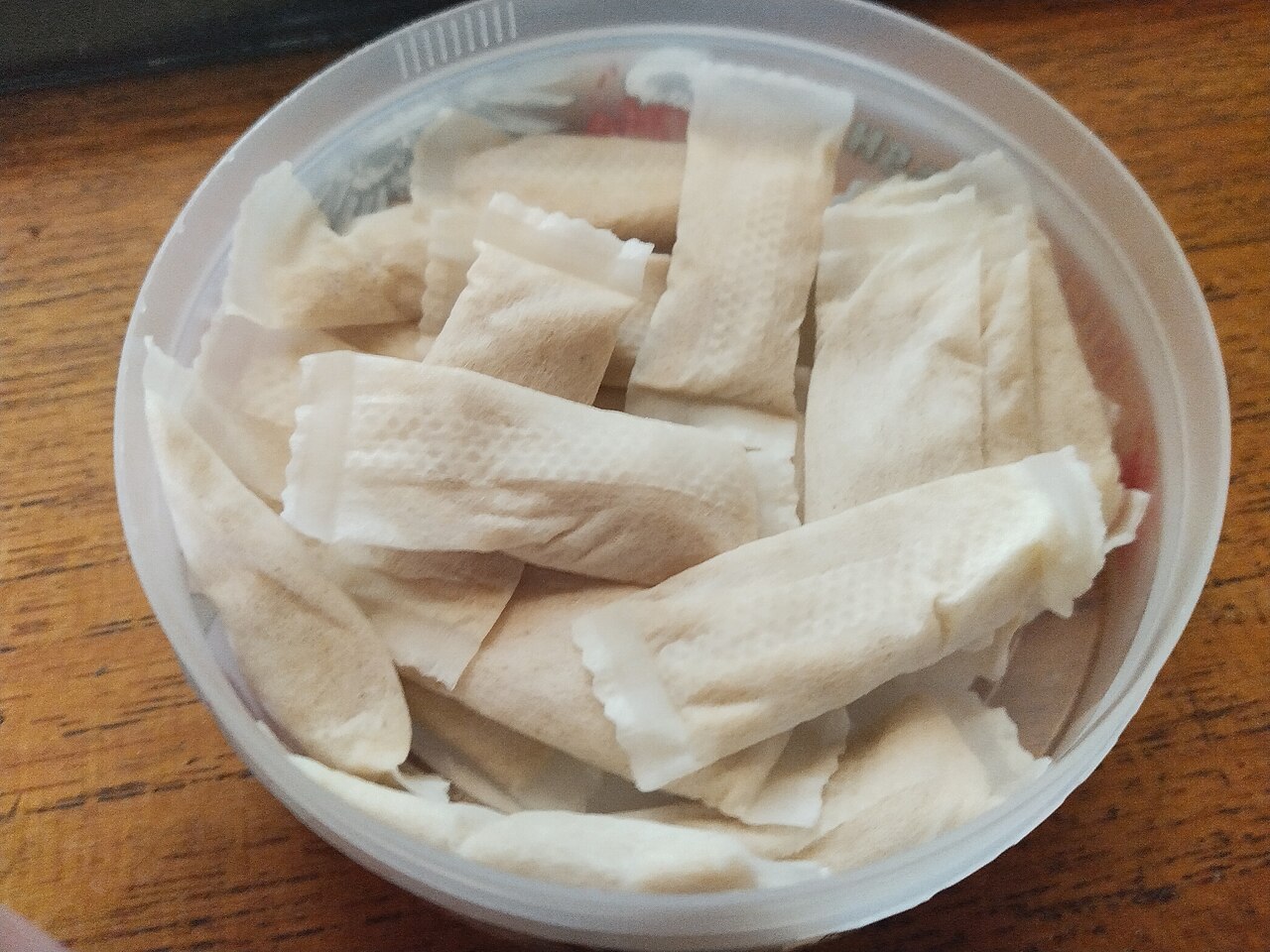
Image context: the cover uses a real photograph of nicotine pouch products because the May 8 guidance explicitly reaches both unauthorized ENDS and nicotine pouches, and because the live policy question is not abstract "innovation." It is which products get a lawful shelf, which products get temporary lower-priority treatment, and which products stay exposed to seizure, detention, or removal.[8]
Fact file
| Item | What is confirmed now | Confidence note |
|---|---|---|
| May 5 authorization | FDA authorized four Glas ENDS pods through the PMTA pathway and said this was the first authorization of non-tobacco and non-menthol ENDS products.[1] | High; direct FDA press release. |
| Why Glas cleared | FDA said the application showed age-and-identity verification, Bluetooth phone pairing, and random biometric check-ins that help limit youth access.[1] | High; direct FDA press release. |
| Authorized market size | FDA's authorized-products page says there are 45 e-cigarettes authorized by the FDA, and these are the only e-cigarettes that may be lawfully sold in the United States.[1][4] | High; direct FDA pages. |
| May 8 guidance | FDA issued final guidance on enforcement priorities for certain unauthorized ENDS and nicotine pouch products.[2][3] | High; direct FDA pages. |
| Limited non-priority lane | FDA says it does not intend to prioritize certain products with accepted-and-filed pending applications, or certain accepted supplemental PMTAs with needed data for non-tobacco flavored ENDS review.[2][3] | High; direct FDA pages. |
| Important exceptions | FDA says it still focuses on products with underage-appealing features, high nicotine content, serious adverse experiences, missing child-resistant packaging, or fire-hazard concerns.[2] | High; direct FDA newsroom page. |
| Import baseline | FDA's January 2025 import-alert update says unauthorized e-cigarettes may be detained without physical examination and that a pending application does not create a legal safe harbor.[6] | High; direct FDA CTP newsroom page. |
| Youth backdrop | FDA's NYTS page says 2024 youth e-cigarette use fell to 1.63 million, yet 87.6% of current youth e-cigarette users still used flavored products; nicotine pouch use was 1.8%.[7] | High; direct FDA/CDC summary page. |
What changed in four days
The cleanest way to read the file is as a two-step sorting exercise. The May 5 Glas authorization shows what the lawful flavored lane now looks like when FDA is willing to say yes.[1] The product did not clear because FDA suddenly stopped worrying about youth appeal. It cleared because the agency said the company's access-restriction system, paired with marketing limits, provided enough evidence that adults could use the product while youth access could be meaningfully constrained.[1]
The May 8 guidance handles the much larger category of products that still do not have premarket authorization.[2][3] Here FDA did not say those products are legal. It said the agency does not intend to prioritize enforcement in some defined cases, especially where an application is already inside the review pipeline at a more advanced stage.[2][3] That is an operational triage decision, not a legalization event. The guidance page is explicit that these policies are recommendations describing FDA's current thinking, and the newsroom summary is equally explicit that falling within the policy has no bearing on whether the product is actually likely to receive authorization.[2][3]
That is why the phrase "supervised lane" is the useful one. The lawful lane remains extremely narrow and product-specific.[1][4] The non-priority lane is broader than the lawful lane, but it is still conditional, provisional, and subject to carve-outs for products FDA considers especially risky or youth-appealing.[2][3]
Why this is not a blanket market thaw
The easiest mistake is to collapse "not prioritized for enforcement" into "safe to sell." FDA's own January 2025 import-alert update blocks that reading.[6] The agency said then that any unauthorized e-cigarette imported into the United States may be detained without physical examination and refused admission, and it stressed that a pending application does not create a legal safe harbor.[6] The May 8 guidance modifies enforcement priorities; it does not rewrite that underlying legal baseline.[2][3][6]
The same is true on the positive side. A flavored authorization exists now, but only in a highly supervised form. FDA's May 5 press release says the Glas orders are specific to those four products, that they rely on a phone-linked access-control model, and that FDA can suspend or withdraw authorization if youth use rises or the public-health balance changes.[1] The agency's authorized-products page reinforces how unusual that clearance still is: even after the Glas orders, only 45 e-cigarettes appear on the lawful list, with the Glas pods added to a roster that otherwise remains small and tightly bounded.[4]
Put differently, the file has become more legible, not more permissive in the broad retail sense. Companies can now see more clearly what an approved flavored lane might require and which unauthorized products may draw somewhat less immediate enforcement attention. They still cannot plausibly claim that FDA has opened the U.S. nicotine market by default.[1][2][3][4][6]
Why nicotine pouches belong in the same article
The guidance is not only about vapes.[2][3] FDA deliberately paired ENDS and nicotine pouches, which matters because the pouch market already has a lawful foothold that helps explain the agency's current sorting logic. In January 2025, FDA authorized 20 ZYN nicotine pouch products, the first nicotine pouches ever cleared through the PMTA pathway.[5] The agency said those products posed lower risk than cigarettes and most smokeless tobacco products, found evidence that a substantial share of adults completely switched, and still emphasized youth monitoring and marketing restrictions.[5]
That earlier ZYN decision helps decode the May 8 guidance. FDA is showing that pouches, like ENDS, are not being sorted through a simple ban-or-permit lens. The agency is distinguishing among authorized products, pending-review products, and products it still sees as illicit or especially dangerous.[2][3][5] The youth data explain why the boundary work stays strict. FDA's NYTS summary says nicotine pouch use among youth did not show a statistically significant change from 2023 to 2024 and stood at 1.8% in 2024, while flavored use remained common among youth pouch users.[7] That does not produce an emergency headline by itself, but it does help explain why the agency couples any access expansion story with visible enforcement caveats.[5][7]
What to watch next
The first checkpoint is implementation. FDA said it will create a public list of manufacturers and products that fall within the non-priority policy.[2] That list will show how broad or narrow the practical carve-out becomes once names, brands, and categories are attached.
The second checkpoint is whether the Glas model remains an exception or becomes a template. If future flavored ENDS authorizations also depend on device-level access controls, age verification, and auditable youth-prevention systems, the May 5 order will look less like a one-off and more like the opening architecture for a tightly engineered flavored lane.[1]
The third checkpoint is enforcement at the border and in retail channels. FDA's May 8 newsroom post still talks about counterfeit products, misdeclared imports, and work with DOJ and Customs and Border Protection to seize and destroy illegal products at U.S. borders.[2] If those actions remain active while the new non-priority list stays narrow, then the real story of May 2026 will be disciplined sorting rather than broad deregulation.
The durable conclusion is the narrow one. FDA's nicotine two-step should be read as a controlled classification exercise, not as a broad market opening. The agency has shown one path for a flavored product to become lawful, one limited path for some unauthorized products to face lower-priority enforcement, and one much larger path where seizure, detention, and youth-risk scrutiny remain fully in play.[1][2][3][4][5][6][7]
Sources
- U.S. Food and Drug Administration, "FDA Expands Market Access, Authorizes New ENDS Products" (May 5, 2026).
- U.S. Food and Drug Administration, "FDA Issues Guidance on Enforcement Priorities for Unauthorized ENDS and Nicotine Pouch Products" (May 8, 2026).
- U.S. Food and Drug Administration, Enforcement Priorities for Certain New Tobacco Products Marketed Without Premarket Authorization (final guidance, May 2026).
- U.S. Food and Drug Administration, "E-Cigarettes, 'Vapes' and Other Electronic Nicotine Delivery Systems (ENDS) Authorized by the FDA" (accessed May 11, 2026).
- U.S. Food and Drug Administration, "FDA Authorizes Marketing of 20 ZYN Nicotine Pouch Products after Extensive Scientific Review" (January 16, 2025).
- U.S. Food and Drug Administration, "FDA Updates Import Alerts to Reinforce that All Unauthorized E-Cigarettes May Be Detained Without Physical Examination" (January 3, 2025).
- U.S. Food and Drug Administration, "Results from the Annual National Youth Tobacco Survey (NYTS)" (2024 findings page accessed May 11, 2026).
- Wikimedia Commons, "File:Nicotine pouches (52263232478).jpg" - source page for the article image.