The Naked City begins by refusing the comfort of the studio. Instead of treating New York as a backdrop that can be simulated on a controlled back lot, Jules Dassin and producer-narrator Mark Hellinger make location itself the movie's first argument. The Library of Congress describes the opening credits as a declaration that this is not Hollywood back-lot New York but actual city space, and Criterion likewise frames the film as a police procedural shot entirely on location in New York.[2][3]
That claim matters because the film's murder plot is less unusual than its method. AFI's synopsis supplies the ordinary crime skeleton: Jean Dexter is killed, detectives Dan Muldoon and Jimmy Halloran take the case, suspects branch outward through jewelry, lies, associates, and a final pursuit.[1] In another film, that plot could become a compact murder mystery. Here it becomes a way of moving through a city. Every errand, interview, staircase, hospital corridor, apartment, bridge, and market-like street surface makes the investigation feel less like a puzzle solved by genius than a public system working through friction.
The City Is Not Atmosphere
The easiest praise for The Naked City is also the easiest way to shrink it: it looks real. The film does look real, but realism is not only a look here. It is an organizing principle. Film at Lincoln Center's note stresses the raw, menacing New York of alleys, skyscrapers, and street life, while also pointing to alleged influence from Weegee's crime photography and Italian neorealism.[4] That combination explains the film's strange balance. It is documentary-leaning without becoming a documentary, noir-adjacent without sealing the city into expressionist shadow.
Dassin uses New York as a machine of evidence. A body in an apartment is not only a body; it is a node in a network of elevators, housekeepers, doctors, jewelry dealers, ferries, fire escapes, gyms, train lines, and remembered faces. The film's procedural pleasure comes from watching information pass through that network. A clue matters, but the route by which the clue becomes usable matters more. A detective has to ask, walk, wait, phone, compare, return, and ask again. The city does not simply contain the investigation. It slows it, feeds it, misdirects it, and occasionally gives up a fact.
That is why the famous urban texture does not feel decorative. When pedestrians fill the frame, they do not merely authenticate the background. They establish scale. The murder is one story among millions, but the film refuses to make that idea abstract. It keeps cutting from official procedure to ordinary circulation: people going to work, cooling off, pausing at windows, crossing bridges, answering doors. The case matters because it briefly reorganizes the flow of the city around one dead woman, then lets the flow continue.
Procedure Replaces the Master Detective
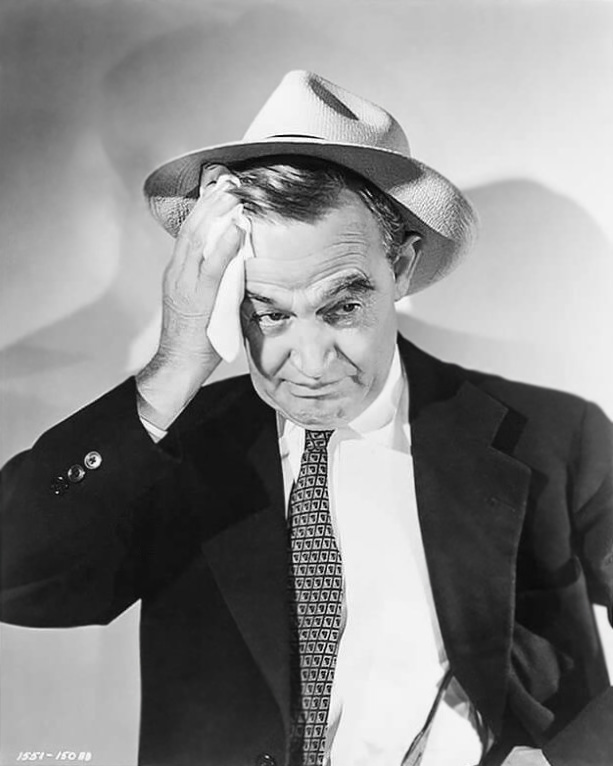
Barry Fitzgerald's Muldoon is gentle enough to make the film feel conversational, but he is not a fantasy detective whose mind leaps beyond institutions. His authority is procedural. He listens, nudges, notices evasions, and lets other people do their work. Halloran, played by Don Taylor, gives the film a second rhythm: younger, more mobile, more tied to legwork and street canvassing. The case advances because these rhythms interlock.[1]
That interlocking is central to the film's moral design. The Naked City does not flatter the police as solitary heroes, but it does treat investigation as labor. One person questions a suspect. Another checks an address. A medical examiner reads a body. A patrol network tightens. Someone remembers a face. Someone else connects that memory to a route. The suspense builds from administrative accumulation rather than from a single brilliant revelation.
This is where the film's editing matters as more than speed. The Academy awarded Paul Weatherwax the 1949 Oscar for film editing, while William Daniels won for black-and-white cinematography.[5] Those two awards point to the craft engine: images of city pressure have to be cut into investigative logic. A location can feel vivid and still be inert if the film cannot make movement intelligible. The Naked City keeps turning motion into argument. It shows the city as a field too large for one person to master, then uses editing to make partial knowledge actionable.
The result is a procedural form that feels almost infrastructural. The case is solved by bodies moving through civic systems: morgue, precinct, street, apartment, transit route, bridge. Even the final chase works because the film has trained us to see public space as both open and bounded. A bridge promises escape and then becomes a trap. Crowds offer anonymity and then become witnesses. Height gives a criminal a last desperate route and then exposes him. The location is never neutral; it keeps changing legal and physical possibility.
Hellinger's Voice Makes the City a Newspaper
Hellinger's narration is often the most divisive part of the film, but it is also one of the keys to its form. His voice does not just explain. It prints. It turns the movie into a moving city column, one that wants to notice the glamorous, the shabby, the bureaucratic, the exhausted, and the comic all at once. That newspaperman texture fits Hellinger's production role and helps explain why the film keeps sliding away from pure noir fatalism toward civic inventory.[2]
The narration can be blunt, even pushy, but bluntness is part of the design. The voiceover keeps reminding the viewer that the case belongs to a larger metabolism. It does not let Jean Dexter's murder become sealed melodrama. It keeps reopening the frame to New Yorkers who have nothing to do with the crime except that they share the city where it happened. The film's final force depends on that widening. A solved case is not the end of New York. It is only the end of this passage through it.
That structure also complicates the film's realism. The Naked City does not pretend that reality simply appears when a camera leaves the studio. The film is highly shaped: narrated, scored, edited, performed, and driven toward a clean resolution. Its innovation is not purity. Its innovation is a new contract between fiction and the real city. The streets are not raw material pasted onto genre. Genre becomes the way the film can read the streets.
Why It Still Feels Modern
The Library of Congress calls The Naked City a cutting-edge crime procedural that introduced a new style of filmmaking, and that judgment still holds because the film's modernity lies in systems thinking.[3] It understands crime as an event that activates institutions, routes, records, habits, and social surfaces. Later police films and television dramas would inherit that logic so thoroughly that it can now feel ordinary. Watching the 1948 film carefully restores the shock: the procedure is not a formula yet. It is being discovered as a cinematic shape.
There is also a useful limit to the film's achievement. Its city is broad but not complete. Its faith in procedure is stronger than a modern viewer may fully share. Its women sometimes remain closer to functions in a case file than to fully opened lives. But those limits do not erase the formal breakthrough. They clarify it. The Naked City is most powerful when it shows how a city can be both human and impersonal, intimate and too large, knowable only in fragments yet still available to method.
That is why the film's title keeps working. The city is "naked" not because it has been fully exposed, but because the film has stripped away one layer of studio insulation. New York remains too big to possess. Dassin's achievement is to make that excess legible without taming it. He turns a murder investigation into a way of seeing civic space: every sidewalk a possible lead, every face a passing story, every route a pressure line, every solved case already being absorbed back into the morning traffic.[1][2][3][4]
Sources
- American Film Institute, "The Naked City" AFI Catalog entry - plot synopsis, principal credits, and production record.
- The Criterion Channel, "The Naked City" - film page identifying Jules Dassin, Mark Hellinger, the 1948 release, cast, and New York location-shooting premise.
- Library of Congress, "Brief Descriptions and Expanded Essays of National Film Registry Titles" - National Film Registry note on The Naked City, location shooting, Oscar recognition, and procedural style.
- Film at Lincoln Center, "The Naked City" screening note - location-shot New York, street-life context, Weegee/neorealism framing, and Dassin credit.
- Academy of Motion Picture Arts and Sciences, "The 21st Academy Awards | 1949" - winners for The Naked City in black-and-white cinematography and film editing.
- Wikimedia Commons, "File:Naked City (Barry Fitzgerald publicity photo).jpg" - 1947 publicity photograph used as the article image source.