Spoilers follow, including the ending of the 1986 film, also released as Summer.
Lunch should be an easy way to join a holiday. In The Green Ray, it becomes an examination. Delphine does not eat meat, and the other diners keep asking her to explain herself. Marie Rivière, who plays her, recalled that Éric Rohmer secretly encouraged the questioning so that she would have to improvise a response.[2] An ordinary preference becomes something she must defend before the table can move on.
In Rohmer's 1986 film, a Parisian secretary still unsettled by a breakup passes through a summer in which company repeatedly fails to become companionship.[1] Delphine can seem exasperating: offered a possibility, she finds an objection. Yet the lunch suggests why simply becoming more agreeable might cost her something. Being included is uncomfortable when inclusion requires a performance of liking what everyone else likes.
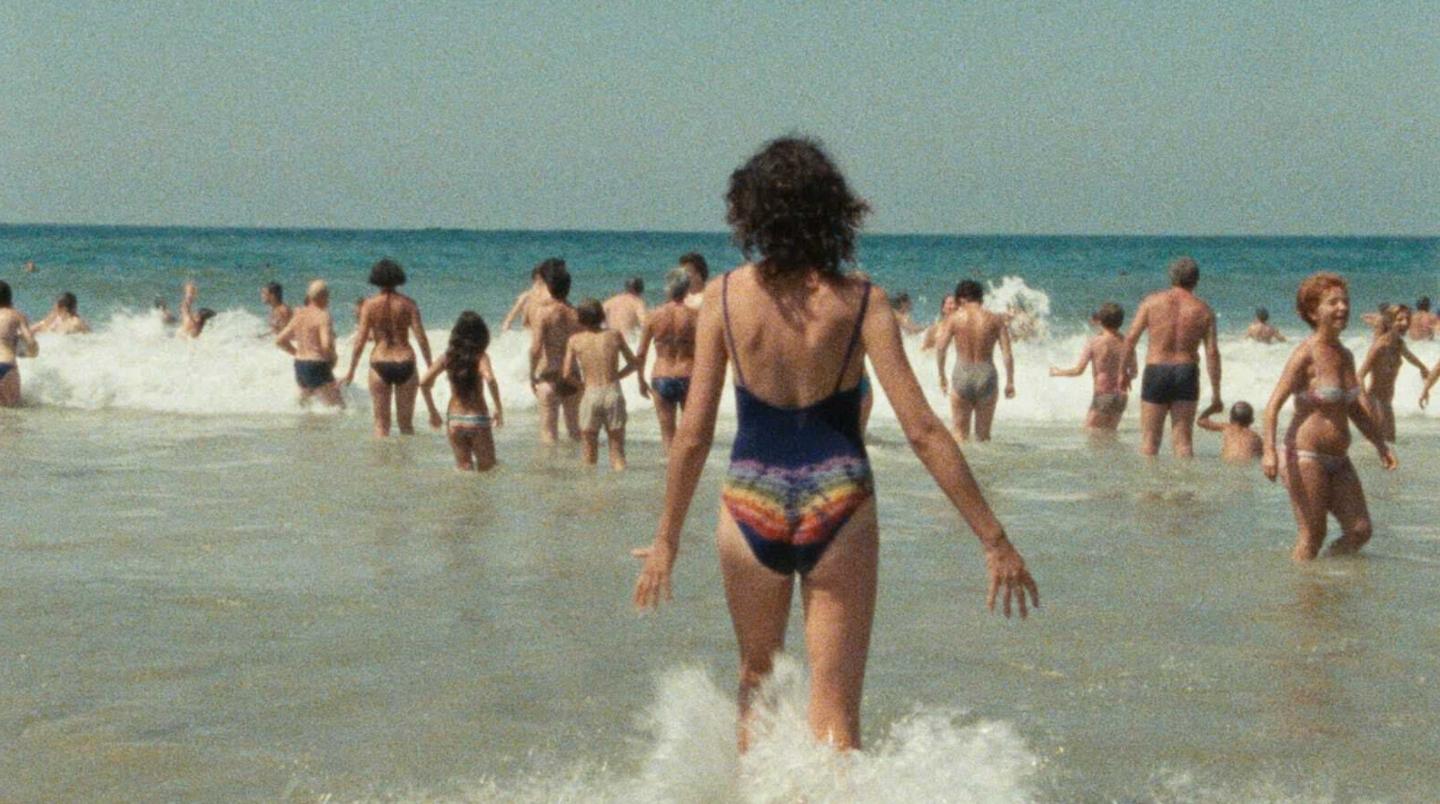
The table scene gives this problem a visual shape. As Linda C. Ehrlich describes it, the camera moves around the outdoor gathering while Delphine's vegetarianism attracts attention; one man offers her flowers to eat.[4] The movement accommodates the group, but its conversation isolates one member. Delphine has a place at the table and still becomes its oddity. The joke is small enough to pass as friendliness, which makes refusing it another possible offence.
Changing the view does little to help. Her travels take her from Paris to Cherbourg, the Alps and Biarritz, with visits cut short when she cannot settle.[3] Each departure briefly restores her ability to choose. The difficulty follows her into the next place. This gives the holiday an anxious rhythm: a destination promises relief, then becomes another setting in which she must explain why she is not enjoying herself.
Tom Birchenough notes that seasickness keeps Delphine from joining the sailing at Cherbourg and that her Alpine stay lasts no more than a day.[5] A group holiday runs on ordinary assumptions: eat with us; come out on the boat; have a good time. Even kindly invitations can make the person who declines them feel conspicuous.
Rivière's performance keeps that discomfort unsettled. Lawrence Garcia points to the film's deliberate mixture of scripted and improvised material, and to Rivière's credit for text and performance.[6] The speech has the awkwardness of someone trying to discover a satisfactory explanation while already giving it. A polished answer would let Delphine protect herself too efficiently. Instead, the effort to be understood can expose more of her than she intended.
That openness also gives the audience work to do. We can recognize a familiar social ordeal without deciding that Delphine is always right. Her difficulty accepting an invitation sometimes hurts her; her resistance sometimes preserves a desire that an easier compromise would miss. Garcia identifies this tension between her avoidance of encounters and her attachment to signs and coincidences.[6] She wants an event to matter, but is wary of the arrangements through which other people manufacture significance.
In Biarritz, she overhears strangers discussing the green flash that can appear as the sun disappears below the horizon, and the Jules Verne novel that gives the film its title.[3] This time, conversation offers her something without requiring a defence. She can listen. An idea reaches her indirectly, with none of the urgency of advice addressed to a person who is supposedly doing life incorrectly.
The difference becomes clearer beside her encounter with Lena, the outgoing Swedish holidaymaker whose ease she cannot simply borrow.[5] Lena supplies a model for enjoying the same place. The film allows another woman's confidence to be attractive without making imitation the necessary next step.
At the railway station, however, Delphine does take a step. Ehrlich describes her beginning a conversation with the young man sitting opposite her, then asking to accompany him to Saint-Jean-de-Luz.[4] The encounter depends on her willingness to speak and make a request. She has spent much of the holiday answering other people's suggestions; now she contributes one. I read that small reversal as the ending's essential preparation. Chance supplies another person, but Delphine must make herself available to him.
By the sea, looking together gives the encounter a form that an interrogation cannot. Birchenough observes how silence gains importance near the close of this otherwise talkative film.[5] Attention can be shared without either person delivering a complete account of themselves. The sunset gives them something beyond their own awkwardness to watch.
The flash itself matters. In a 2012 interview, Rivière objected to a print whose brightness made it disappear: Rohmer had intended the ray to be visible.[2] That distinction keeps the ending's uncertainty in the right place. The film offers a perceptible event; its meaning for a life remains open. A sunset cannot tell us how these two people will treat each other tomorrow.
Delphine nevertheless has something she lacked at lunch: a preference another person can share without first asking her to justify it. The pleasure is modest enough to believe in. She can point toward what matters to her, and someone is there to look.
Sources
- Janus Films, “The Green Ray” — official film listing, release year, central character and premise.
- David Jenkins, “Close-Up on Eric Rohmer's ‘The Green Ray’: An Interview with Marie Rivière.” MUBI Notebook, 5 November 2012 — the lunch improvisation and Rivière's account of the intended visibility of the final green flash.
- Brogan Morris, “10 great summer holiday films.” BFI, 13 June 2024 — The Green Ray's itinerary, overheard conversation and photographic film still.
- Linda C. Ehrlich, “A Tribute to Le rayon vert,” in “Short Take Tributes on Rohmer.” Senses of Cinema, 2010 — the outdoor meal, camera movement and railway-station encounter.
- Tom Birchenough, “The Green Ray.” The Arts Desk, 2 January 2015 — sailing, the Alpine visit, Lena and the closing shift toward silence.
- Lawrence Garcia, “Good Men, Good Women: The Actors of Éric Rohmer's ‘Comedies and Proverbs’.” MUBI Notebook, 17 November 2020 — Rivière's creative contribution, improvisation and Delphine's conflicting responses to chance.