Spoilers follow, including the wedding and final scene of the 1945 film.
A woman on a bus does a small, indispensable job in The Clock: she repeats the meeting instructions that Alice is trying to give Joe. He cannot hear them properly; another passenger makes sure they arrive.[3] The gesture takes an anonymous person out of the background for a moment. Before these lovers can have a private life, somebody else must help them arrange a date.
Vincente Minnelli's 1945 film gives Corporal Joe Allen, played by Robert Walker, a two-day leave in New York. Judy Garland plays Alice Maybery, the secretary he meets there.[1] Their time together keeps acquiring extra participants. Read through these brief interventions, the romance becomes a story about the space strangers can make for one another, even in a city with very little room to spare.
That city was substantially a studio construction. Frank Miller's production account describes rear projection, elaborate art direction and Minnelli's memories of New York; the principal actors did their work away from the actual streets.[2] The distinction matters because the film's urban life is an arrangement. People, sound and scenery have been placed around the couple. A passerby who helps or obstructs them belongs to the same deliberate composition as a doorway. The bustle feels abundant, but it can also be made to pause long enough for a small kindness to register.
The romance has room to breathe, too. Writing in Sight and Sound, Keith Uhlich singles out the nighttime park scene, where the city's sounds build toward an orchestral expression of the couple's intimacy. His reading emphasizes the pressure of passing time even within moments of happiness.[4] Sound lets the film have both proximity and distance: Alice and Joe can listen together while the larger city remains audible. Their closeness does not require the world to stop. It asks them to attend to the same thing for a while. Listening becomes an activity they can share before they know very much about each other's lives.
Then an outing turns into work. After missing the last bus, they accept a lift from milkman Al Henry, played by James Gleason. When a drunk injures Al, the couple finish his deliveries; afterward, they eat breakfast at his home.[1] This is an unusually useful detour for a love story. Joe and Alice get to see each other respond to an inconvenience that belongs to someone else. Attraction has to find a place alongside tiredness, obligations and a job that still needs doing.
The milk route also gives their haste a different measure. They cannot manufacture years of acquaintance before Joe leaves. They can, however, do something together that another person needs. I read this as the film's modest answer to the question of how well they know each other: shared responsibility supplies evidence that conversation alone cannot. The night does not prove they will be happy forever. It gives their hope a little experience to stand on.
Al brings his own courtship into the story. As Joe McElhaney notes in his essay on Minnelli, the milkman remembers falling for his wife while watching her flip pancakes through a restaurant window. McElhaney connects that memory to the director's interest in frames and desire.[5] The anecdote is also wonderfully ordinary. Someone earning a living becomes, to someone looking in, the most interesting person in the world. Beside the young couple's urgent adventure sits a marriage whose remembered beginning is a repeated task. The pancake story gives their romance a possible future made of breakfasts and workdays. Love might survive the departure of the extraordinary occasion that brought it into being.
The city is less accommodating when a subway crowd separates Alice and Joe. They have too little information about one another to conduct an effective search; they eventually reunite at Pennsylvania Station.[1] The gap between emotional intimacy and practical knowledge suddenly becomes frightening. They have found someone irreplaceable without learning enough to replace a missed meeting. That vulnerability makes the earlier passenger's helpfulness look less incidental. In a crowd, a few words successfully passed from person to person can matter enormously.
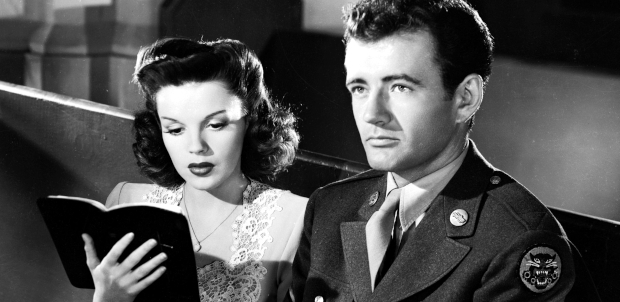
Getting married does not immediately settle their unease. Steve Vineberg describes the civil ceremony's words being overwhelmed by a passing train. Later, the couple repeat their vows in an empty church pew.[3] The repetition changes the scale of the event. The first ceremony has accomplished a public task, but the second gives them time to hear what they are promising. They are already married. What they still need is an experience they can recognize as their own, with room for a sentence to finish and another person to receive it.
That difference makes Alice's disappointment more than a wish for a prettier wedding. So much of their happiness has depended on others noticing them: the passenger relaying instructions, the milkman offering a ride. Now an institution has recognized their union while its hurried ceremony has barely allowed them to inhabit it. In the pew, they supply that missing attention themselves. The film has gradually taught them how to make room for each other.
The ending restores the crowd. Glenn Erickson describes the concluding crane shot rising into Penn Station's rafters as Alice recedes among the travelers after Joe's departure. He also stresses the confidence in her expression despite the uncertain future.[6] The widening view places her happiness beside lives the film has not followed. Every anonymous figure could have a similarly consequential goodbye behind them. Alice has gained a relationship; she has not gained an exemption from the war or the movement of the station.
Nothing in that departure guarantees Joe's return. The tenderness lies in what has already become possible: two people have practiced helping, listening and promising before they must wait. Around them, strangers continue on their way. For a few hours, some of those strangers have made the city large enough to hold a beginning.
Sources
- American Film Institute, “The Clock” (1945), AFI Catalog — credits, milk deliveries, subway separation, Pennsylvania Station reunion and marriage sequence.
- Frank Miller, “The Clock.” Turner Classic Movies, 28 July 2003 — the studio-built New York, rear projection and Minnelli's production approach.
- Steve Vineberg, “Neglected Gem #108: The Clock (1945).” Critics At Large, 14 October 2017 — the helpful bus passenger, sound during the civil ceremony and vows in the church pew.
- Keith Uhlich, “Garlands and cobwebs: Vincente Minnelli's ecstatic vision.” Sight and Sound, updated 14 April 2015 — the park scene's sound and the pressure of passing time.
- Joe McElhaney, “Minnelli, Vincente.” Senses of Cinema, 2004 — Al's pancake-window courtship story and Minnelli's use of frames.
- Glenn Erickson, “The Clock.” CineSavant / Trailers From Hell, 2 June 2022 — the final station shot and film images accompanying the Warner Archive Blu-ray review.