Billy Wilder's Sunset Boulevard begins by telling the viewer that the story has already crossed into aftermath.[1][2][3][4] A body is floating in a swimming pool, the dead man will narrate, and the road leading up to Norma Desmond's mansion has already become a corridor into another tense of Hollywood time. That opening matters because the film is not mainly interested in whether the industry is cruel. Wilder treats that as settled. His sharper question is what happens when an industry built on novelty keeps old images alive long enough for them to curdle. The answer is not nostalgia. It is necrosis.[1][3][4]
That is why the film still feels harsher than most self-reflexive Hollywood classics.[1][2][6] Gloria Swanson's Norma Desmond and William Holden's Joe Gillis are not simply an aging star and a desperate screenwriter thrown into a darkly comic arrangement. They are two different versions of historical refusal. Norma refuses to accept that silent-era divinity has become archival material. Joe refuses to admit that his professional life has already collapsed into improvisation, debt, and borrowed time. The movie locks those refusals together inside a mansion, then keeps asking what kind of industry produces people who can survive only by misreading the calendar.[1][2][3]
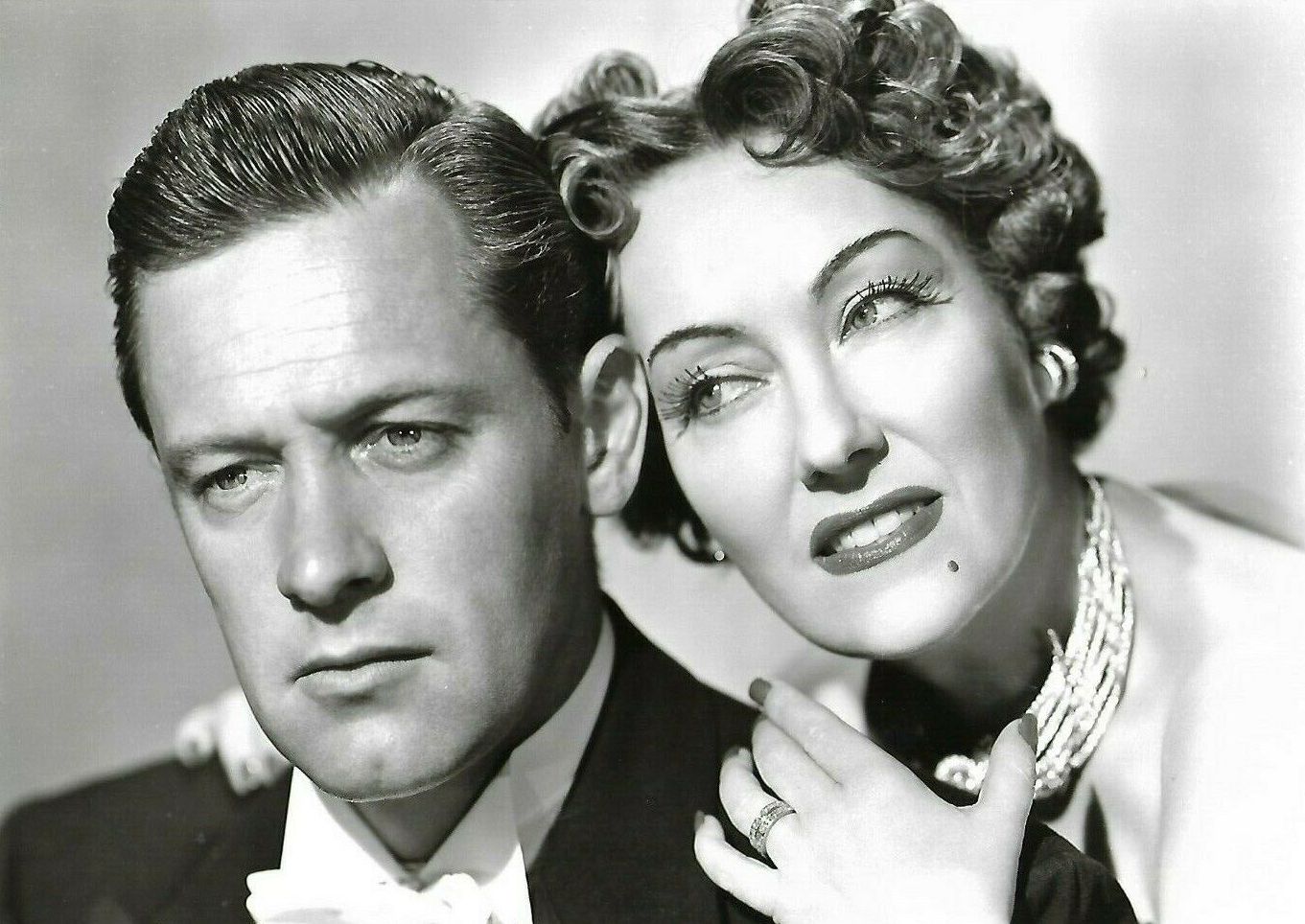
Image context: the cover uses a real publicity still of Gloria Swanson and William Holden from the film. It belongs here because this essay reads Sunset Boulevard through the way the movie keeps staging Hollywood as a fatal duet between obsolete grandeur and freelance opportunism, and that photographic pairing makes the film's central bargain visible at a glance.[5]
The gate matters because Joe enters the film by driving into an archive
Joe does not arrive at Norma's house as if he were entering ordinary domestic space.[1][2][3] He is fleeing creditors, hunting temporary cover, and he swerves into a driveway attached to what first looks like a dead property. Wilder makes that approach feel like a threshold crossing. Outside the gate is the practical, transactional Hollywood of unpaid car notes, studio meetings, discarded scripts, and agents who have stopped returning calls. Inside it is a sealed museum of one woman's stardom, kept functioning by servants, photographs, and ritual repetition.[1][2]
That is the first reason the mansion is so important. It is not merely gothic décor or noir atmosphere. It is a storage chamber for a star image that was never allowed to decompose properly.[1][3][4] TCM describes the film as one of the definitive Hollywood-on-Hollywood pictures, and the point lands because Wilder makes architecture do the conceptual work.[2] The house is full of drapery, portraits, staircases, chandeliers, and shadows, but the deeper effect comes from how everything in it seems to have been arranged to preserve an earlier public self. Norma does not live among possessions. She lives inside a mausoleum built from her own screen memory.
Joe recognizes the absurdity, but he also recognizes the cash value.[1][3] This is one of the film's most exact cruelties. He sees the delusion clearly before he becomes dependent on it. The mansion therefore does not trap him because he is innocent. It traps him because he is broke enough to treat someone else's fantasy as temporary housing. Wilder keeps the moral pressure there all the way through the film. Norma's delusion is ruinous; Joe's adaptability is ruinous in a more modern way. One cannot leave the silent era. The other cannot stop freelancing his dignity.
The pool turns Hollywood aspiration into a tomb before the plot even starts moving
The pool is the film's most famous image because it condenses the whole argument into one modern luxury object.[1][2][4] In postwar Los Angeles, the private pool is a shorthand for arrival, success, and enclosure. Wilder takes that symbol and empties it out. By putting the corpse there first, he turns aspiration into an afterimage. The dream object remains, but the dream has already become narratable only from the far side of death.[1][3]
This is more than a sensational opening. Wilder later recalled how furious some studio figures were at the film's harshness toward Hollywood itself, and that reaction helps explain why the image still shocks.[4] The movie does not flatter the industry by pretending that decay only happens offscreen or in private. It drags the corpse into the prestige architecture of success and forces the viewer to look upward from the pool's depth. Even camera position joins the argument. Joe's narration comes from below the social surface, as if Hollywood can only be read accurately once one has sunk through it.[1][4]
The pool also clarifies the relation between Joe and Norma. He wants professional rescue; she wants resurrection.[1][3] Those are not identical desires, but Wilder makes them rhyme until the rhyme becomes deadly. Joe accepts clothes, shelter, money, and a script job polishing Norma's impossible comeback vehicle. The arrangement looks cynical, then luxurious, then suffocating. What changes is not the basic transaction. What changes is the degree to which Joe realizes he is no longer merely using the house. He has entered a closed system in which everything must serve a return that cannot happen.[1][2][3]
The Paramount lot is the one place where the movie briefly lets history answer back
The most painful scene in Sunset Boulevard is not the murder or the ending. It is Norma's return to Paramount.[1][2][3] Wilder stages the visit with a precise ambiguity. She is not greeted as a random impostor. People really do remember her. Cecil B. DeMille really does know who she is. The lot itself carries institutional memory strongly enough that Norma can mistake recognition for reinstatement.[1][3] That distinction is the heart of the film.
Hollywood memory, Wilder suggests, is sincere and useless at the same time.[1][2][6] A studio can honor a face, tell stories about an era, even pause to admire what once mattered, while remaining structurally committed to new labor, new products, and new schedules. Norma reads courtesy as destiny because she still believes fame is a permanent rank. The studio reads her as a surviving emblem from an earlier regime. Both sides are technically recognizing the same past, yet only one side mistakes that recognition for a future.[1][3]
This is where the film becomes more than a satire of vanity. It becomes a study of institutional tense. Joe, meanwhile, is pulled toward Betty Schaefer and toward a working version of Hollywood still tied to deadlines, collaboration, and rewrite energy.[1][3] Betty is not a pure moral alternative, but she belongs to a different temporal order. She is trying to make the next thing. Norma is trying to make history reverse. Joe drifts between those orders until Wilder makes clear that drifting itself is a choice.
The staircase is the movie's final proof that Hollywood can turn catastrophe into mise-en-scene
The ending works because Wilder does not treat Norma's collapse as private madness alone.[1][2][3] Max converts the police, reporters, and flood of attention into one last production environment. The staircase becomes a set. News cameras become studio apparatus. A criminal scene becomes a comeback image inside Norma's mind. By the time she descends, the film has arrived at its most merciless point: Hollywood does not need to cure delusion if it can photograph it.[1][2]
That descent is why the movie's last movement feels colder than a standard tragedy.[1][3][4] Norma is not simply losing touch with reality. She is retreating into the only reality the industry ever truly rewarded in her: performance under a camera's gaze. Wilder closes the circle with brutal elegance. The woman who could not survive the loss of her screen image is finally granted an audience precisely when her life has become unlivable. Return comes, but only in the form of terminal self-staging.
Joe's death does not resolve anything because the film was never really about whether one man could escape this arrangement.[1][3] It was about whether Hollywood can distinguish between preserving an image and embalming it. Sunset Boulevard answers no. The industry remembers, repackages, flatters, and frames; it does not know how to let old divinities become ordinary human beings. Norma is therefore both grotesque and logical, an extreme case grown directly out of the system's own habits.
Why the film still feels vicious in 2026
The movie's canonization is easy to document. Paramount still presents it as a studio landmark, TCM still treats it as one of the essential Hollywood self-portraits, and the Library of Congress placed it among the first National Film Registry selections in 1989.[1][2][3][6] None of that softens the film. If anything, the institutional praise sharpens the contradiction Wilder saw early. Hollywood loves this movie because it is brilliant. It also loves a movie that says Hollywood turns memory into a fatal operating system.
That is why Sunset Boulevard survives fashion changes better than many industry satires.[1][2][4] It is not merely witty about fame, nor simply bleak about age. It understands that the camera can preserve people in forms their actual lives can no longer inhabit. The gate, the mansion, the pool, the studio lot, and the staircase are all versions of the same device: a space where a person mistakes visibility for continued life. Wilder's masterpiece remains terrifying because the mistake is never confined to Norma Desmond. She is just the one who performs it most completely.
Sources
- Paramount Pictures, "Sunset Boulevard" film page.
- TCM, "The Critics Corner: Sunset Blvd."
- Library of Congress, "Sunset Boulevard" item page.
- Michael Sragow, "Billy Wilder's Sunset Boulevard Revisited," The New Yorker.
- Wikimedia Commons, "File:Press photo of William Holden and Gloria Swanson in Sunset Boulevard (front) (cropped).jpg".
- TCM, "AFI's Top 100: Sunset Boulevard (1950)."