Shirley Clarke is usually introduced as an underground pioneer, a New American Cinema founder, or the rare woman working near the center of that postwar independent surge.[1][2][3] All of that is true, but the label that best explains her films is simpler and more practical. Clarke keeps performance unstable. She does not film people as if the camera were neutrally receiving them. She films them as if the act of being seen were already changing the scene. That is why her work feels both alive and combative. Dance, jazz, street presence, monologue, and documentary procedure all become ways of testing what happens when a body performs under pressure.
That instability links the whole career more tightly than a list of titles can.[2][3] Clarke began in dance shorts and city symphonies, then moved into features that kept crossing fiction and nonfictional method: The Connection (1961), The Cool World (1963), and Portrait of Jason (1967) are the obvious landmarks, but the governing question starts earlier and never really leaves.[1][2][3] How do bodies move once a camera is present? What kind of truth survives staging, repetition, provocation, rhythm, and display? Clarke never pretends those questions can be settled cleanly. She makes them the engine.
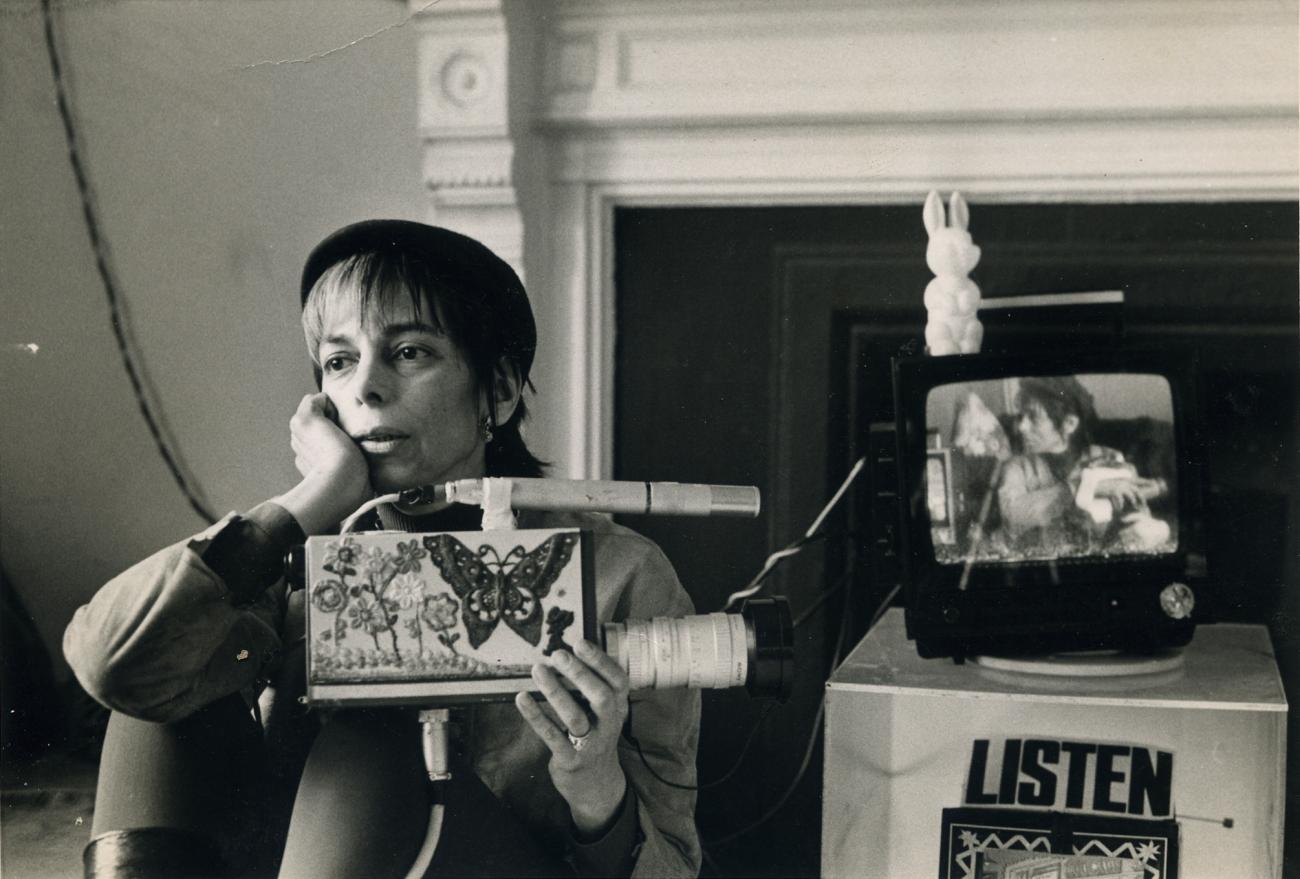
Image context: the lead image uses BFI's archival portrait of Clarke with camera and monitor rather than a generic poster or fan collage.[2] It fits this article because Clarke's authorship never sits above the machinery. Her films keep exposing the camera as part of the encounter, and the portrait does the same thing in still form.
Dance comes first, so bodies organize the frame before plot does
Kim Coleman and Angelos Koutsourakis both emphasize that Clarke came to filmmaking through dance, and that background matters formally rather than decoratively.[1][3] Before the better-known features, she had already made dance films and kinetic urban shorts in which movement does the thinking. Criterion's 2024 Shirley Clarke spotlight uses the right terms when it links her to jazz, modern dance, and abstract expressionism while stressing her feeling for rhythm and motion.[4] Clarke does not treat movement as garnish laid over narrative. She uses it to decide how a shot should breathe.
That choreographic intelligence stays visible even when the subject appears static.[3][4] In The Connection, a room full of addicts waiting for a dealer could have become filmed theater or grim social-message realism. Clarke turns it into something more volatile. Bodies lounge, posture, interrupt, perform for the camera, and refuse the camera, while Freddie Redd's score keeps time from settling into plain deadlock.[5][7] The apartment is cramped, but the film never feels inert. Clarke is always redistributing tension through where people sit, lean, pace, play, or look.
This is one reason her work resists the false divide between formal experimentation and social material.[1][3][4] The frame is never abstracted away from bodies; it is sharpened by them. Even her early city pieces teach the same lesson. Buildings, bridges, and labor do not just exist as architecture. They become sites of patterned motion. When Clarke later moves into features, she carries that training with her. A scene becomes legible not because dialogue explains it, but because the bodies inside it have already started arranging rank, seduction, embarrassment, and threat.
Jazz and black performance push the films into public argument
Clarke's most decisive films are also inseparable from jazz and from Black performance, though never in a calm or innocent way.[2][3][5][6][7] The Connection builds its whole challenge around musicians, addicts, and a meta-documentary setup that keeps asking whether realism is being captured or manufactured.[5][7] TCM is especially helpful on the practical stakes here: the film matters not just as an early independent feature but as a piece of jazz-inflected cinema in which the room's waiting game becomes rhythm, delay, and confrontation.[7] Clarke does not smooth that energy into respectability. She lets it remain abrasive.
The Cool World scales the same instinct outward into Harlem streets, playgrounds, stoops, and gang territory.[1][2][6] BFI's guide to Clarke points to the film's importance as a breakthrough in location shooting and as part of her wider commitment to hybrid form.[1] The BFI film page preserves the core production fact that matters here too: Clarke cowrote the film with Carl Lee, shot in New York, and treated the city less as backdrop than as lived social pressure.[6] The result is not a polished studio allegory about youth violence. It is a movie full of public movement, contested belonging, and people performing themselves under the double pressure of neighborhood life and cinematic scrutiny.
That tension is part of what makes Clarke durable and difficult.[2][3][6] She is not a transparent observer who disappears into the subject. Her films keep showing that performance and observation are entangled. In The Cool World, that means faces, postures, and territorial gestures are never simply "raw reality." They are shaped by the fact of being filmed, by collaboration, and by the unequal structures around that collaboration. Clarke's honesty lies less in claiming purity than in refusing to hide the friction.
Portrait of Jason makes the camera's demand impossible to ignore
If Clarke's earlier films stage the problem, Portrait of Jason makes it explicit.[2][3][8] The setup is almost brutally simple: Jason Holliday talks, jokes, dodges, performs, reinvents himself, and grows tired over the course of one extraordinary filmed evening.[8] But the greatness of the film lies in the way Clarke and Carl Lee let the terms of that performance become visible. Koutsourakis's director profile and his later Portrait of Jason essay both stress that the film does not deliver a stable documentary subject for easy consumption.[3][8] It turns the interview into a struggle over style, authority, fatigue, and truth.
That is why the movie still feels dangerous.[3][8] Jason is charismatic enough to command the frame, yet the frame keeps pressing back. He tells stories, shapes his persona, and performs wit as survival, while the offscreen voices pushing him to "tell the truth" expose the aggression inside documentary desire itself.[8] Clarke does not resolve that aggression. She leaves it there, audible and embarrassing. The film becomes a record not only of Jason Holliday's self-fashioning, but of a camera culture that wants revelation and keeps confusing revelation with extraction.
Seen from that angle, Clarke's whole body of work tightens into one argument.[1][2][3][4] Dance gave her a way to think through bodies in space. Jazz gave her rhythm, interruption, and instability. Documentary method gave her a false promise she could productively break. Across shorts, features, and late work, she keeps refusing the comfortable fiction that people simply present themselves and cameras simply record them. In Clarke, performance is the truth-bearing surface, not the obstacle to truth.
That is why she still matters in 2026.[2][3][4] Plenty of contemporary cinema claims hybridity. Clarke remains sharper because she understood that hybridity is not a branding term or a format mix. It is a pressure system. Put a performer, a street, a room, a monologue, or a song in front of a camera and the terms of reality change. Rather than pretending otherwise, Clarke built a cinema out of that change.
Sources
- Kim Coleman, "Where to begin with Shirley Clarke," BFI.
- Isabel Stevens, "A profile of Shirley Clarke," BFI / Sight and Sound.
- Angelos Koutsourakis, "Clarke, Shirley," Senses of Cinema.
- The Criterion Collection, "The Criterion Channel's February 2024 Lineup" (Directed by Shirley Clarke spotlight note).
- Senses of Cinema, "The Connection."
- BFI, "The Cool World (1963)" film page.
- Turner Classic Movies, "The Connection."
- Angelos Koutsourakis, "Portrait of Jason (Shirley Clarke, 1967)," Senses of Cinema.