Spoiler note: this essay discusses the ending of Roman Holiday, including the final press conference.
People often remember Roman Holiday as the Audrey Hepburn coronation first and the movie second, or else as a postcard romance in which Rome does half the work for everyone involved.[1][2][3][4] Both memories are accurate, but neither goes far enough. William Wyler's film is gentler and stranger than a simple star vehicle, and sadder than a simple travel fantasy. What it finally offers is not freedom in any durable political or romantic sense. It offers a lease. Princess Anne gets one day in which ordinary life can be tried on like borrowed clothes: a haircut, flat shoes, a cigarette, a scooter ride, a mouthful of gelato, a little wandering, and the temporary miracle of being addressed not as a symbol but as a person. The movie becomes moving because it never lies about the terms. The lease will expire.
That built-in expiration is what gives the picture its shape.[1][2][3] AFI's catalog notes that the film announced its own production premise in the credits, declaring that it was photographed and recorded in its entirety in Rome, and that contemporary coverage treated it as the first Hollywood picture shot and processed in Italy.[1] That decision matters aesthetically, not just industrially. Rome is not used as a generic backdrop for glamour. Its streets, steps, riverbanks, traffic, scooters, cafe tables, and stone surfaces create a public world where anonymity can feel plausible for a few hours. The city is what lets Anne stop looking like a royal function and start looking like a young woman improvising a day.
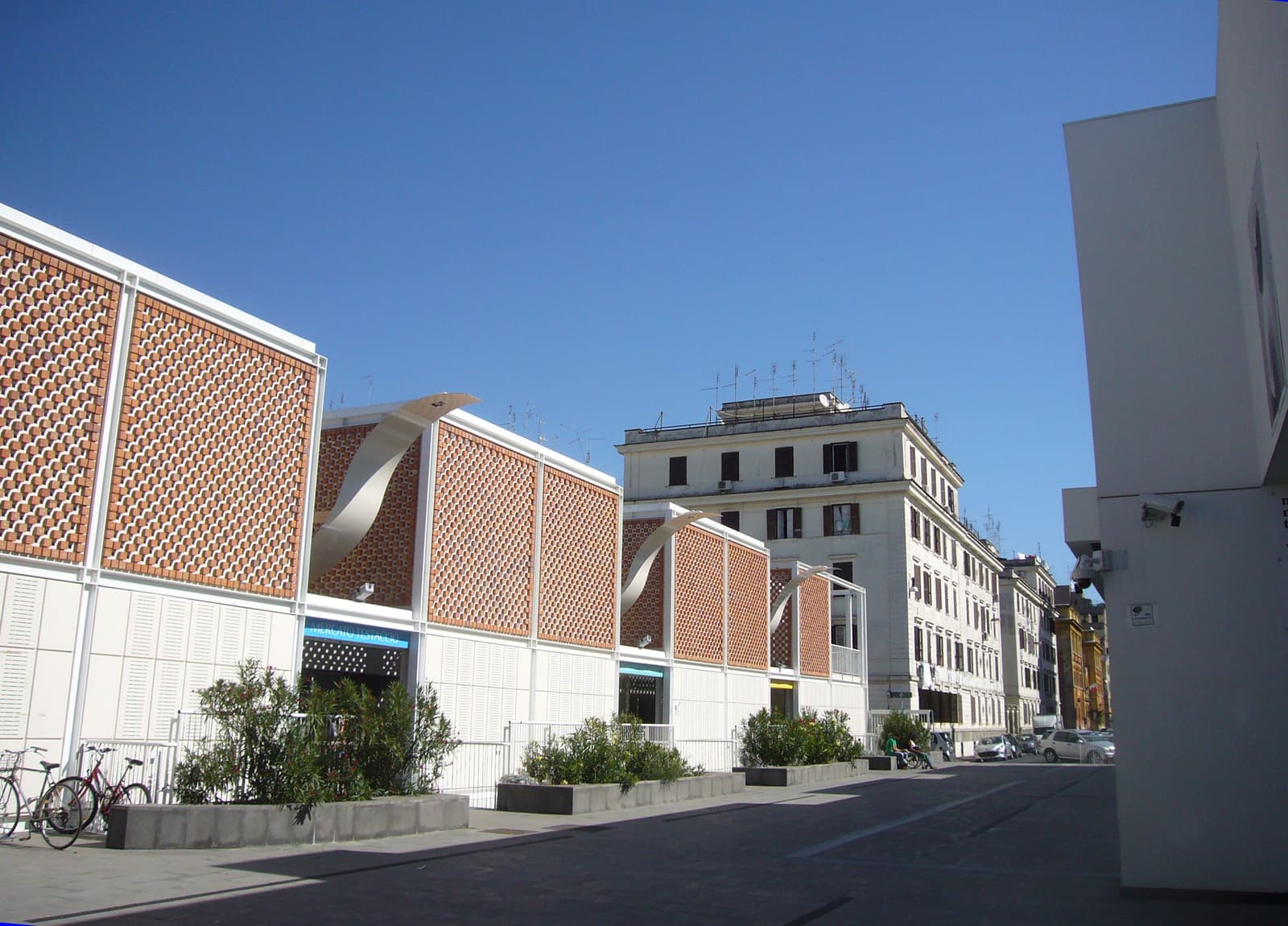
Image context: the cover uses a real Roman residential street rather than a film still. That choice keeps the essay close to the movie's central mechanism: Anne's borrowed freedom is made believable by ordinary civic space, not by spectacle. The apartments, road surface, parked cars, bicycles, and open sky make anonymity feel like something the city can lend for a few hours.
Rome makes disguise feel ordinary instead of theatrical
Many romantic comedies depend on disguise, but Roman Holiday strips the device down to social basics.[1][2][3] Anne does not become someone wildly implausible. She becomes someone less legible. Once she has slipped past the machinery of state visits, handlers, and rehearsed speeches, the city gives her something subtler than invisibility. It gives her ambient inclusion. In Rome, she can sit at a cafe table, walk a street, or linger at a market without every gesture being interpreted as protocol.
That is why the film's location shooting is more than tourism bait.[1][2] The appeal of Rome lies in its public looseness. Anne is not escaping into wilderness, private wealth, or secluded luxury. She is escaping into pavements, barbers, newsstands, scooters, river walls, and crowded daytime circulation. The fantasy is civic. It proposes that ordinary urban life contains kinds of freedom unavailable inside ceremonial life, not because the city is pure, but because it is full of people who are not looking at her the way a court looks at her.
BFI's capsule still describes the film as a romantic comedy, and that label remains useful so long as comedy is understood as a form of pressure release rather than weightlessness.[2] Anne's freedom is exhilarating because it is so materially small. She does not overthrow anything. She orders food, gets her hair cut, chooses where to stand, and lets time become hers for a few hours. The film understands that for someone overgoverned, those small acts can feel revolutionary without needing to be dramatized as revolution.
The haircut and the scooter are not props; they are tools for testing a self
The most famous details in Roman Holiday risk becoming souvenirs in memory.[2][3] Audrey Hepburn's cropped hair, the Vespa ride, and the Mouth of Truth episode are often treated as the cute parts, the bits that made the movie immortal in still images and trailers.[2][5] But the film gives each of them a precise thematic function. They are not random charms. They are instruments through which Anne rehearses a version of selfhood with fewer witnesses and fewer instructions.
The haircut matters because it is the first outward sign that she wants to interrupt continuity.[2][3] Royal life depends on repetition, costume, and recognizability. Cutting her hair is not rebellion in a grand political register, but it is a refusal of visual continuity, a way of making herself briefly unreadable to the system that has always known how to place her. Even the act of choosing the cut matters. A woman who is usually dressed, scheduled, and displayed by others gets to decide what face she will bring back into the street.
The scooter does something related in motion.[2][3] It is comic, but it is also democratic. Instead of being carried through Rome as state theater, Anne moves through it badly, noisily, and in public confusion. The film loves the disorder of that movement because it collapses distance. Royal transport isolates. The scooter exposes. It turns Anne from a figure to be saluted into a body that must react, balance, improvise, and occasionally cause a mess. Freedom in Roman Holiday is not serene. It is a little embarrassing, a little unstable, and therefore real.
Even the Mouth of Truth gag matters beyond its famous laugh.[2][5] The scene is playful, but it turns on a hidden fact inside a public ritual. Joe performs danger, Anne believes him for a second, and the joke lands because intimacy has started growing inside deception. That pattern runs through the whole film. Pleasure is possible here, but it never arrives cleanly. Every good moment is entangled with concealment, role-play, or the clock.
Joe's profession keeps commerce inside the romance
One reason Roman Holiday remains sharper than many films built on the same premise is that it never lets romance float free of work.[1][2][3][4] Joe Bradley does not stumble into Anne's life as a neutral bystander. He recognizes a story. He sees the scoop value before he fully sees the person. Irving Radovich sees it too, only more crudely, with a camera always ready to convert private trust into publishable evidence. The film's tenderness therefore grows inside a structure of extraction.
That journalistic frame does two useful things. First, it prevents the movie from becoming a pure fairy tale. Joe and Anne are not meeting on abstract emotional ground. They are meeting in a city where images, access, and headlines have value. Second, it lets the picture rhyme its own plot with its production history. The Library of Congress and the Academy both note that Dalton Trumbo's story credit was entangled with blacklisting and delayed recognition.[3][4] A film about concealed identity, managed appearances, and truths that cannot be publicly owned was itself shaped by Hollywood's politics of naming and misnaming. That does not explain the movie, but it gives its public-private split an extra historical resonance.
Joe's transformation matters because the film refuses to sentimentalize it too early.[1][3] He does not become decent the moment Anne becomes charming. Decency has to fight against professional appetite. The romance becomes convincing because it is measured against something harder than shyness or class difference. Joe must decide whether an extraordinary day is a commodity or a confidence. That question keeps the film honest.
The final press conference turns freedom back into posture
The ending is what makes the whole film land with such force.[2][3][4] If Roman Holiday merely celebrated spontaneous life and then paired its leads off, it would remain lovely but smaller. Instead, Wyler returns Anne to protocol and lets the film discover how much can be said inside formality once two people share a secret history. The press conference is not an action climax. It is a test of whether borrowed freedom can leave a trace after public roles have resumed.
This is where Hepburn's performance becomes truly devastating.[2][3][4] The overnight-star story is real; the Oscars history confirms how quickly the industry recognized her.[3][4] But star birth is not the deepest reason she works in the film. She understands that Anne cannot play the ending as simple heartbreak, and cannot play it as cheerful maturity either. She has to restore the princess without erasing the woman who spent a day in Rome. So every pause, every controlled smile, and every carefully phrased answer at the press conference becomes double. Official language continues; private knowledge stays alive beneath it.
Joe's final refusal to expose her completes the film's ethic.[1][3] He does not win Anne, topple monarchy, or carry freedom into a future they can share. He does something smaller and morally finer. He allows the day to remain hers. The reporters get their audience. The public gets its images. But the truth of what happened is withdrawn from circulation at the last possible moment.
That is why the last walk out of the room hurts as much as it does.[2][3] Nothing spectacular happens. A woman returns to her role, a man stays standing in an emptying chamber, and a city day ends. Yet the film has been preparing precisely this emotional arithmetic all along. Freedom was real, but leased. Romance was real, but unclaimable. Rome was not a cure. It was a borrowed interval in which two people briefly escaped the scripts waiting for them. Roman Holiday lasts because it treats that interval as enough to matter and never pretends it can be made permanent.
Sources
- AFI Catalog, "Roman Holiday (1953)" film entry with credits, production history, and location-shoot note.
- BFI, "Roman Holiday (1953)" film page.
- Library of Congress, "Roman Holiday (1953)," National Film Registry brief description and essay entry.
- Academy of Motion Picture Arts and Sciences, "4K Restorations Available in August: 'Cinderella,' 'Roman Holiday' and More."
- Paramount Movies, "ROMAN HOLIDAY | Trailer" — trailer reference for iconic scene memory and visual circulation.