Film noir is often treated like a sealed vintage style: trench coats, Venetian blinds, cigarette smoke, and a doomed man narrating his own mistake. But noir has survived for nearly a century because it is not a costume kit. It is a transferable visual and moral system: put people into unstable institutions, light them as if reality is cracking, and force every choice through risk, desire, and compromise.
That system did not begin in 1940s Hollywood. Its strongest early blueprint came from German Expressionist cinema in the 1910s–1930s, where filmmakers used distorted design and hard contrast to externalize anxiety. From there, émigré talent and studio adaptation translated the look into American crime stories, and later directors rebuilt it again in neo-noir with color, new cities, and modern surveillance culture.
If you want to understand why noir still feels contemporary, the useful question is not “what does noir look like?” It is “what problem was noir built to solve?” The answer is this: how to make social distrust visible on screen.
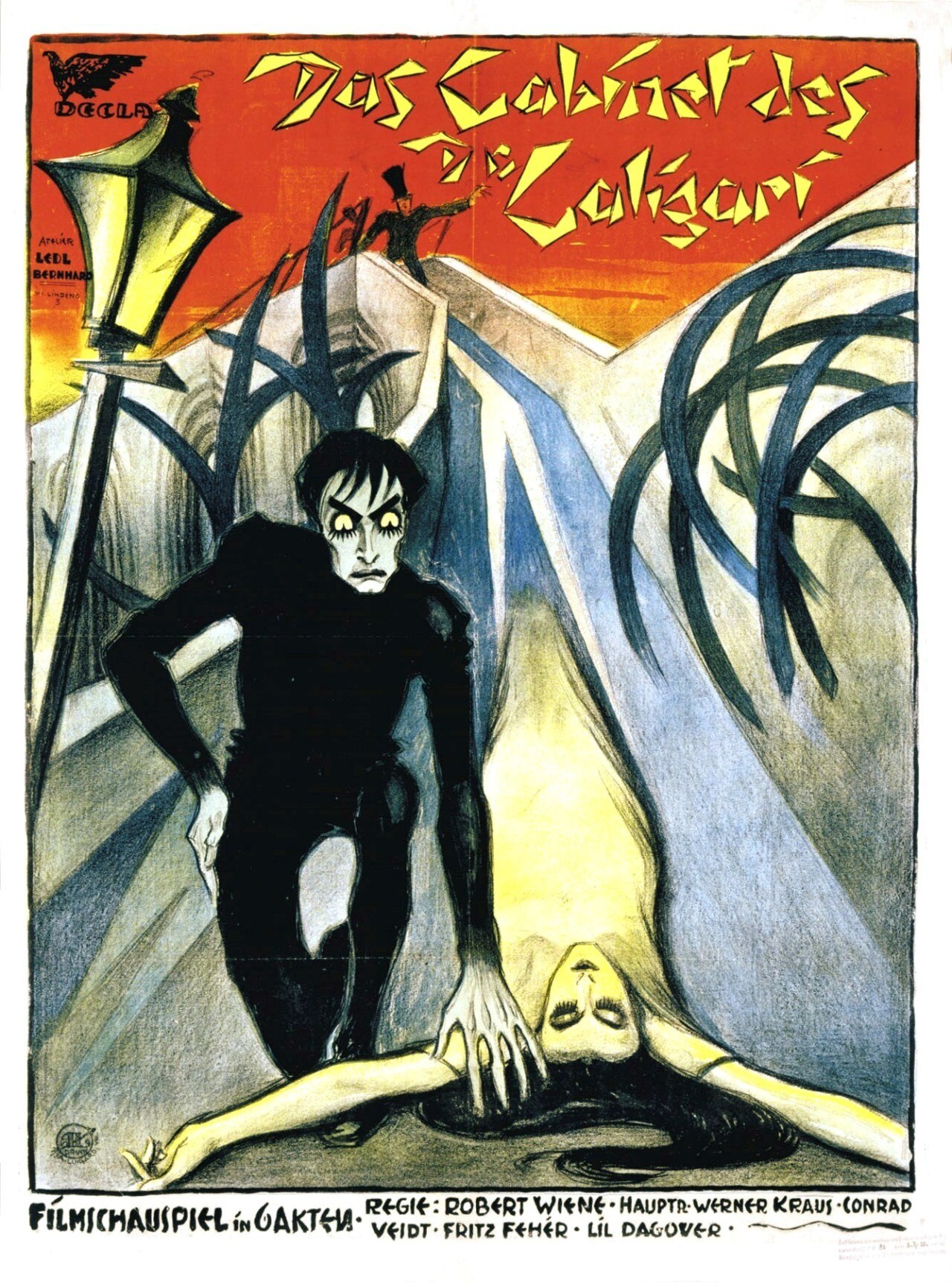
Image context: the cover image references expressionist set design from The Cabinet of Dr. Caligari (1920), grounding this article’s lineage argument in the visual language where noir’s shadow logic first cohered.
1) The expressionist prototype: design as psychology
Britannica’s entry on The Cabinet of Dr. Caligari calls the film (released in 1920) both a foundational horror work and the first major breakthrough of German Expressionist cinema.[1] That dual status matters. The film’s painted shadows, angled streets, and anti-natural set geometry are not decoration; they turn built space into a psychological instrument.
In other words, Expressionism established a durable rule: when institutions feel irrational, images should stop pretending the world is stable. This rule appears across Weimar-era output, where non-naturalistic architecture and exaggerated contrast carry emotional and political pressure.[2][3]
American Cinematographer’s historical review notes that German cinema’s interwar boom and later talent migration brought this visual thinking to Hollywood, naming figures like Fritz Lang and Karl Freund as key bridges.[4] Even if only a subset of Weimar films were fully Expressionist, the movement’s high-contrast methods became portable craft.
At this stage, the core noir toolkit already exists:
- visual asymmetry,
- hard-edged light as narrative pressure,
- and environment as moral argument, not neutral backdrop.
2) Hollywood translation: from expressionist space to noir causality
When French critics encountered the delayed wartime wave of American crime films in the mid-1940s, they labeled the cycle film noir.[5][6] The style looked new in the U.S. context, but structurally it was a translation project:
- Expressionist lighting and mood,
- hard-boiled American crime plotting,
- and postwar social pessimism.
BFI’s noir overview (1940–1959 cycle) summarizes this blend directly, pointing to “angular lighting effects” inherited from 1920s German cinema and a world-weary postwar atmosphere.[5] Britannica similarly identifies noir’s cynical protagonists, low-key contrast, and existential undertow as defining marks of the form.[6]
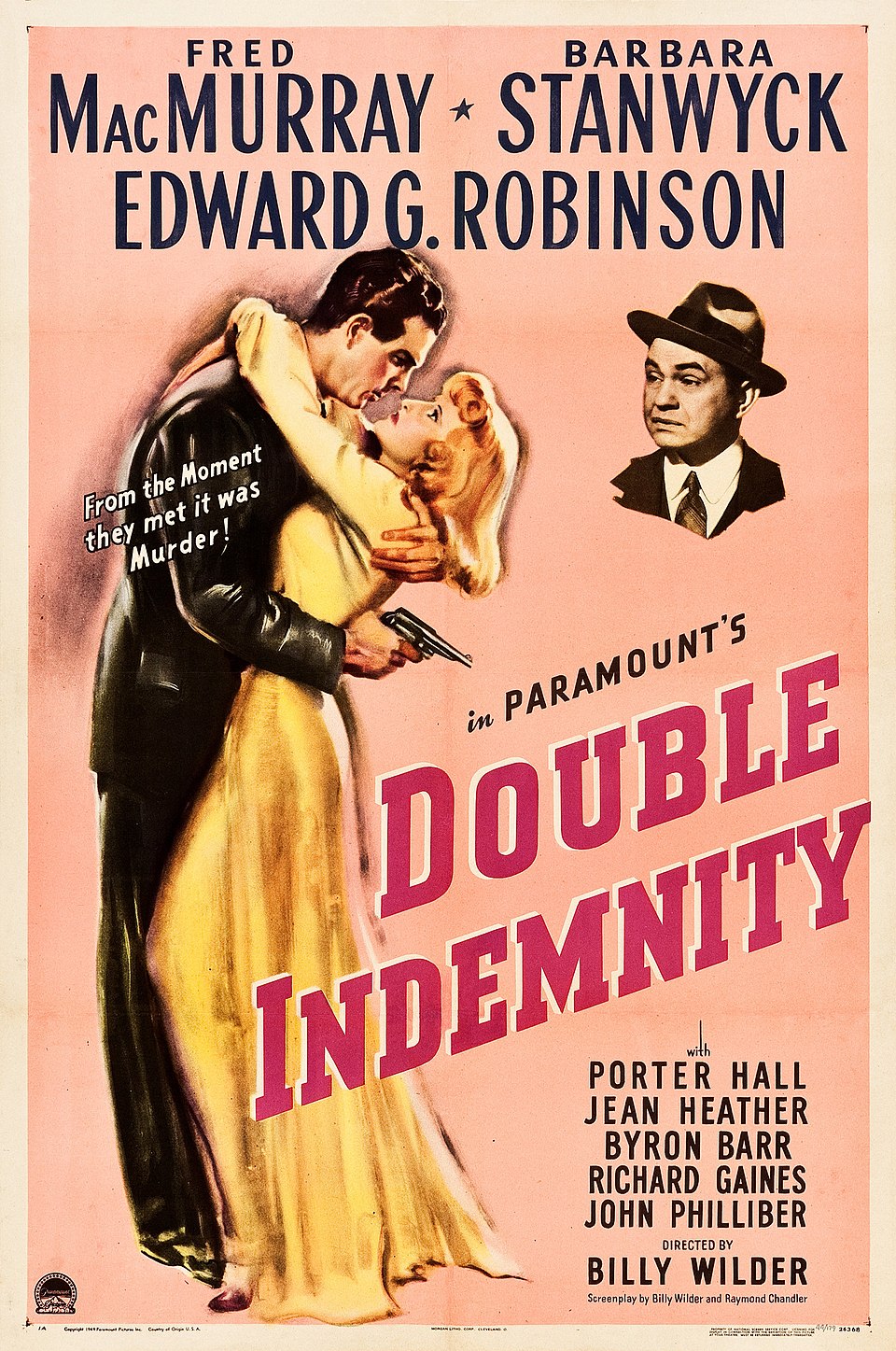
That is why Double Indemnity (released in 1944) remains such a useful reference point. Britannica calls it a quintessential noir film.[7] But its importance is bigger than canonical status: it shows noir’s causal machine in clean form. Desire triggers conspiracy, conspiracy triggers procedural pressure, and every attempt at control increases exposure. Light and narrative are synchronized—faces split by shadow while options narrow.
So classic noir is not just “dark cinematography.” It is a contract between image and consequence:
- the frame says trust is broken,
- the plot proves trust is broken,
- and the ending denies clean recovery.
3) Why noir kept surviving after the 1950s
If noir were only a black-and-white period style, it would have ended with studio-era production habits. Instead, later filmmakers carried its logic into neo-noir. Histories of neo-noir generally place the revival from the 1970s onward, with updated violence, sexuality, and urban systems but recognizable noir DNA in moral ambiguity and high-contrast composition.[8]
What changed was medium and setting:
- color replaced strict monochrome,
- suburban and corporate spaces joined alleyways,
- police files became data systems,
- and conspiracy moved from single crimes to institutional networks.
What stayed was noir’s governing equation: the city is legible as power, and power is rarely transparent.
You can see this continuity in contemporary detective-centered films like The Batman (2022): rain-heavy urban imagery, procedural pursuit, corruption ladders, and a protagonist whose “truth-seeking” still passes through compromised systems.[9] The textures are modern, but the noir contract remains intact—no stable innocence, only better or worse bargains.
4) The movement context that matters in 2026
In practical terms, noir is now a trans-period grammar rather than a closed historical box. That is why it keeps reappearing in prestige crime, superhero reboots, and streaming thrillers:
- It handles distrust better than heroic realism.
- It allows politics without speechifying.
- It turns urban infrastructure (streets, offices, transit, data rooms) into character.
This is also why expressionist inheritance still matters. Once cinema learned to bend architecture, contrast, and angle to represent internal fear, it gained a method that remains useful whenever public life feels opaque.
Noir’s afterlife is therefore not nostalgia. It is maintenance. Every era with institutional fatigue rebuilds the same machine: fractured light, uncertain narration, and characters negotiating systems that promise order while producing danger.
Takeaway
The line from Caligari (1920) to neo-noir in the 2020s is not a museum timeline; it is a working lineage of cinematic problem-solving. German Expressionism supplied the visual stress language. Hollywood noir fused it with American crime causality. Neo-noir kept the moral weather while updating the technology and the city.
That is why noir still feels alive: it was designed for periods when reality looks official on paper but unstable in lived experience.
Sources
- Britannica — The Cabinet of Dr. Caligari
- Britannica — German Expressionism
- Wikipedia — German expressionist cinema (historical overview)
- American Cinematographer — German Cinema Comes to Hollywood
- BFI — A great film noir for every year (1940 to 1959)
- Britannica — film noir
- Britannica — Double Indemnity (film)
- Wikipedia — neo-noir (periodization/context)
- Wikipedia — The Batman (2022) (production/context)