Paul Schrader's 1985 USA-Japan production Mishima: A Life in Four Chapters is often described as a biopic, but that label is almost too ordinary for the machine the film actually builds.[5] It does not try to make Yukio Mishima legible by smoothing him into a single psychological line. It splits him into systems: the last day of his life in 1970, black-and-white memories that move through childhood and public self-fashioning, and saturated stage worlds adapted from three of his novels.[1][2] The film's craft achievement is that those systems remain visibly separate while constantly pressing on one another.
That separation is not decorative. It is the point. The Criterion Channel frames the movie as a collagelike portrait that investigates Mishima's attempt to reconcile self, art, and society; the structure enacts that impossibility instead of merely stating it.[1] If the film had used a conventional cradle-to-grave shape, the viewer would be invited to ask which event explains the man. Schrader's answer is harsher and more cinematic: no single event explains him. The life, the written work, the body, the public performance, and the fatal final gesture keep rewriting each other.
The film makes biography spatial before it makes it explanatory
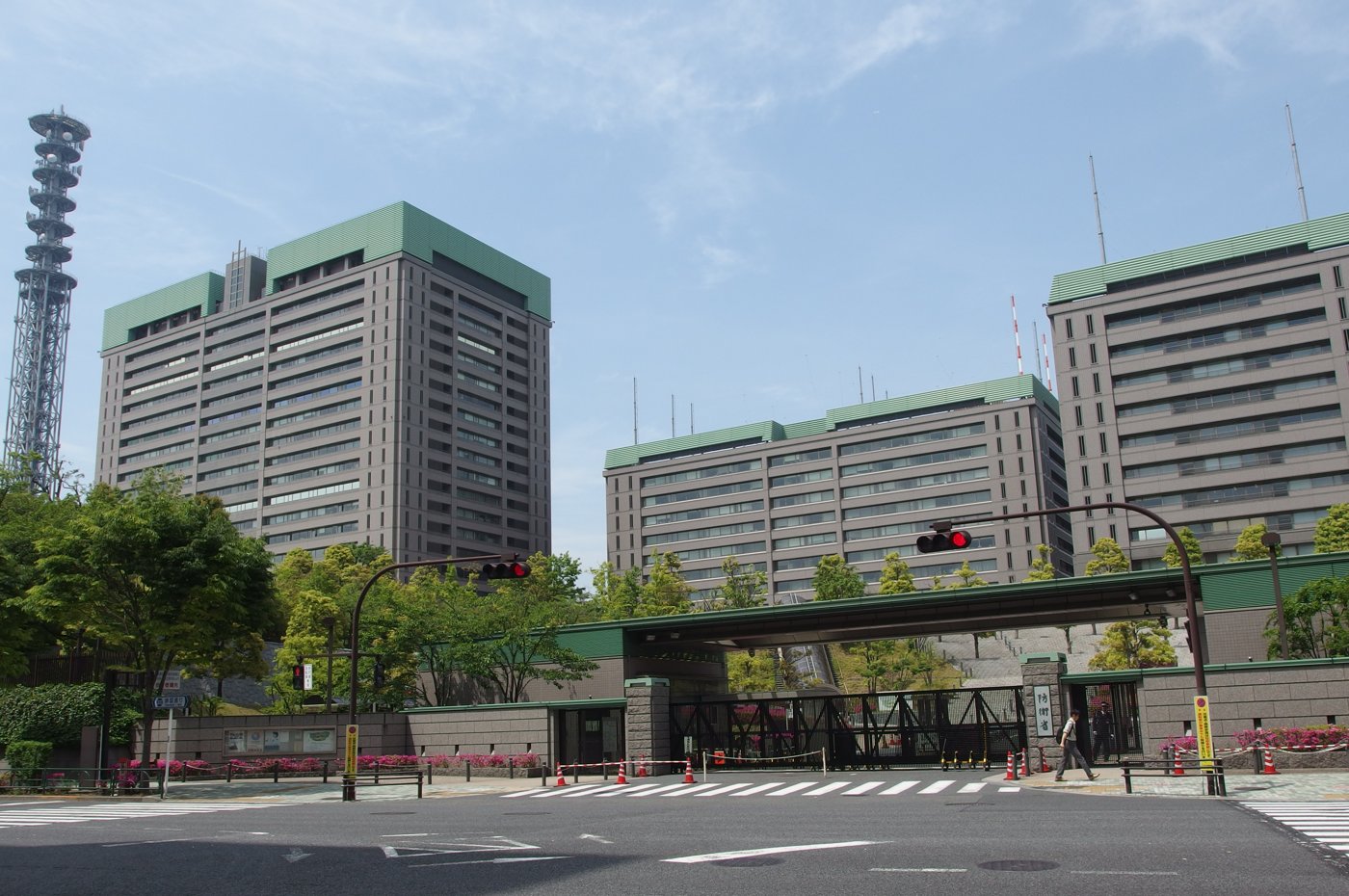
The present-tense strand gives the film a hard spine. Mishima and members of his private militia move toward the military headquarters where the day will end; the scenes have the pressure of procedure, not confession.[1][2] The camera is not asking us to wait for a hidden childhood key that will unlock the act. It is arranging bodies, uniforms, corridors, cars, and speeches into a route. Biography becomes movement toward a stage.
That matters because Schrader's recurring subject has long been the solitary man who prepares himself for a role that may destroy him. UCLA's account of the film reads Schrader's Mishima as a visual autopsy and emphasizes the progression from words toward action, body, and public self-direction.[2] In Mishima, that pattern is more dangerous because the mission is not invented for fiction. The film is adapting a real writer whose life already looked theatrical, and it has to keep that theatricality from becoming simple endorsement.
Schrader solves the problem by refusing a neutral middle style. The 1970 material is controlled and muted. The memories are black and white. The fiction sequences are boldly artificial. Each mode tells the viewer what kind of evidence it is allowed to be. Memory is not the same as public action; fiction is not the same as confession. Yet the modes keep touching, so the viewer can feel how a pose rehearsed in art might return as a gesture in life.
Black and white turns memory into composition
The Ichigaya image is useful because it keeps the article anchored in the film's least metaphorical pressure: the final day has an address before it becomes an interpretation. Against that hard destination, the black-and-white memory strand becomes more unstable. The writing desk, childhood rooms, books, paper, light, and shadow are not safe biopic furniture. They are control surfaces, places where life can be converted into sentences, image, and discipline.[1][2]
UCLA's account describes the childhood, adolescence, and biographical material as crisp black-and-white, distinct from both the documentary-style final day and the stylized novel dramatizations.[2] That monochrome choice does not make the past more truthful. It makes it more composed. Memory arrives as form, already sorted by contrast, framing, and voice-over. The past is not raw material waiting to be discovered. It is another made object.
That is why the film's flashbacks avoid the soft glow that often weakens cinematic biography. They have elegance, but not comfort. Childhood frailty, erotic self-recognition, wartime fantasy, literary ambition, physical training, and celebrity all appear as stages in the construction of a public self.[2] The black-and-white register keeps asking whether self-knowledge and self-stylization can ever be separated once a person has learned to live through images.
Ishioka's sets make fiction behave like pressure
The novel sequences are where Mishima becomes most visibly unlike ordinary biography. The Criterion Channel identifies the fictional strand as stylized evocations of Mishima's works, while UCLA specifies the three source zones: The Temple of the Golden Pavilion, Kyoko's House, and Runaway Horses.[1][2] Each looks like a separate emotional climate. The colors do not illustrate the plot from outside. They trap the characters inside an argument.
Eiko Ishioka's production design is the strongest clue to why those scenes feel so assertive. UCLA describes the dramatizations as heavily stylized theatrical sets, and IONCINEMA singles out the triptych of Ishioka's design, Bailey's photography, and Glass's score as the artistic combination behind the film's Cannes recognition.[2][4] That is exactly what the finished film feels like. The fiction scenes are not windows into Mishima's books. They are rooms that push back.
UCLA notes that each set design carries a specific color scheme, while IONCINEMA describes the film's three periods as made distinct by pronounced visual palettes.[2][4] Those palettes are not tasteful period coding. They make obsession legible as atmosphere. Beauty becomes a color trap; erotic debt becomes a chamber; political purity becomes a ritual field. The craft decision is blunt in the best sense: the inner life is not hidden beneath the surface. The surface has become the inner life.
Glass gives the structure forward motion
Philip Glass's score is the other element that keeps the film from falling into fragments. The Criterion Channel highlights it alongside Bailey's cinematography and Ishioka's sets and costumes, while Glass's own recording page preserves Schrader's note that he wanted music that would unite the film's disparate elements and propel it forward.[1][3] The music does not simply intensify emotion after the image has done its work. It gives the film a sense of procession, as if the separate tracks are being pulled toward one convergence.
Schrader's account of the collaboration is especially revealing: Glass wrote from the script, Schrader edited against the temporary score while cutting, expanding, and repeating cues, and Glass then rewrote the music to fit the film's precise needs.[3] That workflow helps explain why the score feels both independent and locked in. It has its own architecture, but it also knows when to tighten around image, speech, and transition.
The result is unusual for a biographical film. Instead of using music to humanize Mishima or soften the last movement into tragedy, the score gives the structure ceremonial momentum.[3][4] It lets the film feel terrible and lucid at once. By the climax, the fictional endings, the public act, the memories, and the cultivated body are no longer separate explanatory tracks. They are simultaneous pressures.
The craft is the argument
That is why Mishima remains one of Schrader's most audacious films. Its moral intelligence lies in form. It does not ask the viewer to admire Mishima's politics, forgive his narcissism, or reduce him to pathology. It asks something more difficult: to watch how a person can turn life into art, then discover that art may not provide any stable boundary against performance, violence, or self-destruction.[1][2]
The film's beauty is therefore never innocent. Bailey's separated image registers, Ishioka's aggressive set worlds, and Glass's processional score all make self-invention feel at once seductive and catastrophic.[1][2][4] A weaker biopic would translate contradiction into explanation. Mishima keeps contradiction visible as craft. The man is not solved by the structure. He is caught inside it.
That is the lasting lesson for filmmakers. When the subject has already made himself into an image, the camera cannot pretend to stand outside image-making. Schrader's solution is to build a film of competing image systems and let them collide. Biography becomes black-and-white memory, present-tense procedure, color-coded fiction, and musical propulsion. The technique does not decorate the life. It shows why the life cannot be separated from technique.
Sources
- The Criterion Channel, "Mishima: A Life in Four Chapters" streaming page, with film description and special-feature descriptions.
- Rowena Aquino, "Eros and Heroism: Mishima, A Life in Four Chapters," UCLA International Institute, July 11, 2008.
- Philip Glass, "Mishima" recording page, including Paul Schrader's note on the score's development and track listing.
- Nicholas Bell, "Criterion Collection: Mishima: A Life in Four Chapters | Blu-ray Review," IONCINEMA.com, June 17, 2018.
- BFI, "Mishima: A Life in Four Chapters (1985)" film page, with credits, country, and running-time metadata.
- Wikimedia Commons, "Japan Ministry of Defense in Ichigaya" image file, showing the Ichigaya compound in Tokyo.