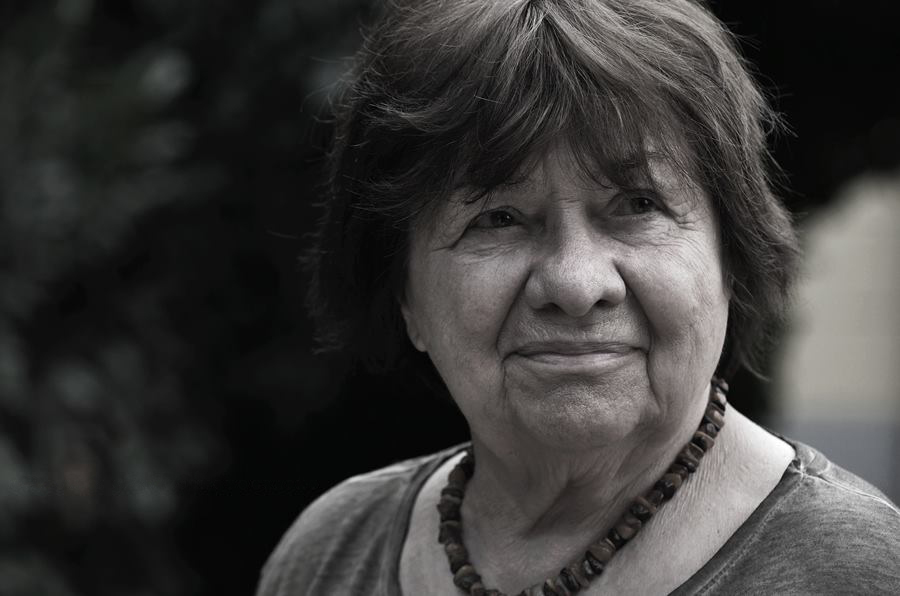
Marta Meszaros's films often begin where a more impatient movie might think nothing cinematic has happened yet: a woman in a factory room, a conversation at a table, a child returning to a family that cannot tell the truth, a young worker deciding whether love requires surrender. The drama does not announce itself through spectacle. It gathers in faces, pauses, doorways, institutional offices, apartments, and the small humiliations that make private life political before anyone names it that way.
That is why Meszaros remains more than a recovered pioneer or a festival-history footnote. Her cinema matters because it finds historical pressure inside ordinary arrangements. She does not simply put women at the center of stories. She changes the scale at which stories become visible. Marriage, motherhood, work, adoption, orphanhood, censorship, and state violence do not arrive as separate themes. They enter the room through who gets believed, who gets touched, who has a document placed before them, and who is expected to accept a lie as common sense.[1][2]
Documentary training made fiction tougher
The National Film Institute's filmography places Meszaros's fiction work after a long documentary apprenticeship: after graduating from Moscow's Union State Film School in 1956, she made documentaries in Bucharest and then worked as a short-film director in Hungary before her feature career began in 1968.[1] That background is not just biographical scaffolding. It explains the hardness of attention in her features. Her camera often behaves as if it has learned not to decorate people before it has understood the conditions around them.
The difference shows in the way her films handle rooms. A room in Meszaros is rarely a neutral container. It is a place where family expectation, state authority, sexual negotiation, and economic dependence compress into posture. People sit, stand, hesitate, and look away with the weight of institutions already present. The setting may be domestic, but the pressure is social.
BFI's guide to her work emphasizes that the personal is never far from the political in a career spanning more than fifty years and more than two dozen features.[2] That is the key to her style. Meszaros does not need a speech explaining that private choices are shaped by history. She lets a woman's hesitation at a table disclose more than a slogan could. The camera waits until the social fact becomes visible in the body.
Her women are not symbols of virtue
The easiest way to flatten Meszaros is to praise her for making "strong women." The phrase is too smooth for what her films actually do. Her central women are often forceful, but they are also lonely, cornered, desirous, proud, needy, observant, evasive, and sometimes cruel. Their strength is not a branding label. It is a contested survival practice.
The National Film Institute's essay on her work argues that, after ten years of documentaries, her debut feature made self-aware Hungarian women newly visible on screen: women whose desire for integrity awakens alongside vulnerability and struggle.[3] That description fits because Meszaros's characters do not simply represent emancipation as a solved ideal. They negotiate the cost of wanting a life that others have already structured for them.
In Adoption, that cost becomes painfully concrete. Janus Films describes Kata as a lonely middle-aged factory worker who wants a child with her married lover, and Anna as a teenage ward of the state determined to emancipate herself and marry; the film follows the bond between them as a slice-of-life drama about female self-determination in 1970s Hungary.[4] The film's power lies in its refusal to turn either woman into a lesson. Kata's wish for motherhood is not sentimentalized into pure generosity. Anna's urgency is not reduced to youthful rebellion. Both women are testing whether the available forms of family can hold their actual needs.
That is Meszaros's moral intelligence. She does not rescue women by making them flawless. She gives them the right to be complicated under pressure.
Adoption turned intimacy into an international event
The 1975 Golden Bear for Adoption can sound, from a distance, like a tidy milestone: a restored classic, a major Hungarian achievement, and the first Berlin top-prize win by a woman director.[4][5] But the milestone matters because the film itself is so deliberately unspectacular. It wins attention through intimacy, not scale.
The National Film Institute's career note connects that breakthrough to Meszaros's wider career, including the later autobiographical Diary films.[5] The surprise is that a film built from quiet rooms, social constraint, and guarded faces could carry that much international force. It did not need to imitate the grand male-authored modernisms around it. It made another kind of seriousness legible.
The restored film's afterlife is important here. The National Film Institute's career notice records that eleven Meszaros features had recently been digitally restored through its restoration program.[5] Restoration did not merely polish old titles. It made the shape of an overlooked career easier to see: the same ethical attention running from early contemporary stories into autobiographical historical cinema.
The Diary films make memory a battlefield
If Adoption shows Meszaros's gift for present-tense social rooms, Diary for My Children shows what happens when those rooms become haunted by history. Janus Films describes the film as a portrait of a strong-willed teenager, Juli, brought back to Hungary after losing her father in Stalinist purges and forced to live under a rigid Communist Party official; it also notes the film's Cannes Grand Prix.[5]
The premise could have produced a conventional coming-of-age memoir. Meszaros makes it harsher and more layered. The problem is not only that Juli remembers trauma. It is that the adult world around her wants to control the terms under which memory can be spoken. The child must learn that history is not just what happened. It is also what powerful people demand be signed, forgotten, renamed, or endured.
The NFI essay is especially useful on this point: it describes how Diary for My Children refracts an era through a psychological and emotional triangle in which even private motifs are woven through with Stalinism.[3] That is a precise account of Meszaros's method. She does not place history in the background like wallpaper. She makes history interfere with love, loyalty, paperwork, education, family, and self-recognition.
The result is autobiographical cinema without narcissism. Meszaros's life enters the films not as confession for its own sake, but as evidence of how the twentieth century reached into childhood, kinship, and memory. The Diary films do not ask viewers to admire survival from a distance. They ask what kinds of truth become possible after a system has trained people to call denial history.
Her plainness is formal discipline
Meszaros's style can look plain if one expects authorship to advertise itself through flamboyant camera movement or overtly symbolic design. But plainness is not absence. In her films, it is a discipline of proportion. She keeps close enough to faces to register injury, but rarely so close that the viewer can consume pain as spectacle. She lets settings remain recognizable, but charges them with social meaning through blocking, silence, and repeated negotiation.
That discipline is why her documentary background and fiction work feel continuous. The films trust ordinary surfaces without treating them as simple. A factory is a workplace and a social hierarchy. A home is shelter and confinement. A state institution is paperwork and moral pressure. A family table is care and coercion. Meszaros's achievement is to make those double meanings visible without turning every scene into a thesis.
Her influence is easiest to feel when watching later filmmakers who treat domestic space, women's work, and political memory as inseparable. But her films do not need the later canon to justify them. They already contain a complete argument about cinema: that a face in a room can carry as much history as a battlefield, and that a woman's refusal to accept the available story can be a major dramatic event.
Why the profile still matters
The European Film Academy's lifetime-achievement notice called Meszaros one of the significant female directors of cinema and emphasized her devotion to independent and complex women; it also noted that eleven of her features had recently been digitally restored through Hungary's National Film Institute program.[5] That institutional recognition is welcome, but it should not domesticate her. Meszaros's films remain sharp because they keep asking uncomfortable questions about the price of ordinary arrangements.
Who is allowed to want a child? Who gets to define family? What happens when a state lies through the people raising you? How much history can fit in a kitchen, a corridor, a signature, a silence? Meszaros did not answer those questions with manifestos. She built films where the questions become visible in behavior.
That is the force of her cinema now. It reminds viewers that political filmmaking does not always begin with public events. Sometimes it begins with a woman entering a room where everyone expects her to accept the terms. Meszaros's camera stays long enough to see whether she will.
Sources
- National Film Institute Hungary, "Marta Meszaros" - institutional filmography and biography covering documentary training, feature career, the Diary series, and selected awards.
- BFI, "Where to begin with Marta Meszaros" - viewing guide and career overview of Meszaros's women-centered cinema and historical-political concerns.
- National Film Institute Hungary, "What do the films of Marta Meszaros give the world?" - essay on her documentary background, female subjectivity, trauma, quasi-realist period, and Diary films.
- Janus Films, "Adoption" - film page for Meszaros's Golden Bear-winning drama, including plot context, release details, and official still/poster downloads.
- National Film Institute Hungary, "EFA Honours Marta Meszaros with Lifetime Achievement Award" - award notice summarizing her career, major films, Cannes and Berlin honors, and restoration program.
- Wikimedia Commons, "File:Meszaros Marta.jpg" - photographic portrait source for the article image.