Lois Weber is easiest to flatten into a recovery headline: firsts, lost films, forgotten woman director. Those facts matter, but they can make her sound important mainly because history treated her badly afterward. The stronger profile begins with power. In the 1910s, Weber was not a marginal exception waiting to be rediscovered. Kino Lorber's Pioneers: First Women Filmmakers collection places Weber among early women whose films helped shape cinema's language, while the National Endowment for the Humanities notes the scale of her output, her feature-directing landmark, her 1916 admission to the Motion Picture Directors' Association, and her studio ownership the following year.[1][2]
That combination changes the question. Weber did not simply enter a young industry before the gates closed. She used the looseness of early Hollywood to make an unusually complete claim on cinema: write the problem, stage the evidence, direct the bodies, shape the cut, and put the finished film in front of an audience as an argument. Her films often addressed poverty, birth control, capital punishment, marriage, hypocrisy, and social respectability, but the moralism was not a sermon pasted on top of technique.[2][5] The technique was the moralism. Split screens, mirrors, self-inscription, parallel stories, and hard attention to rooms and bodies let Weber make film viewing feel like judgment.
Authority Before The Studio System Hardened
Weber's career makes most sense if early Hollywood is treated as a live industrial experiment rather than a settled hierarchy. NEH quotes her recollection that everyone was too busy learning a new business to police who was gaining a foothold.[2] That line should not be romanticized. The opening was real, but temporary. It mattered because Weber was ready to occupy more than one job at once: performer, scenarist, director, producer, editor, and public moral voice.[1][2]
That is why the word "auteur" fits her less as a prestige label than as an operating description. Weber's authorship was practical. She did not only sign themes. She built production conditions around them. In 1917, when she formed Lois Weber Productions, authorship became a business arrangement as well as a style.[2] The point was not vanity control. It was alignment. A film about an underpaid shopgirl, a birth-control controversy, or a family watching cautionary versions of itself required a production method that could keep social pressure, performance, editing, publicity, and moral framing pointed in the same direction.
Her authority also complicates a common story about silent-film women as assistants to male innovation. Weber worked for years with Phillips Smalley, and credits often carry both names, but the evidence around her studio leadership and public status makes it hard to treat her as a footnote to someone else's authorship.[2][6] The important correction is not merely biographical credit. It is formal. If Weber is read as an appendage to early film history, her films become examples of social-issue melodrama. If she is read as a director with command, the same films look like systems for organizing attention.
Social Problem Films With Teeth
The danger with Weber's moral subjects is that modern viewers may expect either scolding or simplicity. Her surviving work is more severe than that. Shoes (1916), selected for the National Film Registry in 2014, follows an underpaid shopgirl whose worn footwear becomes not a symbol floating above the story but a physical problem: labor, weather, family dependence, desire, bodily exposure, and shame all pass through one everyday object.[4] The Library of Congress summary stresses Weber's missionary background, reform impulse, and vivid visual storytelling, but what makes the film endure is the way those elements lock together.[4]
In other words, Shoes is not only about poverty. It is about how poverty makes the body negotiate public space. The shop counter, the street, the window display, the damaged shoe, and the mirror all become pieces of an argument about what respectability costs when wages do not meet need. That is Weber's best habit: she turns an issue into a sequence of visible pressures, then lets the viewer feel how limited the character's choices have become.
Idle Wives (1916), preserved in incomplete form by the National Film Preservation Foundation, makes the method even more reflexive. The surviving film notes describe characters attending a movie called Life's Mirror, directed inside the story by "Lois Weber," where they see cautionary versions of their own lives.[5] That device could have been a gimmick. Weber makes it a theory of cinema. Filmgoing becomes a space where people encounter themselves indirectly, through melodrama sharpened into recognition.
This is why her moral cinema looks like command rather than decoration. Weber does not simply ask audiences to agree with her. She designs situations where looking has consequences. A mirror, a screen within the screen, a shop window, a split field of action, or a body in need becomes an instrument for forcing recognition. The moral claim arrives through arrangement.
Suspense As Grammar, Not Only Plot
Weber's technical reputation often narrows to Suspense (1913), the short thriller selected for the National Film Registry in 2020.[3] The selection notice matters because Suspense is not preserved as a curiosity by a woman who happened to be early. It belongs in the registry because it shows early cinema actively discovering how to divide, accelerate, and coordinate attention. The home-invasion setup is simple enough: danger approaches, a woman is isolated, help is delayed. Weber's achievement is to make simultaneous action feel spatially legible and emotionally tightening.
The split-screen effect associated with Suspense is useful because it exposes her larger habit. Weber liked forms that made parallel pressure visible: one person seeing and another not seeing, one life mirrored by another, one social fact hidden by polite surfaces, one action occurring while another fails to arrive in time. The technique is not a trick outside her social films. It is the same mind at work. A split screen can organize danger; a mirror can organize shame; a movie inside a movie can organize self-recognition.
That continuity is the profile's center. Weber's cinema moves between thriller grammar and reform melodrama because both depend on timing, blocked knowledge, and bodies under pressure. The endangered woman in Suspense and the underpaid shopgirl in Shoes do not occupy identical genres, but both are placed inside systems where delay, exposure, and visibility matter. Weber's moral intensity comes from making those systems concrete.
The Cost Of Being Early
The recovery of Weber's career carries a built-in sadness. Many films are lost or incomplete, and the industrial opening that allowed women to direct, write, produce, and shape early cinema narrowed as Hollywood became more standardized and exclusionary.[2][5] But treating Weber chiefly as a casualty makes the profile too small. Her importance is not only that later structures pushed women like her outward. It is that, before the narrowing, she showed what cinema could be when a director treated authorship as total responsibility.
That responsibility could be stern. Weber believed cinema could improve viewers, expose hypocrisy, and press social questions into public feeling.[2][4][5] The belief can feel unfashionable if art is expected to avoid instruction. Yet her best films do not reduce cinema to lesson delivery. They insist that form itself can be a way of thinking ethically. Where is the viewer placed? What do they know before the character knows it? What does a room reveal? What does a body endure before a society calls the result morality?
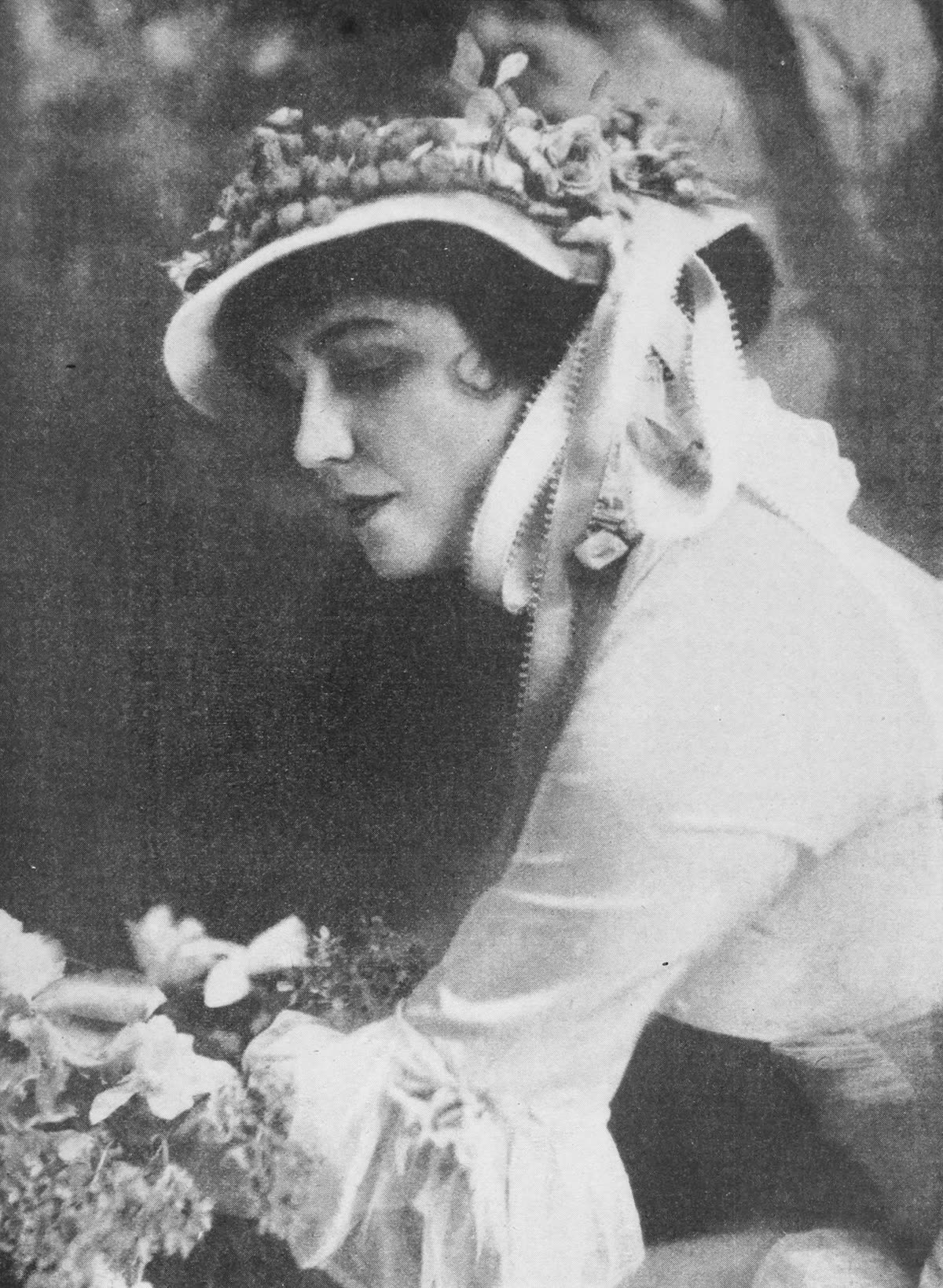
The 1917 Photoplay portrait used here helps because it refuses the later mythology of disappearance.[6] Weber is not pictured as an abstraction or a footnote. She is a public film figure at the height of her visibility, facing the camera world with the confidence of someone who understood that directing was not only arranging actors. It was arranging power: over story, production, attention, and the moral temperature of the room.
Lois Weber's films matter now because they make early Hollywood look less settled and less male by default. More importantly, they make directing look like a form of pressure. She did not merely point the camera at social problems. She built visual situations that made evasion harder. In her strongest work, cinema is a mirror, a trial, a warning, and a machine for attention. That is why the rediscovery should not stop at honoring her firsts. Weber's real achievement is sharper: she made the silent screen behave as if it had a conscience and someone in charge of it.
Sources
- Kino Lorber EDU, "Pioneers: First Women Filmmakers" - restoration collection context including Lois Weber and early women filmmakers.
- National Endowment for the Humanities, "Lois Weber: An Early Hollywood Filmmaker with Her Own Studio" - biographical and industrial context.
- Library of Congress, "Brief Descriptions and Expanded Essays of National Film Registry Titles" - registry context and description for Suspense (1913).
- LoisWeber.net / Milestone Films, "Shoes (1916)" - restoration, credits, source basis, and National Film Registry note.
- National Film Preservation Foundation, "Idle Wives (1916)" - preservation notes and film context.
- Wikimedia Commons, "File:Lois Weber Photoplay 1917-03.jpg" - archival 1917 Photoplay portrait used as the article image.