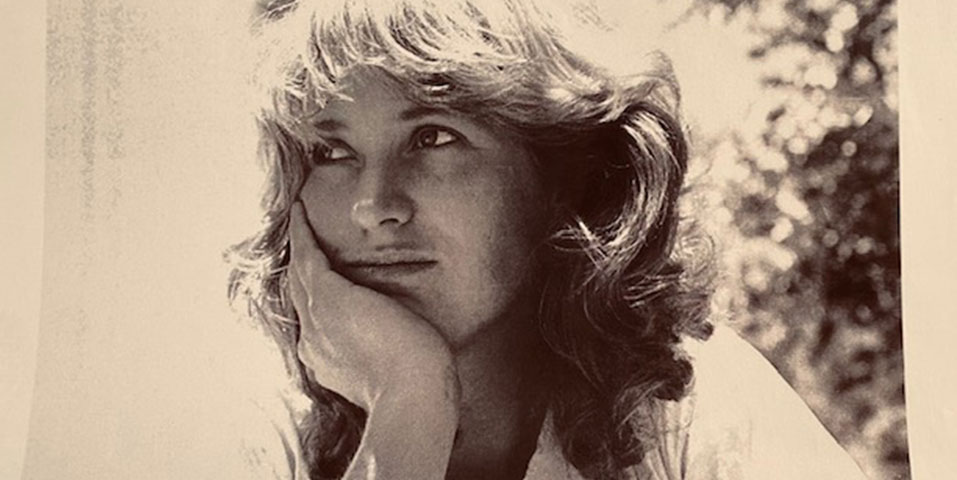
Jane Campion is often described in large, respectful labels: major auteur, feminist pioneer, Palme d'Or winner, the first woman to receive two Academy Award nominations for best director.[1][2][3] All of that is true, and none of it is the most useful place to start. The real Campion signature is pressure. Her films keep arranging a world in which desire cannot stay private. It leaks into weather, clothing, rooms, mud, pianos, letters, bodies, and above all into the act of being watched by other people. A Campion protagonist may look solitary, but solitude in her cinema is never sealed. The world presses in.
That is why her work still feels sharper than the prestige-drama reputation that sometimes follows it. Campion does not simply tell stories about women under strain, nor does she build tasteful literary adaptations that happen to have strong heroines. She creates pressure systems. A family house becomes an amplifier of shame. A beach becomes a zone of barter. A bonnet, a sleeve, a piece of piano music, a cigarette, a glance across a room, or a hand on fabric can carry the whole emotional argument. Even when the films appear lyrical, they are structural. They are built so that feeling has nowhere to hide.[3][4]
Early Campion: disorder enters through the body before it enters through plot
BFI's guide to Campion is useful on one essential point: from the shorts onward, she challenged cinema's white, straight male default and centered women who were intense, unruly, or difficult without flattening them into cautionary cases.[4] That matters because Campion's early films are not polite announcements of female subjectivity. They are confrontational. Sweetie (1989) does not ease the viewer into empathy; it drops the viewer into a family system already vibrating with embarrassment, erotic confusion, and sibling resentment.[1][4] Campion understands that family life is never only dialogue. It is posture, interruption, mess, objects left in the wrong place, a body refusing decorum. The result is not social realism in a neutral register. It is domestic life turned into unstable voltage.
An Angel at My Table (1990) widens that method rather than softening it.[1][4] Janet Frame's life could have been reduced to uplift or pathology, but Campion refuses both shapes. She keeps returning to the problem of exposure: what it means for a woman to be misread by institutions, diagnosed by strangers, and then forced to build authorship out of a life that other people have already tried to classify. Even at this stage, Campion is not mainly interested in redemption arcs. She is interested in what scrutiny does to the self, and in the stubborn private core that survives it.
The Piano: landscape does not symbolize feeling, it exerts it
No Campion film states the method more nakedly than The Piano.[3][5] BFI's film page gets to the center of it quickly: Ada, a mute woman, arrives in nineteenth-century New Zealand for an arranged marriage, and the piano becomes both bargaining tool and outlet for private passion.[5] But the film's force comes from the fact that nothing in it remains merely private. The beach, the forest, the mud, the black dress, the instrument itself, the labor of hauling it, the husband's authority, Baines's desire, Flora's watchfulness: every element turns intimacy into a public condition.
This is why the film remains so unsettling. Campion does not use silence to make Ada passive. She uses silence to redistribute force. Holly Hunter's face, posture, and hands become the language of a person who cannot be contained by the terms available to her.[5] The landscape around her is not a picturesque backdrop for suffering. It is an active medium, almost a second skin. Wind, surf, rain, and timber do not mirror emotion after the fact; they bear down on it in real time. Campion films desire as something that takes physical environment seriously.
The film's reputation for eroticism can sometimes make it sound softer than it is. In truth, The Piano is a movie about transaction, possession, humiliation, and the terrifying fact that bodily feeling can exceed the moral or social arrangement built around it.[3][5] Campion makes that excess visible without sentimentalizing it. She knows that desire can be liberating and coercive inside the same scene. Few filmmakers have been better at holding those two facts together.
Bright Star: tenderness in Campion is still a pressure system
Because Bright Star (2009) is a Keats film, it is easy to misremember it as Campion's gentle period of refinement. BFI's page is much more accurate: what matters is not simply the romance between Keats and Fanny Brawne, but the urgency with which life and art become indivisible.[6] Campion does not treat Fanny as poetic decoration around a doomed male genius. She films her as an equal intelligence whose attention, dressmaking, wit, and emotional insistence all change the atmosphere of the film.[4][6]
This is classic Campion territory. Clothing matters not because she likes costume surfaces for their own sake, but because fabric is one of the ways bodies negotiate visibility. Rooms matter because proximity and delay reorganize feeling. Letters matter because speech arrives too late or from too far away. Bright Star is tender, but it is not weightless. Love in the film is constantly being shaped by class, illness, distance, family supervision, and the ordinary cruelty of time.[6] Campion's gift is that she lets those pressures remain tactile. You feel them in hems, in wallpaper, in air, in the pause before someone is allowed to touch.
The Power of the Dog: when Campion films men, scrutiny becomes a weapon they cannot survive
BFI's guide makes a crucial point about Campion's later work: The Power of the Dog extends her cinema rather than breaking from it.[4] On the surface, it looks like a detour, a western centered on Phil Burbank's cultivated hardness. In practice it is one of the purest Campion films because it is again about performed identity under hostile observation.[7] Phil survives by staging himself. His voice, posture, cruelty, and theatrical masculinity are all forms of defensive authorship. He watches others viciously because he cannot permit himself to be legible in return.
Campion is fascinated by that instability. She does not expose Phil through explanatory psychology. She exposes him through textures of labor and attention: rawhide, banjo strings, saddle leather, cigarette paper, a handkerchief, a bath, a hidden cache, the awkward geometry of bodies in a doorway.[4][7] In other words, she uses the same tools that powered The Piano and Bright Star. The difference is that now the central figure is a man built out of defensive performance, and the violence of being watched becomes fatal.
This continuity is what makes Campion such a coherent director across decades. She does not repeat plots. She repeats conditions of pressure. People want, hide, observe, misread, harden, and break. The environment around them is never neutral. It records everything.
Why Campion still matters in 2026
Campion's institutional place is secure; that much is settled.[1][2][3] What keeps the films alive is something more practical. She remains one of the few major directors who can make interior life fully cinematic without turning it into speechifying or psychologized fog. She knows that private feeling becomes legible through arrangement: who gets looked at, who controls the room, whose body is being bartered, whose intelligence is being dismissed, what object carries the scene's real energy, what landscape makes denial impossible.[3][4][7]
That is why the word "feminist" is correct but still incomplete for her. Campion does not merely reverse the angle of vision. She rebuilds the dramatic machinery underneath vision itself. She asks what scrutiny costs, what desire does to form, and how social power settles into the smallest physical details. Sweetie, An Angel at My Table, The Piano, Bright Star, and The Power of the Dog differ in tone, scale, and historical setting, yet they all arrive at the same recognition: a life is most exposed not when it confesses, but when the world around it begins to register what it wants.
Sources
- Encyclopaedia Britannica, "Jane Campion" (biography and career overview).
- AFTRS, "Jane Campion" (alumni showcase and career background).
- Festival de Cannes, "Jane CAMPION" (career profile and Cannes milestones).
- BFI, "Where to begin with Jane Campion" (career overview from Sweetie to The Power of the Dog).
- BFI, "The Piano (1992)" (film page).
- BFI, "Bright Star (2009)" (film page).
- BFI, "Jane Campion's The Power of the Dog announced as BFI London Film Festival 2021 American Express Gala."