Spoiler note: this essay discusses the midnight walk through the cane field, Carrefour, the houmfort sequence, and the ending.
Jacques Tourneur's I Walked with a Zombie (1943) is one of those films whose title promises a cruder experience than the movie actually delivers.[2][3][4][6][7] The phrase sounds like pulp, and RKO clearly wanted pulp. What Val Lewton and Tourneur made instead is a haunted plantation picture in which the main shock is not a monster jumping from the dark but the realization that the dark is already social, historical, and architectural. A nurse arrives on Saint Sebastian to care for a catatonic woman; she enters a house full of grief, resentment, and half-spoken explanations; and before long the island starts feeling less like a tropical backdrop than like a machine for turning beauty into unease.[2][3][4]
That tonal shift is why the film still matters.[3][4][7] The Criterion program note describes it as a journey into the realm between life and death, and that is accurate so far as it goes.[6] But the film is doing something more precise. It keeps asking what kind of world makes people prefer supernatural explanations to ordinary injustice. BFI's Val Lewton overview is especially useful here because it frames the picture as a melancholy, dreamlike Jane Eyre variation set on a fictional Caribbean island whose atmosphere is inseparable from the history of slavery carried into its landscape.[3] Once you watch with that in mind, the film's famous images stop looking like decorative horror poetry. They become forms of memory.
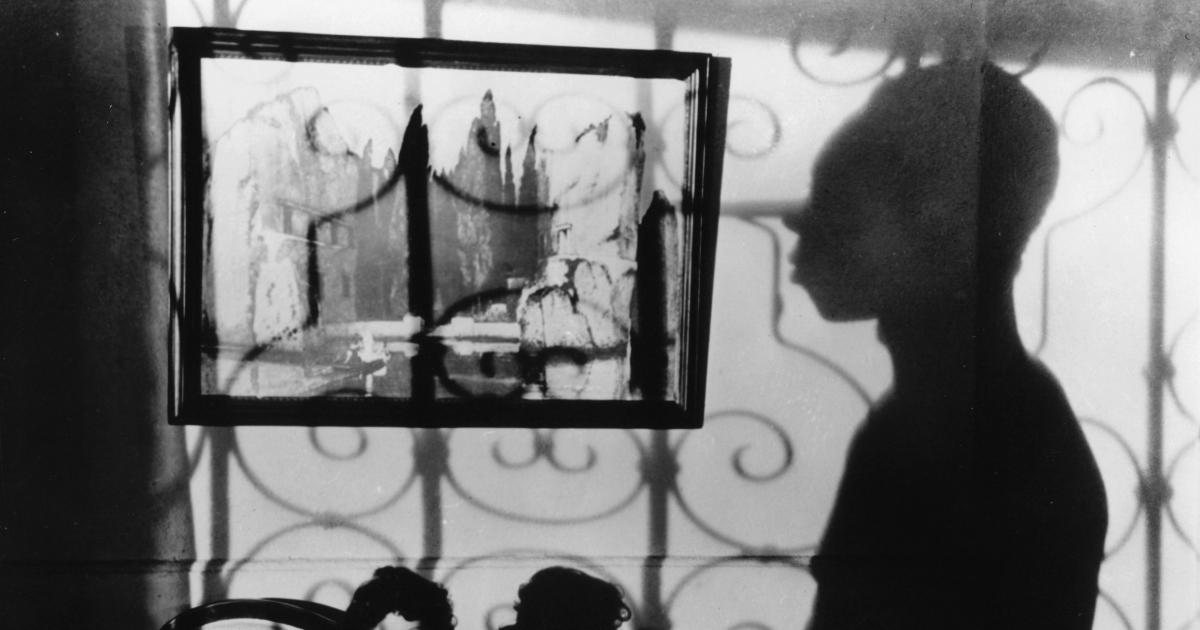
Image context: the lead image is a BFI still from the film showing a silhouetted female figure near a bed and mosquito net.[1] It belongs here because the movie's first great move is to make illness visible as enclosure. Before Carrefour appears, before the drums take over the night, the film has already taught us to read netting, ironwork, shadow, and distance as a language of captivity.
The sickroom makes captivity look elegant before the plot gives it a name
One reason the film lingers is that it refuses to hurry toward explanation.[2][4][6] Jessica's condition is frightening, but Tourneur does not stage her as a loud spectacle. He stages her as a stillness that contaminates the house. Beds, curtains, mosquito netting, verandas, and filtered light keep making her less a patient than a figure held in suspension. Senses of Cinema is sharp on the film's visual method: horror here does not depend on cramped expressionist gloom alone, because the images repeatedly open outward into sea, sky, and air even as they trap people inside social roles they cannot master.[4]
That tension is already concentrated in the image BFI uses for the film page.[1] The shadowed profile, the gauze, and the decorative ironwork do not merely create atmosphere. They turn the room into a threshold space, half domestic, half ceremonial. You can feel why Betsy, the Canadian nurse, keeps misreading what she sees.[4][5] She arrives expecting medicine, diagnosis, and recovery. The house keeps giving her shapes instead: silhouettes, voices, songs, interrupted sleep, and a patient whose body seems present while her will has withdrawn. The film's technical confidence lies in making that withdrawal visible without ever reducing it to one simple cause.
Nochimson's essay is valuable here because it refuses the easy reading that the film's horror comes from voodoo alone.[4] Her point is tougher: the picture keeps showing how white plantation authority accepts the "zombie explanation" because that story is easier to live with than the actual violence of the world surrounding it. That does not make the film politically pure; it remains tied to a white protagonist's viewpoint.[3][4][7] It does make the visual strategy more interesting. The sickroom is frightening because it is too beautiful, too orderly, too ready to turn a damaged woman into one more decorative problem to be managed.
The cane-field walk and Carrefour move horror out of surprise and into rhythm
The midnight walk with Jessica through the cane field is the film's most famous passage because it changes the grammar of horror.[4][5][6] Betsy does not race through a maze while a threat chases her from behind. She advances almost ceremonially, guiding Jessica forward through wind, cane, and drum rhythm until Darby Jones's Carrefour rises into the frame like a vertical punctuation mark. The effect is startling, but not because he lunges. He hardly needs to move. Tourneur understands that terror can arrive through stillness when the landscape around that stillness has already been prepared like a ritual corridor.[4][5]
TCM's clip notes and the Criterion materials both point to the film's extraordinary atmosphere, but the technical basis of that atmosphere is simple enough to name.[5][6] The cane is tall enough to turn the path into a channel. The wind supplies constant motion without relief. Betsy and Jessica move in white, which makes them look exposed rather than protected. Carrefour, by contrast, appears as a rigid interruption, a body so upright and so quiet that he seems less like a man entering the scene than like the island itself standing up. The sequence proves that the film's horror does not depend on a reveal. It depends on procession.
That is also why the scene feels dreamlike without losing weight.[3][4][6] BFI calls the picture uncanny, suspended between reality and dream, life and death.[3] The cane-field walk is the best evidence. It never asks the viewer to choose one side decisively. The space is concrete, the bodies are concrete, the fear is concrete; yet the sequence keeps refusing ordinary practical logic. Betsy walks as if summoned. Jessica follows as if sleepwalking through history. Carrefour functions at once as a person, a warning, and a landmark. The film's deepest innovation may be that it lets dread behave like choreography.
The island's soundscape makes history audible long before the ending
If the cane field gives the film its visual thesis, sound gives it memory.[3][4][5] BFI's Val Lewton guide calls out Sir Lancelot's calypso song as vital exposition, and that is exactly right.[3] In a weaker movie, backstory would arrive through an authoritative speech or a diary entry. Here it arrives through performance. The "Fort Holland" song drifts through the plantation world carrying local knowledge, gossip, mockery, and the buried history of the island's ruling family. Information in this film is rarely neutral. It comes sung, overheard, repeated, and made communal before the white protagonists are ready to absorb it.
The drums do related work at a different emotional pitch.[3][4][5] They are not just cues telling the audience that something uncanny is about to happen. They pressure the film's whole division between official and unofficial knowledge. Betsy has medical training, the Holland house has status, and the island's white rulers assume they possess explanation. The music keeps opening a parallel system of meaning beside them. Once that system becomes audible, the house's authority starts sounding thin.
This is where the film becomes harder than its title.[4][7] The scary thing is not simply that another belief system exists. The scary thing is that the plantation's own story about itself is so inadequate. The calypso singer can narrate what the great house would rather smooth over; the drums can make the night answer back to daylight order.[3] Horror, in other words, is not imported into a stable world. It leaks out of a world that has been unstable all along.
The sea and the slave-ship story keep tropical beauty from becoming innocent
One of the movie's most unsettling lines concerns the slaves brought to Saint Sebastian in chains at the bottom of a ship.[3][4] The line matters because it changes the island's visual weather. After that, palms, beaches, and sea breeze cannot remain innocent atmosphere. Nochimson is persuasive on this point: the film refuses to let plantation life become ahistorical romance, even though Betsy herself is often too naive to grasp the full pressure of what she hears.[4] She sees beauty first. The film keeps making beauty answer to the dead.
That answer is everywhere once you know to look for it.[2][3][4] Open water in the film does not promise freedom so much as distance, transport, and burial. The towering figurehead of Ti-Misery is not just Gothic ornament. It gives the plantation a carved memory, a face under which the living continue their routines. Even the love plot between Betsy and Paul Holland never gets to exist in a vacuum. It remains surrounded by inheritance, damage, and a system of explanation built to protect the house from recognizing itself too clearly.[3][4]
This is why the ending lands the way it does.[4][5] The film does not close by solving its mysteries into one clean doctrine. It leaves voodoo, guilt, desire, illness, and violence partially entangled. That ambiguity is not a weakness in the writing. It is the formal consequence of everything the movie has been doing from the start. A plantation order built on disavowal cannot produce a fully transparent ending. It can only generate deaths, rituals, and survivors who still do not entirely know what world they inhabit.
So I Walked with a Zombie endures not because it invented a durable monster template.[2][3][6] It endures because it discovered a richer horror structure: dread born from light wind, half-heard music, decorative rooms, historical silence, and a landscape that keeps returning what the house tries to bury. The shadow by the bed, Carrefour in the cane, the calypso song, the drums, and the sea all belong to the same design. Tourneur and Lewton make terror feel less like invasion than recollection. What walks in this film is not only a zombie. It is a whole colonial past that the island never stopped carrying.[3][4][7]
Sources
- BFI still image used for the cover, "i-walked-with-a-zombie-1943-woman-on-couch-and-shadow.jpg".
- BFI, "I Walked with a Zombie (1943)" - film page and synopsis.
- Alex Barrett, "Where to begin with Val Lewton," BFI - on the film's Jane Eyre inheritance, melancholy atmosphere, slavery backstory, and Sir Lancelot's calypso narration.
- Martha P. Nochimson, "I Walked With a Zombie," Senses of Cinema - close reading of the film's cinematography, plantation setting, and racial politics.
- TCM, "I Walked With a Zombie" page and clips - cast, premise, and scene descriptions for Betsy's first night and the island setting.
- The Criterion Collection, "I Walked with a Zombie" film page - program note on the film's atmosphere, cast, and production credits.
- Chris Fujiwara, "I Walked with a Zombie: Better Doctors," The Criterion Collection - essay on fragmentation, discontinuity, and the film's unsettling treatment of life and death.