The imperial family takes tea; workers labor in fields and ditches. In The Fall of the Romanov Dynasty (1927), Esfir Shub makes these kinds of images answer one another. Footage of royal leisure acquires a different weight when the next people on screen have no time to rest. The people photographed remain the same. The relationship between their lives has become the subject.[1]
Shub built a filmmaking career around that difference. A camera recorded something; an editor decided how another person would encounter it. Her achievement lay partly in making the second act visible as authorship. Yet her later work also took her beyond recovered footage, toward newly filmed encounters and recorded voices. The archive was a beginning.
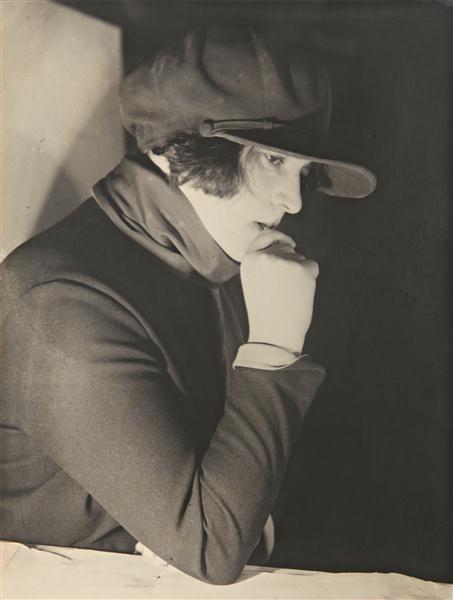
Learning to change a film
Shub entered Goskino as an editor in 1922. Foreign films were being recut for Soviet release, with their stories adjusted to suit Bolshevik ideology. Between 1922 and 1925, she re-edited about two hundred films. This was an education in how composition, movement, and the order of shots could survive—or be transformed by—a new arrangement.[2]
The work involved a revealing tension. It required close attention to somebody else's craft while authorizing substantial interference with it. An editor could learn a film intimately in the process of making it say something its makers had never intended. Shub's later documentary practice would bring that power to bear on records of real people.
When Sovkino commissioned her anniversary film in 1926, the material was far from ready. There was no centralized archive to consult. Shub searched scattered collections, including film stored in damp basements; some emulsion was already separating from its base. The recovered material included Nicholas II's film chronicle.[2] Before the footage could become an argument, it had to remain a visible image.
What the old camera could not decide
The Fall of the Romanov Dynasty draws on records made before and during the First World War, assembling a history of the social order that collapsed in 1917. Some material came from the tsar's own cameramen. The film's intertitles openly align its historical account with the revolutionary victors.[3]
This gives the royal footage a peculiar force. The original camera's access becomes useful to a filmmaker with opposing loyalties. Private ease can be examined alongside public hardship. In my reading, the unsettling element is how little the photographed gesture needs to change: an afternoon's amusement can become an accusation through its placement beside another person's working day.[1]
That does not make the resulting account politically innocent. A surviving shot gives evidence of what stood before a camera, within its limits. It cannot by itself establish why an entire political system fell. Shub's selection, sequence, and titles construct that explanation. The distinction matters because the persuasive pleasure of the film comes from seeing real historical people enlisted in an argument they did not choose to make.[3]
The film also opened a route to further directing. The Great Road followed in 1927, and Lev Tolstoy and the Russia of Nicolai II in 1928; together they formed a compilation trilogy.[3] Success made Shub identifiable with a method. It could also make subsequent departures harder to see.
Moving out of the storehouse
Consider Today (Cannons or Tractors?) (1930). A Soviet-German coproduction, it set the Soviet Union against the capitalist West. The Soviet material was newly shot, while the Western sections relied mainly on newsreels Shub selected at Germany's UFA studio. The Harriman Institute's screening notes describe it as one of her most visually experimental films.[4]
That mixture changes the problem of making a documentary. The filmmaker can commission one part of the visible world while inheriting another. The comparison therefore brings together different conditions of access and recording. For a viewer, a useful question is what those conditions let each side show. The contrast has been shaped before the final edit begins.
Sound offered another departure. K-Sh-E (1932), about the Komsomol's role in electrification, was Shub's first sound film. As the BFI's account emphasizes, the film lets the crew remain visible and its subjects acknowledge the camera. Much of its sound was recorded directly; Gavriil Popov's score, including a theremin, supplied another layer.[5]
Here the apparatus enters the encounter. The people being filmed know someone is listening, and the film allows that knowledge to register. Directly recorded sound and composed music also have different relationships to the event: one carries traces of the recording situation; the other can organize our response. Shub was working with both. Calling her simply a collector of old images leaves this interest in the present unexplained.
A career larger than its surviving outline
Anastasia Kostina's doctoral research places Shub's struggle for recognition as a director alongside her changing forms. Its account extends to the unrealized Women (1933), the lost Moscow Builds Metro (1934), and the unfinished New Turkey Strides (1934). These projects complicate a career easily reduced to the films that remain available.[6]
Their different statuses matter. An unrealized proposal cannot be analyzed as a completed film, and a lost work cannot be judged from its title. They do establish that the surviving filmography leaves out attempts, interests, and labor. A director's reputation can become tidier than the work of directing ever was.
Shub's career offers a particularly sharp reason to resist that tidiness. She is remembered for giving existing images new relationships, yet she kept changing her own relationship to the material. The basement, the editing table, and the sound recording each posed a different question. Who made this record? What can still be recovered from it? What happens when it meets the next image—or a living voice?
Sources
- Light Industry, “Esfir Shub's The Fall of the Romanov Dynasty,” 8 October 2012 — the film's juxtapositions and attribution of Alexander Rodchenko's 1924 portrait.
- Anastasia Kostina, “1927: The Fall of the Romanov Dynasty (Esfir Shub).” Senses of Cinema, December 2017 — early editing work, the commission, and recovery of deteriorating footage.
- IDFA Archive, “The Fall of the Romanov Dynasty” — historical materials, political framing, and the compilation trilogy.
- Harriman Institute, Columbia University, “Founding Mothers: Women Filmmakers of Early Soviet Documentary,” June 2021 — production and footage sources for Today (Cannons or Tractors?).
- British Film Institute, “K-SH-E (1932)” — visible filmmaking, direct sound, and Gavriil Popov's score.
- Anastasia Kostina, The Mother of Soviet Documentary: Esfir Shub in Compilation Film and Beyond, 1927–1937. Yale University doctoral dissertation, 2022 — repository abstract on directorial recognition, formal experimentation, and unfinished or lost projects.