Ernst Lubitsch is one of those directors who gets compressed into a slogan too quickly. People invoke the "Lubitsch touch" as if it were a perfume note: light, urbane, suggestive, somehow impossible to pin down.[1][2][3] The phrase survives for a reason, but it also hides the machinery. A cleaner way to read Lubitsch is through three repeatable controls. He uses doors, pockets, and offscreen business to let action arrive by implication; he uses ellipses to make the audience finish a joke, a flirtation, or an embarrassment for itself; and he uses adult comic timing to make talk feel like social architecture rather than mere chatter.[1][2][3]
Those controls explain why his films still feel both airy and exact. The world of a Lubitsch comedy looks graceful on the surface, yet every movement inside it carries information: who has money, who wants access, who can improvise a role, who has mistaken style for power.[1][3][4] Even when the stories revolve around jewel thieves, shop clerks, stage actors, or diplomats, the real subject is arrangement. Lubitsch keeps showing that desire is never free-floating. It moves through rooms, class codes, props, routines, and performances that have already been designed by someone.
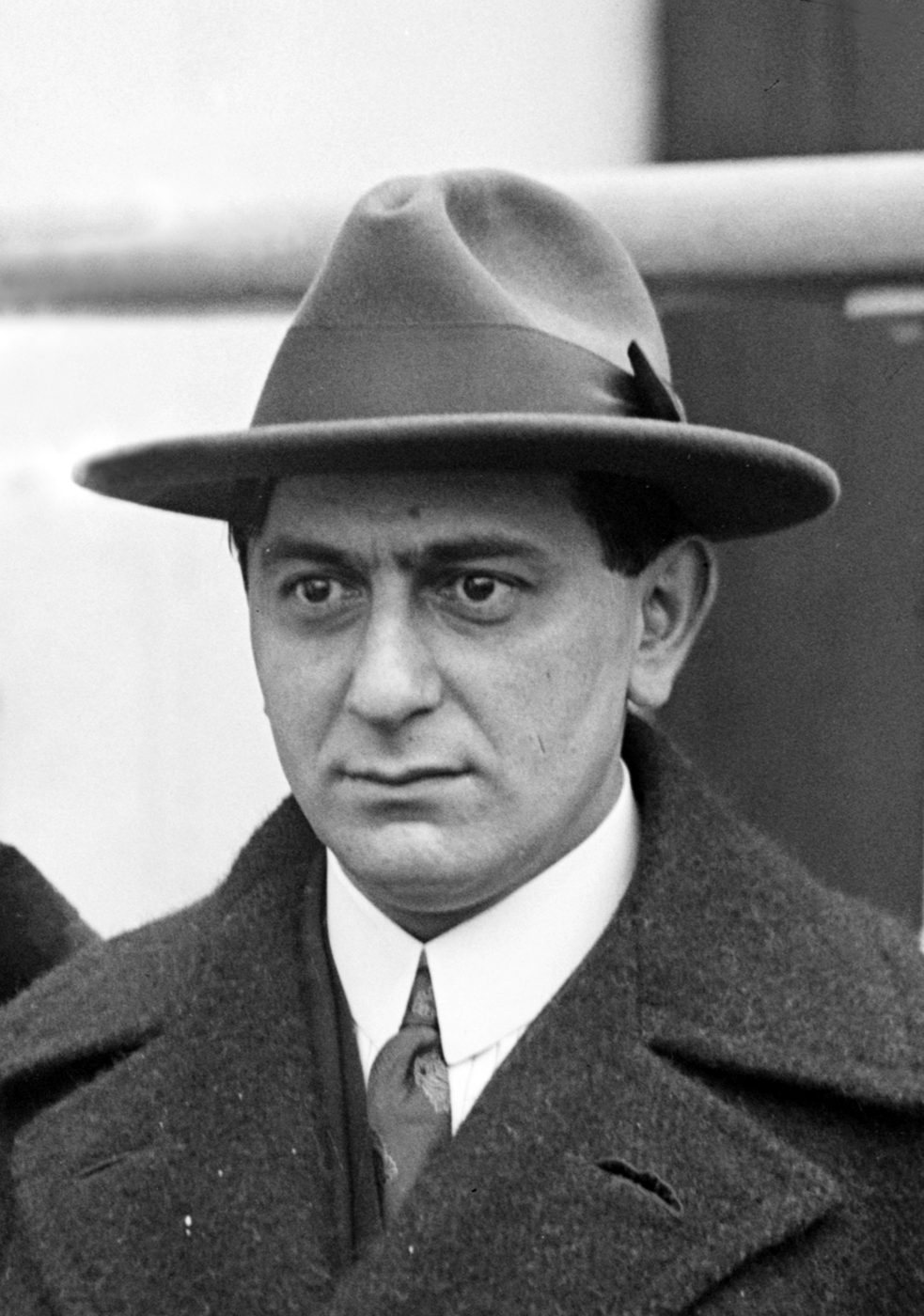
Image context: the lead image uses an archival portrait of Lubitsch preserved on Wikimedia Commons from a Library of Congress / Bain News Service record. It fits this essay because the piece tracks a directorial method spanning multiple films and decades, not a single poster or still.[5]
1. The "touch" lives in what Lubitsch declines to show
Adrian Martin's close look at the ending of Trouble in Paradise is useful because it refuses to treat the "Lubitsch touch" as one cute signature move.[2] He describes it as an integration of plotting, staging, actor direction, editing rhythm, and musical placement, which is exactly the right scale for understanding Lubitsch.[2] The point is not that he hints instead of states. Many filmmakers hint. Lubitsch builds whole comic sequences so that the most pleasurable beat lands in the viewer's head a fraction before it is confirmed on screen.[2][3]
That habit gives his comedies their unusual density. An entrance is funny because of the exit it echoes. A missing object matters because somebody has already slipped it from one pocket to another. A line sounds innocent until the next glance reorganizes it. The elegance comes from compression. Lubitsch trusts the audience to keep up with concealed transactions, emotional reversals, and social calculation without pinning everything down in explanatory dialogue.[1][2]
This is why his films rarely feel overworked even when they are tightly engineered. You experience them as buoyant because the labor has been pushed into arrangement. The joke reaches you finished, but the film has made you quietly assemble it along the way.
2. Trouble in Paradise: theft becomes a language of courtship
If one Lubitsch film shows this method in miniature, it is Trouble in Paradise.[2][3] Martin notes that the final scene lasts only about forty-five seconds, yet in that tiny span Lubitsch lets gesture, missing objects, musical acceleration, and reciprocal theft do nearly everything the ending needs.[2] The lovers do not reconcile through confession. They reconcile by proving that each can still outplay the other. Desire arrives as tactical fluency.
The deeper lesson is structural. In Lubitsch, crime and romance often share the same grammar.[2][3] To steal is to read another person's rhythm correctly; to flirt is to do something similar under a softer name. Doors matter for the same reason. Martin's essay points out the elaborate offscreen business that follows Lily's exit in Trouble in Paradise, and once you see that pattern, you start noticing how often Lubitsch lets the decisive action happen just beyond the center of the frame.[2] What matters is not merely what a character says, but whether footsteps return, whether a purse has changed weight, whether a goodbye has already turned into a second entrance.
That is why Lubitsch's so-called sophistication never feels like decorative wit. It is a theory of behavior. He films adults as people who conceal, test, improvise, and steal small advantages from one another long before they commit to any large declaration.
3. The Shop Around the Corner: a room can carry more feeling than a confession
The surprise in Lubitsch's career is how fully the same method survives when the scale comes down from jewel thieves and society swindlers to clerks in a Budapest leather-goods shop.[1][4] The National Film Registry essay on The Shop Around the Corner makes the essential point cleanly: the movie's real soul is not just the pen-pal romance, but the store itself, the workplace rhythm, and the people who slowly become a kind of family.[4] That emphasis tells you something crucial about Lubitsch. He can build radiance out of ordinary commercial routine because routine already gives him structure to play against.
Kevin Bahr's essay also lingers on the mailbox scene, and that choice is revealing.[4] Lubitsch turns an almost absurdly simple action into heartbreak: a woman opens box 237, reaches in, finds nothing, and understands the silence all at once.[4] No grand speech is required. The shot works because absence has been staged as precisely as presence. Lubitsch knows that the emotional turn in a romance often lives in the delayed letter, the failed meeting, the empty compartment where feeling was supposed to arrive.
Seen next to Trouble in Paradise, the achievement becomes even clearer. One film organizes appetite through glittering criminal play, the other through work, loneliness, and minor humiliations in a small shop.[2][4] Yet both depend on the same directorial faith: a well-placed object, room, or pause can carry more truth than a tidy explanation.
4. To Be or Not to Be: performance turns political without losing its comic nerve
Lubitsch's late style becomes sharper, not safer.[1][3] BFI is right to call To Be or Not to Be an audacious assault on fascism.[1] The Library of Congress essay goes further and helps explain why the film startled so many people in its own moment: it fused comedy with occupation, vanity with terror, and stage performance with active resistance.[3] That combination was scandalous to some early viewers precisely because Lubitsch would not switch into solemn prestige mode when the subject turned historical and lethal.[3]
What matters artistically is that he does not abandon his own method in order to become "serious."[1][3] He doubles down on it. The Polish actors survive through impersonation, timing, overheard cues, second meanings, and ego turned into tactical resource.[3] The jokes come fast because the stakes are fast. A misplaced line or mistimed entrance can now alter life and death, not merely romantic alignment. Lubitsch's older interest in performance as seduction expands into performance as civic improvisation under pressure.
That expansion shows how strong the directorial system already was. The same filmmaker who understood how a missing necklace could resolve a love story also understood how acting itself could become anti-Nazi method. Elegance does not vanish when the subject darkens. It becomes more dangerous.
5. Why Lubitsch still teaches
Lubitsch remains durable because he solved a problem that contemporary filmmakers still struggle with: how to make intelligence feel light.[1][2][3][4] Many directors can be airy but vague, or precise but heavy. Lubitsch keeps both qualities in motion at once. He trims explanation, yet the films never feel thin. He arranges rooms, objects, and entrances so carefully that the viewer experiences complexity as pleasure rather than homework.[2][4]
That is also why his influence keeps regenerating. Later filmmakers can borrow the surface markers, the doors, the implied sex, the high-comic poise, the line that lands twice, but the real lesson is underneath: trust the audience, move the crucial action one step off center, let etiquette reveal appetite, and treat performance as a social technology rather than a decorative skill.[1][2][3]
Once you see that, the "touch" stops looking mystical. It becomes concrete. Lubitsch turned comedy into an architecture of inference, where every exit leaves a trace, every object can become a plot device, and every elegant sentence carries a hidden floor plan underneath it.[1][2][4]
Sources
- Matthew Thrift, "Where to begin with Ernst Lubitsch." BFI, November 29, 2021.
- Adrian Martin, "Stealing hearts: the ending of Trouble in Paradise." Sight and Sound / BFI, January 26, 2023.
- David L. Smith, "To Be or Not to Be" essay PDF. National Film Registry / Library of Congress.
- Kevin Bahr, "The Shop Around the Corner" essay PDF. National Film Registry / Library of Congress.
- Wikimedia Commons, "File: Ernst Lubitsch 01.jpg" (Library of Congress / Bain News Service portrait record).