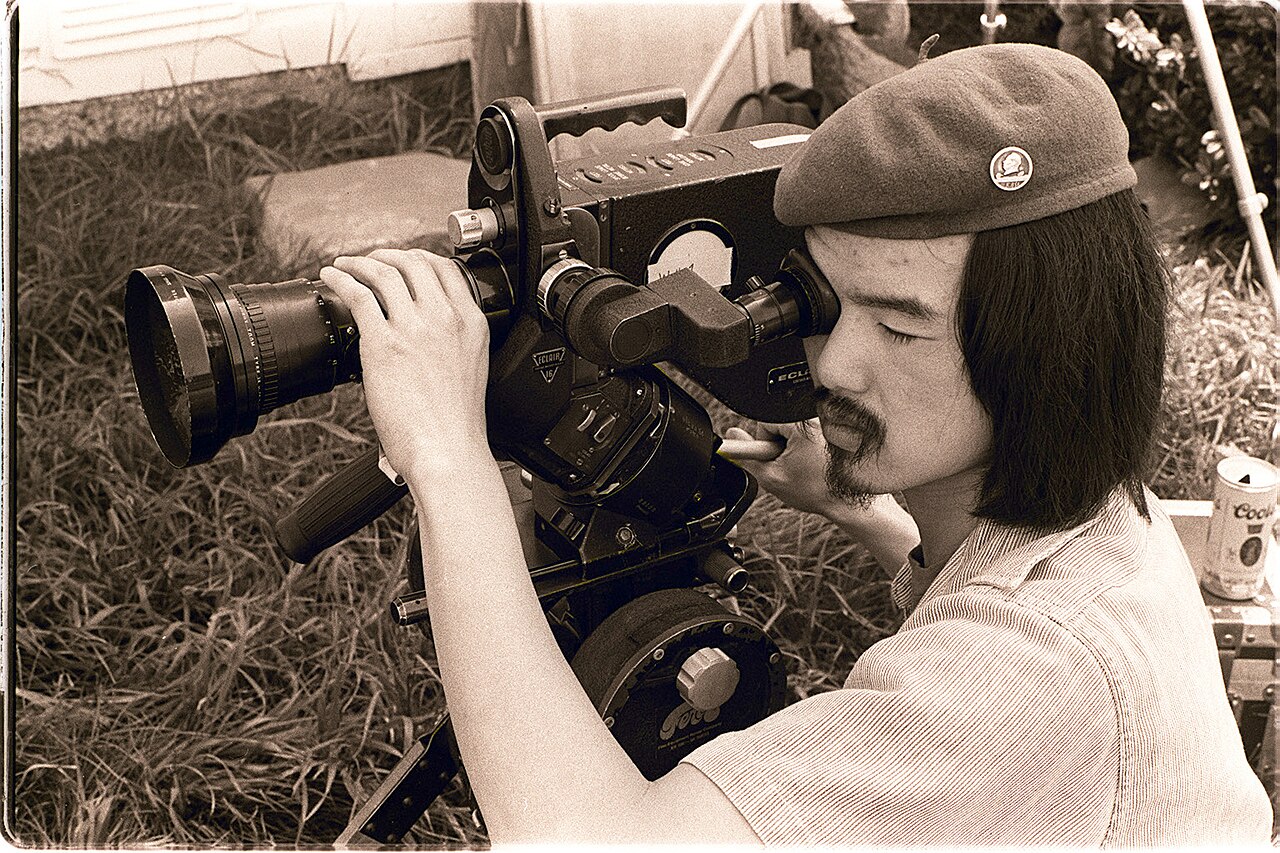
The Eclair NPR did not make documentary cinema honest by itself. No camera can do that. What it changed was the physical bargain behind a scene: how close a camera could get to a speaking person, how long it could stay there, how quickly a magazine could be changed, and whether location sound could travel with the image instead of dragging the crew back toward studio habits. Before lightweight video became ordinary, this was one of the machines that made documentary presence feel technically plausible.
That is why the NPR belongs in film history as more than a collector's object. The Science Museum Group's 1967 example identifies the initials plainly, Noiseless Portable Reflex, and notes that the camera's quietness and portability made it important to French cinema verite and documentary work.[2] The Australian War Memorial's David Telfer camera entry adds the operational detail that matters most: crystal sync freed the cameraperson from the cable linking camera and recorder, while the camera's balance, easy-loading magazines, and relative silence made it attractive to filmmakers, broadcasters, and television producers.[3]
The result was not simply a nicer 16mm camera. It was a change in what counted as a shootable event. A conversation on a street, a worker's route through a building, a political encounter, a household argument, a schoolroom, a hospital corridor, or a war-zone interview could be approached as unfolding action rather than reconstructed testimony. The NPR helped move nonfiction cinema from "we will explain what happened" toward "we can stay near it while it happens."
The breakthrough was a production shape, not a magic truth machine
The easiest way to romanticize the NPR is to fold it into a vague story about truth. Cinéma vérité and direct cinema both attracted that kind of language, partly because handheld cameras and synchronous sound seemed to promise less mediation than older documentary formats. But the real breakthrough was more prosaic and more powerful. The camera made a different production shape possible.
Criterion's essay on Chronicle of a Summer describes the immediate prehistory: Jean Rouch and engineer Andre Coutant developed a lightweight, relatively quiet handheld sync-sound 16mm prototype in France, connected to a Nagra recorder, and Michel Brault's handling of it helped bring the film outside with a new liberty of movement.[4] That prototype world matters because the later NPR did not appear as an isolated gadget. It condensed a problem filmmakers had already identified: studio-scaled nonfiction tools were too slow, too heavy, or too noisy for the kind of social reality they wanted to pursue.
IDFA's archive page for The Camera That Changed the World gives the same problem a wider frame. It describes documentary as once restricted by cameras too heavy to carry easily, then points to parallel American and French efforts around portable cameras with synchronized sound in 1960.[5] That does not mean every later handheld documentary was automatically better or more truthful. It means the camera stopped forcing filmmakers to choose so often between mobility and usable sound.
That distinction is crucial. Silent handheld footage could move with life but had to rebuild speech later, or surrender it to narration and music. Heavy sync-sound systems could preserve speech but often changed the event by making the equipment too present. The NPR's promise was to narrow that gap. It made speech and movement less mutually exclusive.
Quiet was an aesthetic feature because it was a social feature
"Noiseless" can sound like a specification sheet word, but on a documentary set it is social engineering. A noisy camera imposes itself on the room. It makes sensitive speech harder to record, forces distance or dubbing, and reminds everyone that the apparatus is chewing through film beside them. A quieter camera does not disappear, but it gives the encounter more room to breathe.
The Science Museum entry connects that quietness directly to the camera's documentary role, while the Australian War Memorial entry calls the NPR the first 16mm camera built from the ground up to be noiseless and notes its uptake by filmmakers, news broadcasters, and television producers.[2][3] The important point is not absolute silence. The point is that the camera became quiet enough to sit closer to ordinary speech without making that speech technically absurd.
The Eclair camera material explains how the machine advertised that ambition. It describes blimp-free silent running, a low shoulder-resting profile, a compact coaxial 400-foot magazine, and a true reflex viewing system.[6] Those features belong together. Silence helped sound. Shoulder balance helped duration. Reflex viewing helped framing and focus in motion. The 400-foot magazine reduced interruptions. The design was not just a list of virtues; it was a workflow argument.
That workflow changed the texture of nonfiction film. Instead of making the subject return to the camera, the camera could now follow the subject's route. A filmmaker could keep walking while listening. A subject could keep moving while talking. The camera could wait inside an ordinary tempo rather than cutting an event into equipment-friendly pieces.
The shoulder changed the politics of distance
The NPR's shoulder shape mattered because documentary distance is never neutral. A tripod can be dignified, patient, and rigorous, but it often asks action to happen in front of it. A shoulder camera can move beside action, behind it, around it, or into its path. That does not make the image innocent. It makes the filmmaker's distance adjustable in real time.
Criterion's account of Chronicle of a Summer is useful here because it stresses walking-camera sequences that could follow people down stairs, onto buses, and through Paris streets without the rails and preparation that had structured earlier location work.[4] The NPR carried that logic into a more durable production package. The camera's body and magazine placement put weight behind the lens and on the operator's shoulder, so mobility was not only possible in brief bursts. It could become a working method.
This is where film technology becomes film grammar. A shoulder-level camera changes how faces, crowds, and rooms relate to one another. It can hold a face while the background is still socially alive. It can let an interview become a walk. It can treat a hallway as a lived route rather than a neutral connector. It can stay with uncertainty for a few more seconds because the operator does not have to rebuild the shot every time someone moves.
That grammar is visible in the 1976 Curtis Choy photograph used for this post. The image does not show a camera in a glass case; it shows a filmmaker bending into a location with the NPR held as a working extension of the body.[1] That is the machine's historical argument in one frame. The camera's meaning was not its elegance on a shelf. It was the way it made a human operator more mobile while keeping image and sound professionally usable.
Crystal sync made freedom measurable
The less glamorous half of the story is synchronization. Portability without stable sync would have left filmmakers with a beautiful new problem: free movement and drifting sound. The Australian War Memorial entry is especially concrete on this point. It says the crystal sync system used with the NPR freed the cameraperson from the cable linking camera to recorder and kept footage in sync with sound.[3] The Eclair camera material likewise describes a crystal-controlled motor with a quartz oscillator that permitted sync sound without a physical connection between camera and recorder.[6]
That matters because documentary filmmaking is full of fragile time. A person hesitates before answering. A door opens during a sentence. A crowd reacts half a beat before a speaker finishes. A worker's hands keep moving while the voice explains the task. If image and sound drift, those details become postproduction repairs or losses. Stable sync allowed filmmakers to trust that the body's timing and the voice's timing would remain tied together.
The cable detail is not trivial. A cable between camera and recorder creates choreography: two crew members must move as a coupled system, and the event must accommodate their tether. Once crystal sync breaks that tether, the camera can take a route and the sound recordist can take another, each staying close to what their tool needs. The location becomes less like a rigged set and more like a real field with separate responsibilities.
That is a technical change with ethical consequences. It does not guarantee respect for subjects, but it lowers the pressure to restage them. It lets filmmakers observe longer, respond faster, and preserve more of the relation between voice, gesture, and environment. In documentary, that relation is often the whole point.
The NPR also changed fiction by changing expectations
Although the NPR is easiest to discuss through documentary, its influence does not stop at nonfiction. Once audiences and filmmakers became accustomed to a camera that could walk with real speech through real spaces, fiction inherited the expectation. A staged scene could be made to feel less anchored to marks and more responsive to social movement. A street could be used as street, not merely as a background plate. The line between documentary presence and fictional looseness became more porous.
Criterion's essay notes that the innovations around Chronicle of a Summer spread into documentaries and fictions, with mobile camera, real-time interviews, and real-world locations becoming recognizable markers of authenticity.[4] That phrase, markers of authenticity, is important because the style eventually became a convention. What began as a production solution turned into a look that could be copied, quoted, or even parodied.
The NPR's legacy is therefore double-edged. It opened a route toward more agile nonfiction practice, but it also helped create a visual rhetoric in which shakiness, street movement, and audible location speech could be mistaken for truth itself. The responsible lesson is not that portable sync sound tells the truth. The lesson is that it changes the conditions under which truth claims are made. It lets a film gather a different kind of evidence, while leaving interpretation, framing, consent, and editing very much in human hands.
That is why the camera still feels historically alive. Digital cameras and small recorders have made sync sound so routine that the old problem can be hard to feel. But the NPR reveals the hinge. It belongs to the moment when documentary filmmakers were no longer fully trapped between the silent mobile image and the sound-bound static setup. It made the shoulder a platform, the magazine a time budget, the motor a sound decision, and the cable-free recorder a new form of proximity.
The Eclair NPR did not make reality available without mediation. It made mediation lighter, quieter, and closer. Before video made portability ordinary, that was enough to change what cinema could credibly follow.
Sources
- Wikimedia Commons, "File:Curtis Choy with a 16mm Eclair NPR - Fresno, 1976.jpg" (Nancy Wong photograph of Curtis Choy filming with an Eclair NPR).
- Science Museum Group Collection, "Eclair NPR 16mm cine camera" (1967 object record, maker, materials, and note on cinema verite documentary use).
- Australian War Memorial, "Noiseless Portable Reflex (NPR) Eclair 16mm camera: David Telfer, ABC cine cameraman" (object description, Vietnam use, crystal-sync notes, and production history).
- Sam Di Iorio, "Chronicle of a Summer: Truth and Consequences," The Criterion Collection, 2013 (context on Rouch, Coutant, Brault, handheld sync-sound 16mm, and new documentary procedure).
- IDFA Archive, "The Camera That Changed the World" (2011 film page describing portable silent cameras with synchronized sound in American and French documentary practice).
- Cameras Eclair, "NPR (ECLAIR 16/CAMÉFLEX/CAMERETTE)" (camera features including blimp-free running, shoulder design, 400-foot magazines, reflex viewing, and crystal-controlled sync).