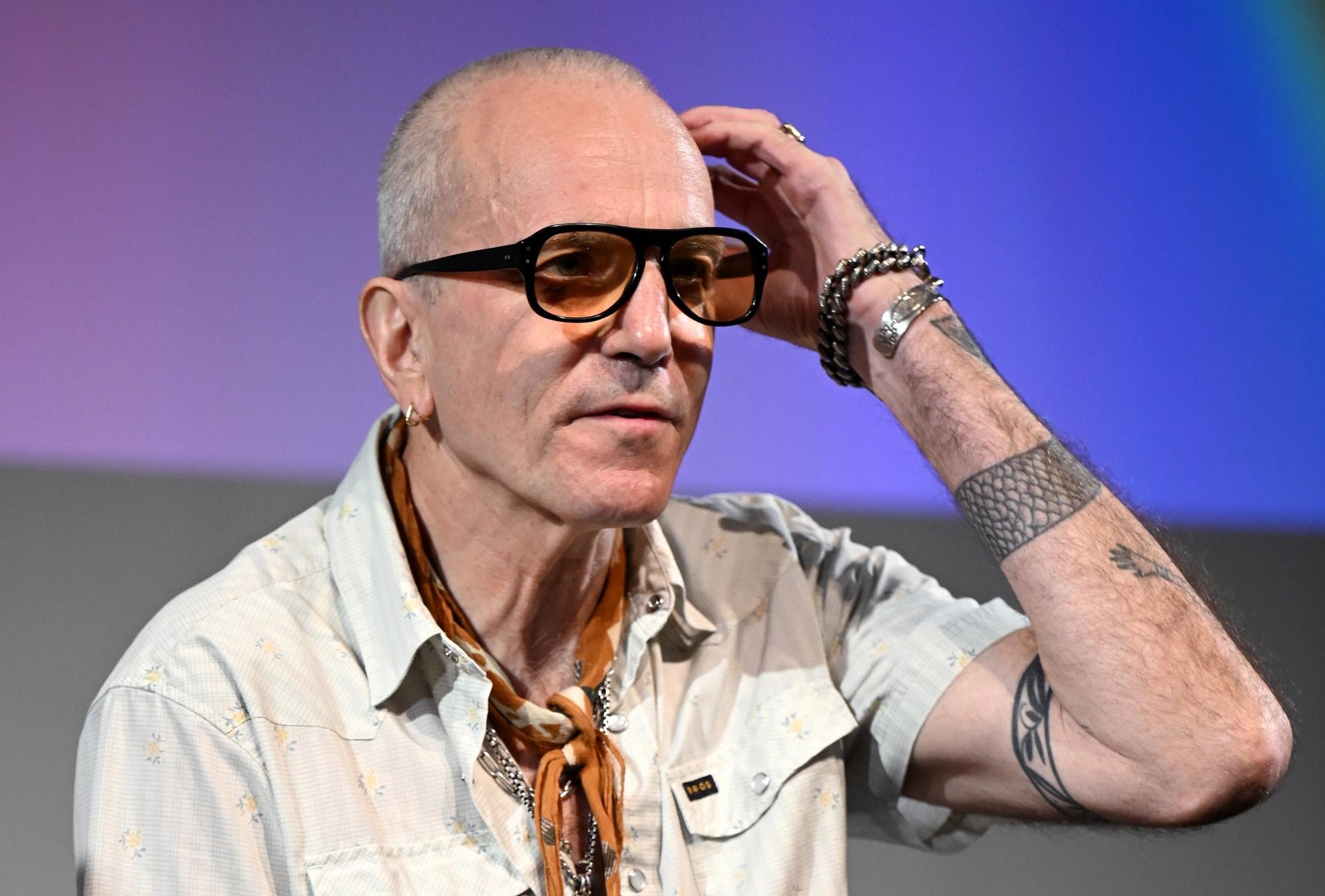
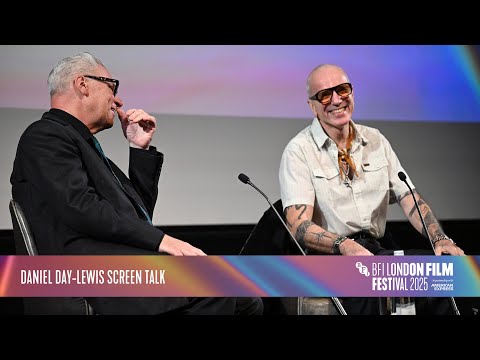
Daniel Day-Lewis has been turned into a genre of backstage anecdote. The stories emphasize duration, discomfort, acquired skills, and an actor who supposedly seals himself inside a character until filming ends. They promise a simple equation: the greater the ordeal, the truer the performance. That equation is memorable, but it is a poor account of what acting looks like in the BFI's 2025 Screen Talk with Day-Lewis, his son Ronan, and Mark Kermode.[1]
Across the conversation, preparation sounds less like solitary self-punishment than the construction of a playable world. A physical task gives the imagination something exact to answer. Silence gives a scene pressure without explaining it. A director creates conditions in which an actor can risk a choice. Day-Lewis even describes the process as something that needs to remain joyful—a striking word from the performer most often represented through tales of extremity.[1][2]
Watch, then, for the gap between legend and working vocabulary. The talk moves from Anemone, the film Day-Lewis co-wrote with and performed for Ronan, back through My Left Foot, theatre, and his collaborations with Jim Sheridan. Its useful subject is not whether every famous production story is accurate. It is what those stories obscure: screen acting is made with other people, and immersion matters only when it becomes behavior that a camera can register.[1][2]
Begin with the space between words
The opening discussion of Anemone supplies a quiet key to the whole interview. Day-Lewis says he was drawn to the film's silences and to what can exist between spoken lines.[2] That interest redirects attention from transformation as a visible stunt to performance as controlled availability. A silent actor is not doing nothing. The face can receive a thought, resist it, redirect it, or let another person wait for an answer. The camera turns those tiny decisions into dramatic time.
This is also why the presence of Ronan matters. Anemone began as a wish to work together; father and son wrote the film, and Ronan directed it.[2] Their family relationship may have reduced one kind of distance, but it did not eliminate the roles of director and performer. It made trust part of the production's material. Daniel could not privately perfect a performance and then deliver it intact. He had to make choices inside his son's framing, timing, and judgment.
The useful viewing move is to notice how often Day-Lewis's answers return to relationships even when a question invites mythology. His idea of concentration is not a locked room. It is a way of becoming responsive enough that another actor's pause, a director's adjustment, or the physical facts of a set can alter the work. Silence is valuable because it keeps that responsiveness visible.
My Left Foot: turn preparation back into a task
When the talk reaches My Left Foot, the familiar evidence of commitment becomes unusually concrete. Preparing to play writer and painter Christy Brown, Day-Lewis learned to write and paint with his left foot.[2] The Irish Film Institute places the small 1989 production at the start of Jim Sheridan's international directing career and notes that both Day-Lewis and Brenda Fricker won Academy Awards for their performances.[5] Those outcomes helped turn the preparation into legend.
But the more revealing question is not how much discomfort the actor tolerated. It is what the task taught him that admiration from a distance could not. Holding a pencil with a foot creates problems of leverage, pressure, fatigue, speed, and intention. A line on paper becomes the record of a body solving those problems. Preparation is dramatically useful when it generates such specific decisions; difficulty by itself proves nothing.
That distinction also sets an ethical limit. An actor's acquired skill does not make him the final authority on another person's disability, and physical effort cannot guarantee a generous representation. What it can do is replace a vague instruction—“show determination,” perhaps—with an action whose resistance is real. The camera then records choices rather than an illustrated adjective. Day-Lewis's account is strongest when heard at this practical scale: gentle steps toward a task, not pain offered as a certificate of seriousness.[1][2]
The director is not outside the “method”
The middle of the Screen Talk dismantles the image of immersion as a private achievement. Day-Lewis calls the director-actor relationship the center of the working experience and remembers that bond with Jim Sheridan as sustaining.[2] His 2013 BAFTA press conference about Lincoln makes a similar point from another collaboration. Asked to summarize working with Steven Spielberg, he resists compressing an important relationship into a tidy formula; he describes choosing the role as a personal need, then doing the work steadily rather than unveiling a secret technique.[3]
A 2007 Museum of the Moving Image conversation with Paul Thomas Anderson makes the shared structure clearer still. Discussing There Will Be Blood, Day-Lewis recalls Anderson creating the “playground” and says the joy lay in confronting its obstacles.[4] The metaphor is exact. A playground is designed, bounded, and social. Its rules make invention possible. The actor's freedom depends on a script, locations, clothes, props, light, fellow performers, and a director able to recognize which discoveries belong in the film.
That is a better explanation of the finished performances than the idea of a character maintained by force of will. Daniel Plainview's opening labor in There Will Be Blood works because body, mine shaft, tools, framing, sound, and duration agree about a man before he speaks. Reynolds Woodcock's authority in Phantom Thread is carried through trained hands, clipped attention, costume, breakfast rhythm, and the pressure created by Vicky Krieps and Lesley Manville. Research feeds those arrangements, but collaboration turns it into cinema.
Play is demanding because it stays open
Calling the work play does not mean calling it casual. Serious play is rule-bound experimentation: repeat an action, discover where it fails, vary one choice, and remain alert to a result no one could fully plan. It can be exhausting precisely because the performer cannot simply display the research. Skills and routines have to become quiet enough that the scene can change around them.
Day-Lewis's BAFTA remarks about Lincoln describe a long approach to a heavily mythologized figure. Doris Kearns Goodwin's Team of Rivals helped him move from monument toward person, but the actor also insists that a role must meet a personal need rather than be accepted as a favor to history or a director.[3] That claim can sound inward-looking. In practice, it creates responsibility: once he accepts the work, the private attraction must survive contact with Spielberg's film and with every other performance in the room.
The BFI talk's late return to Ronan makes that openness especially legible. Here the director is also the actor's son, and their prior intimacy cannot answer every production question for them. It can only give them a basis for taking those questions seriously. Trust does not remove friction; it makes friction usable. The performance remains an encounter rather than a sealed demonstration of technique.[1][2]
What the legend leaves out
The public stories about Day-Lewis tend to end before the most important conversion. They tell us what he learned, wore, built, or endured, then invite us to treat the preparation as the performance. The Screen Talk suggests the reverse. Preparation is successful when viewers stop seeing it as a separate accomplishment. A practiced movement becomes a character's ordinary competence. Research becomes an unforced response. A sustained silence becomes a decision about another person.
This is why joy is not a soft alternative to rigor. It is the condition that keeps rigor from becoming display. Play lets a performer take exact work seriously without deciding the result in advance. It also admits the other makers back into the story: a director establishes the field, collaborators introduce surprise, and editing determines what finally reaches an audience.[2][4]
Near the conversation's close, Day-Lewis describes the hope that work meaningful to its makers might become meaningful to someone else.[2] That hope contains the proper boundary of his method. Immersion may organize the actor's private process, but the film must eventually leave him. What crosses that distance is not the legend of effort. It is a look held half a beat longer, a hand that knows its task, a silence made active, and the sense that a prepared performer is still capable of being surprised.
Sources
- BFI, “Daniel Day-Lewis and Ronan Day-Lewis interviewed by Mark Kermode | BFI LFF 2025 Screen Talk,” YouTube video.
- Ibrahim Azam, “Daniel Day-Lewis: ‘The process needs to be a joyful thing’ – LFF Screen Talk,” British Film Institute, 17 October 2025.
- BAFTA, “EE British Academy Film Awards in 2013 – Winners Press Conference: Leading Actor,” transcript of Daniel Day-Lewis discussing Lincoln.
- Museum of the Moving Image, “Daniel Day-Lewis + Paul Thomas Anderson,” transcript following There Will Be Blood, 11 December 2007.
- Ruth Barton, “My Left Foot,” Irish Film Institute program note.