Chantal Akerman is often introduced through labels—avant-garde, feminist, minimalist, structural—but labels can flatten what is most usable in her work. The sharper way to read her as a director is through control variables. Again and again, she changes what cinema does by altering three things that mainstream filmmaking usually treats as background: how long a shot lasts, what a room does to a body, and how much emotional force can be carried by what remains offscreen.[1][2]
That is why Akerman still feels current in 2026. She did not make “slow films” as a branding choice. She built pressure by refusing convenience. Instead of cutting away once information is delivered, she often lets time continue until routine hardens into structure, and structure hardens into feeling.
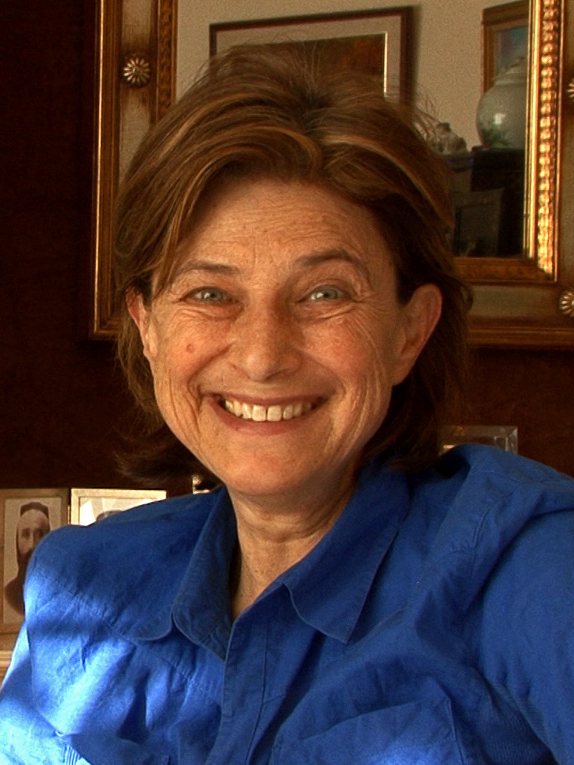
Image context: the lead image uses a 2012 portrait/video still of Akerman as a director-centered visual anchor; the craft claims below are tied to the cited film and biography sources, not to this portrait itself.
What Akerman redirected cinema toward
Britannica’s biography gives the broad outline: born in Brussels in 1950, Akerman came from a Jewish family marked by Holocaust survival, left film school quickly, and decided to make films after seeing Godard’s Pierrot le fou.[1] The same core timeline appears in the Wikipedia synthesis, which also emphasizes how formative her early New York period became.[2]
That New York period matters because it helps explain why Akerman’s cinema does not behave like prestige literary adaptation or classical character drama. Exposed to filmmakers such as Michael Snow, Jonas Mekas, and Andy Warhol, she absorbed a stronger idea: time in cinema is not just a container for events; time is itself material.[2]
If you start from that premise, Akerman’s directing signature becomes easier to see. She is not simply “showing everyday life.” She is recalibrating how much duration an action deserves before viewers understand its emotional cost.
Jeanne Dielman: duration as pressure, not ornament
Akerman’s most famous film remains Jeanne Dielman, 23 quai du Commerce, 1080 Bruxelles (1975), the 201-minute study of domestic routine and sex work that moved from canonical art-house landmark to the top position in the 2022 Sight and Sound critics’ poll.[1][2][3][4][7]
Plenty of writing says the film is important because it “shows chores.” That is true, but it misses the directing method. Akerman’s real intervention is proportionality. She gives cooking, cleaning, table-setting, hallway movement, and waiting the kind of durational seriousness that commercial cinema usually reserves for plot twists or crisis scenes.
That shift changes genre logic. Repetition stops reading as filler and starts reading as tension. A missed beat at the kitchen table or an altered rhythm in a room lands with the force of event because Akerman has taught the audience the baseline pattern first.[2][4]
In director-profile terms, Jeanne Dielman is not just her breakthrough title. It is the clearest blueprint for her larger method: use duration to make invisible labor legible, then use legibility to make tiny deviations devastating.
Rooms in Akerman are never just sets
Most directors treat apartments, kitchens, hallways, and hotel rooms as neutral containers for performance. Akerman treats them as behavioral machines. Her interiors determine tempo, body angle, repetition frequency, and emotional ceiling.
This is visible in Jeanne Dielman, but it already echoes earlier work and keeps returning later. The point is not only that women occupy domestic space under social pressure. The point is that framing and duration let a room become measurable. Once viewers can measure it, they can also feel confinement, ritual, and drift without a speech explaining any of it.[1][2]
That is one reason Akerman’s films age so well. She rarely relies on explanatory dialogue to tell us what a space means. She makes the space produce meaning through habit.
News from Home: distance can be narrated without showing the wound directly
If Jeanne Dielman is the home-bound Akerman template, News from Home (1976) is the distance template. Britannica summarizes the setup cleanly: images of New York City are paired with Akerman’s reading of letters from her mother.[1][5] The Wikipedia entry fills in the practical outline—Belgian/French production, released in 1976, built from city views plus maternal correspondence.[2][6]
The directing lesson here is crucial. Akerman does not force reunion into dramatic encounter. She lets separation travel through voice, street movement, transit space, and urban duration. The emotional subject is family attachment, but the visible world is sidewalks, stations, traffic, and distance.
That separation between image-track and emotional center became one of Akerman’s most durable tools. She keeps proving that a film can hit hard without converting feeling into immediate confrontation. Voice can arrive from elsewhere; intimacy can sit inside distance; biography can be carried by geography.
Late Akerman: the method contracts, then sharpens
The same biography arc that begins with New York and the 1970s breakthroughs also runs through Akerman’s late work, including No Home Movie (2015), her final film about conversations with her mother shortly before her death.[1][2]
This late endpoint matters because it reveals what stayed constant. Across decades, genres, and production scales, Akerman kept returning to a few directorial convictions:
- Time must be felt, not merely announced.
- A room can organize psychology before a character names it.
- Distance is not the absence of emotion; it is one of emotion’s forms.
Seen this way, her career is remarkably coherent. The films vary widely on the surface—fiction, documentary, essay film, installation-adjacent work—but the directorial engine stays recognizable.
Why Akerman still matters to directors in 2026
The simplest answer is that current cinema still struggles with exactly the problems Akerman solved.
- Many films cut too quickly to let routine become intelligible.
- Many interiors are lit beautifully but directed vaguely.
- Many autobiographical films overexplain feeling instead of staging distance.
Akerman offers a harder standard. She shows that precision of duration can replace emphasis, that room logic can replace exposition, and that emotional force can arrive through withholding rather than climax.[1][2][4][6]
Her canon position matters here, but only as confirmation. Jeanne Dielman topping the 2022 Sight and Sound poll did not invent Akerman’s importance; it exposed how much of modern film culture had finally caught up with what her work had already made available.[7]
A practical viewing protocol for studying Akerman as a director
If you want to study Akerman as craft rather than reputation, watch one early film and one later film with this checklist:
- Track how long she waits after narrative information is already clear.
- Mark which rooms create behavioral rules before dialogue does.
- Notice where voice and image are emotionally misaligned on purpose.
- Watch for the point where repetition stops feeling descriptive and starts feeling dangerous.
That last threshold is the one many directors still miss. Akerman’s cinema shows that when duration, space, and distance are calibrated precisely, ordinary life does not become smaller on screen. It becomes almost unbearable to ignore.
Sources
- Encyclopaedia Britannica — “Chantal Akerman”
- Wikipedia — “Chantal Akerman”
- Encyclopaedia Britannica — “Jeanne Dielman, 23 quai du Commerce, 1080 Bruxelles”
- Wikipedia — “Jeanne Dielman, 23 quai du Commerce, 1080 Bruxelles”
- Encyclopaedia Britannica — “News from Home”
- Wikipedia — “News from Home”
- BFI Sight and Sound — “The Greatest Films of All Time” (2022 poll)
- Wikimedia Commons file used (lead image)