
Celine Sciamma's BFI Screen Talk from the 2019 London Film Festival is valuable because it catches a filmmaker explaining form without reducing it to slogans.[1] The occasion is Portrait of a Lady on Fire, but the conversation is not only a campaign stop for one film. It becomes a compact map of Sciamma's recurring questions: who gets to look, who gets to be looked at, when desire becomes a form of attention, and how a film can refuse the old habit of treating a woman's image as something captured by someone else.
That makes the video a strong annotated viewing for movie readers. NEON's official synopsis gives the narrative setup: in 1760 France, Marianne is hired to paint Heloise's wedding portrait while hiding the commission under the cover of companionship, until observation, intimacy, and portrait-making become intertwined.[4] The BFI interview around the film frames Sciamma's project as a female-centered vision of equality, solidarity, romance, and sex, while Film Comment's conversation stresses love, looking, and the restoration of lost histories.[2][3] The Screen Talk lets those written claims acquire a working voice. Sciamma is not presenting theory as decoration. She is describing choices that decide how the camera behaves.
The useful viewing lens is this: watch for how often Sciamma turns a visual problem into an ethical one. A portrait can be an assignment, a commodity, a trap, a memory, or a collaboration. A gaze can dominate, invite, test, answer, or refuse. In Portrait of a Lady on Fire, the drama is not simply whether Marianne and Heloise fall in love. It is whether the act of seeing can be remade so that the person seen also becomes an author of the image.
Start with process, not mystique
Early in the Screen Talk, the most important thing to notice is Sciamma's practicality.[1] She does not make the film's beauty sound accidental, mystical, or merely atmospheric. She talks as a writer-director who builds conditions: period setting, casting, rhythm, silence, page structure, and the exchange between painter and subject. That practicality matters because Portrait of a Lady on Fire can be misread as a film of pure delicacy. It is delicate, but it is also engineered.
The film's central mechanism is the portrait commission.[4] Marianne must observe Heloise without openly naming the purpose of that observation, which means the first phase of looking is contaminated by secrecy. Sciamma's drama begins there, not in plot complication for its own sake. The hidden commission makes the old cinematic gaze visible as a labor system: one person studies, another is made into an object, and power hides inside the appearance of attention. The movie then spends its strongest scenes trying to undo that arrangement.
That is why the interview's emphasis on equality is not a thematic afterthought.[1][2] Equality becomes a question of staging. When Heloise begins to look back, the film changes shape. The point is not that looking is suddenly innocent. The point is that looking becomes reciprocal. Marianne's authority as painter is challenged by Heloise's intelligence as subject, witness, and eventual collaborator. A portrait that began as extraction becomes a negotiated image.
The portrait is a contract before it is an object
The best way to follow the middle stretch of the video is to listen for Sciamma's interest in rules.[1] Romance, in her account, is not just a flood of feeling. It is a system of permissions, refusals, delays, and shared decisions. That is why the painting plot works so well. A portrait is never only paint on canvas. It is a contract about time, access, memory, class, marriage, and future ownership.
NEON's synopsis makes the coercive background clear: Heloise is being prepared for marriage, and the portrait exists because another household wants an image before receiving her as a bride.[4] Sciamma turns that premise away from melodrama and toward procedure. Who decides what Heloise's image should promise? Who gets the finished portrait? What happens when the person being represented begins to shape the representation? Those questions make the love story more precise, not less romantic.
Film Comment's interview is useful because it connects the film's love story to the recovery of histories that were often left outside official record.[3] That context helps explain the film's restraint. Sciamma is not withholding spectacle because she lacks emotion. She is resisting the idea that emotion has to be proven by possession, exposure, or narrative punishment. The image becomes more intense when it is shared under conditions both women understand.
This is also why the Screen Talk remains useful even for viewers who already admire the film.[1] It gives language to something the movie makes one feel: consent can be cinematic. Consent is not only a spoken yes or no. It can live in shot duration, in whether the camera advances or waits, in whether a body is allowed to answer a look, in whether silence opens space rather than closing it. Sciamma's cinema is often discussed through the phrase "female gaze," but the video shows why the phrase is strongest when it names a method, not a badge.
Restraint is not distance
Around the later portions of the conversation, watch how Sciamma's calmness can be mistaken for coolness.[1] Her films often avoid explanatory excess: fewer speeches, fewer sentimental shortcuts, fewer musical instructions telling the audience what to feel. But restraint here is not emotional distance. It is trust. The film trusts faces, timing, walking, firelight, page turns, and the pressure of who is allowed to remain in frame with whom.
The BFI written interview describes the film as upending assumptions of traditional cinema, especially around romance and sex.[2] One of the sharpest reversals is that Sciamma does not treat looking as a one-way engine of desire. In many films, the looked-at figure becomes evidence of the looker's longing. Here, the person looked at keeps returning force to the image. Heloise's gaze is not simply beautiful; it is analytic. She studies Marianne studying her, and that double attention becomes the film's real erotic charge.
That reciprocal structure changes how the period setting works. The 1760 setting could have become costume prestige: dresses, cliffs, candlelight, and painterly surfaces as tasteful heritage packaging.[4] Sciamma uses those elements, but she keeps them from becoming passive decoration. The island, the house, the studio, the beach, and the unfinished canvas are all working spaces. They define what can be said, what must be hidden, and what can briefly be invented between women whose future options are heavily constrained.
The Screen Talk helps because Sciamma speaks from inside those design choices rather than around them.[1] She makes clear that the film's intensity depends on building a world where looking has consequences. The central romance is unforgettable not because the camera constantly announces passion, but because the film understands attention as action. To see someone differently is already to change the room.
What the video teaches you to rewatch
After watching the BFI conversation, a rewatch of Portrait of a Lady on Fire becomes less about waiting for famous images and more about tracking negotiations.[1] Notice when Marianne has information Heloise does not. Notice when Heloise corrects the image being made of her. Notice how often the film asks whether memory is more truthful when it accepts loss rather than pretending possession can preserve love. These are dramatic questions, but they are also craft questions.
That is the value of choosing an interview rather than a trailer or clip compilation. Sciamma's account keeps pointing back to the relationship between ethics and form.[1][2][3] The camera's patience is not ornamental. The quietness is not emptiness. The portrait is not a plot device that happens to sit inside a romance. It is the central machine by which the film tests whether representation can become mutual.
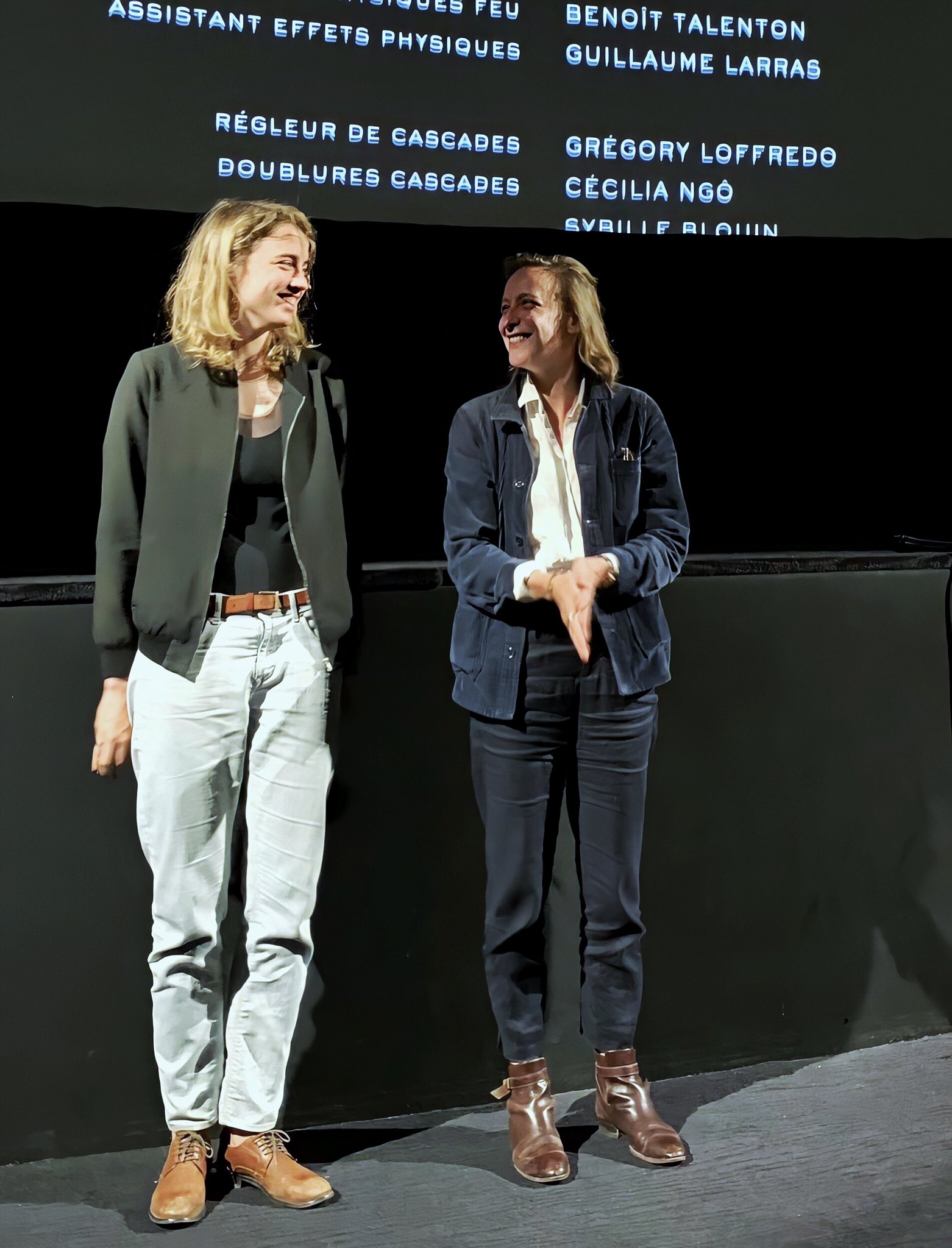
This also explains why the article's cover image is not a conventional still of the lovers alone.[5] The photograph of Haenel and Sciamma at a screening keeps collaboration in view. Portrait of a Lady on Fire is about painter and subject, but it is also a made film: actor, director, audience, and historical imagination meeting around an image. The Screen Talk is part of that afterlife. It lets viewers hear how the movie's beauty was constructed out of exact commitments: do not steal the image, do not flatten desire into conquest, do not confuse restraint with absence, and do not let looking remain a privilege of only one side.
That is why the video still matters beyond the film's release moment. It turns admiration into attention. Sciamma shows that a film can be ravishing without surrendering to possession, romantic without erasing power, and historical without treating the past as sealed. In her hands, looking becomes collaboration because the image is never finished until the person inside it has looked back.
Sources
- BFI, "CELINE SCIAMMA Screen Talk with Tricia Tuttle | BFI London Film Festival 2019," YouTube video.
- BFI / Sight and Sound, "No man's land: Celine Sciamma on Portrait of a Lady on Fire" - interview on the film's female-centered romance and challenge to traditional cinema assumptions.
- Film Comment, "Interview: Celine Sciamma on Portrait of a Lady on Fire" - discussion of love, looking, and restoring lost histories.
- NEON, "Portrait of a Lady on Fire" - official film page and synopsis for the portrait commission, 1760 setting, and Marianne-Heloise premise.
- Wikimedia Commons, "File:Adele Haenel and Celine Sciamma.jpg" - real 2020 screening photograph used as the article image.