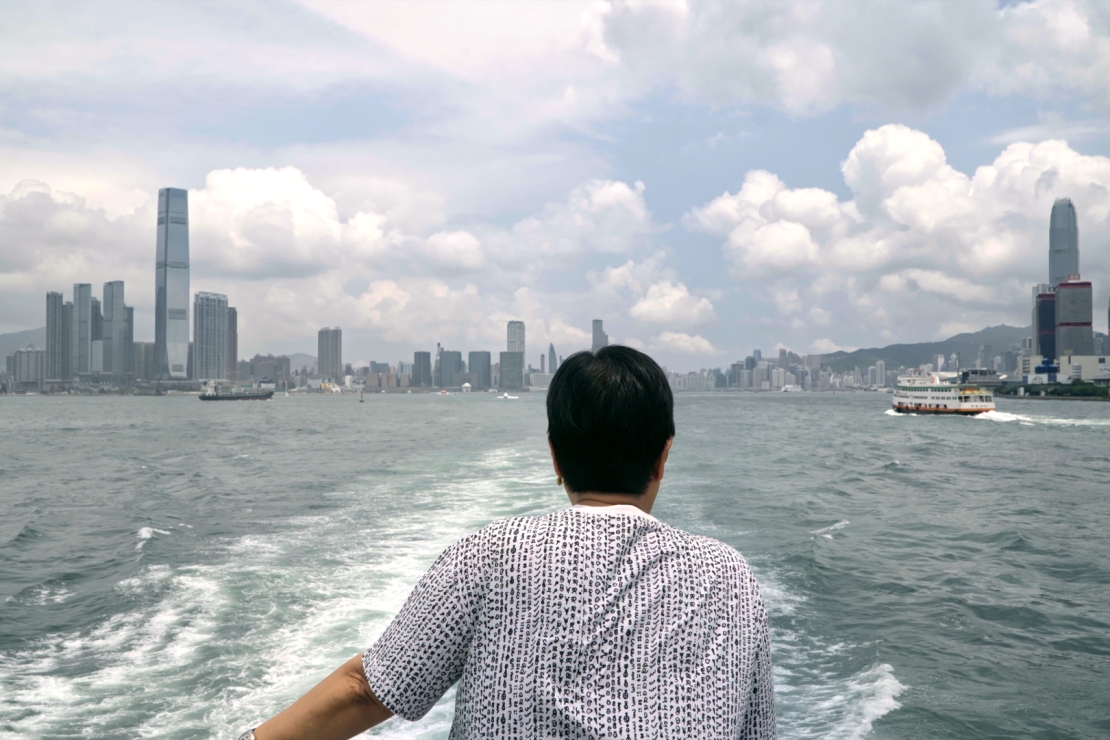
In A Simple Life (2011), a household changes when the person who has kept it running can no longer do the work. Ah Tao, played by Deanie Ip, has spent decades serving a family. After she becomes ill and enters a nursing home, Roger, the film producer played by Andy Lau, must learn to care for her. The reversal allows affection to emerge through the practical business of adjusting to another person's needs.[1]
That adjustment is one of Ann Hui's enduring subjects. Her films give family feeling somewhere to happen: a workplace, an unfamiliar hometown, a room that somebody must make time to visit. Belonging can depend on an obligation being recognized or a small task being done. Across very different stories, she makes those apparently minor transactions substantial enough to carry a film.
A director learns to listen
Hui's education crossed several kinds of storytelling. After studying English and Comparative Literature at the University of Hong Kong, she spent two years at London Film School. Back in Hong Kong, she assisted King Hu, then directed dramas and short documentaries at TVB. Work for RTHK's Below the Lion Rock followed in 1978, before her first feature, The Secret, in 1979.[2]
Literature, documentary and commercial television offered different ways of arranging experience. Her later account of her method suggests how she brings them together. In a 2021 interview with Justin Chor Yu Liu, Hui explained that the story should determine a film's structure, with camera and lighting decisions following that larger conception. She resists designing a visual style first and finding material to fit it.[3]
She also described accepting useful behavior that actors produce on set. What once worried her as insufficient control had become a working method she wanted to refine.[3] This helps explain why her characters can seem to have lives extending beyond their dramatic assignments. A director can organize a story carefully while leaving its inhabitants room to surprise her.
The daughter is also a stranger
Song of the Exile (1990) gives that openness an autobiographical charge. Maggie Cheung plays Hueyin, an aspiring journalist returning from London to Hong Kong for her sister's wedding. Her difficult relationship with her Japanese mother, Aiko, played by Lu Hsiao-fen, gradually acquires a history the daughter has not fully understood. The story travels across generations and places; returning to Japan does not simply restore the mother's sense of home.[4]
Hui credited screenwriter Wu Nien-jen with a sophisticated structure that moves backward and forward without making its machinery conspicuous. She also identified a particular directing problem: getting performers to understand the finer details of a film as a whole when they are accustomed to approaching it scene by scene.[4]
Those remarks make the family story more interesting. A mother's behavior can look different once another part of her past becomes available. The viewer must keep revising a judgment, much as an actor must carry information from elsewhere in the film into a single encounter. Intimacy here requires an effort of interpretation. Being somebody's daughter does not mean already knowing her.
A neighborhood takes time
In The Way We Are (2008), Hui narrows the geographical field to Tin Shui Wai. Kwai, a widowed supermarket worker, lives with her teenage son and develops a friendship with Foon, an older woman beginning work at the same supermarket. M+ places the film against the district's stigmatizing reputation as a place of sadness: Hui gives sustained attention to the everyday life that such a label obscures.[5]
The museum also identifies the use of an early digital camera. That modest production texture belongs to a film in which the neighborhood's ordinary routines occupy the foreground.[5] Festival des 3 Continents programmer Jérôme Baron draws attention to gestures as small as changing a light bulb and slicing a durian, alongside the film's origins on a television budget.[6]
These are useful details because they make kindness measurable in effort. A light bulb leaves a job to be done. Preparing food takes hands and time. By giving these actions narrative space, Hui lets a relationship accumulate through what people do for each other. The scale stays small enough for the recipient of a favor to remain a person, with moods and habits, instead of becoming an emblem of deprivation.
The film's quietness consequently has an edge. A district described chiefly through calamity becomes a place where people must also finish a shift, feed someone and get through an uneventful afternoon. Ordinary continuity deserves attention on its own terms.
When the helper needs help
A Simple Life brings a harder asymmetry into this world of practical affection. Its story draws on producer Roger Lee's experience, with Lee and Susan Chan sharing screenplay credit. The long relationship between a domestic worker and the family she serves gives the care reversal its weight. IFFR's account emphasizes both the gradual adjustment and the space Hui leaves for secondary characters around the central pair.[1]
The distinction between service and affection remains worth holding onto. Years of labor can create intimacy without erasing the inequality that organized the household. Reading the film through that tension makes Roger's new responsibilities more consequential: affection has to find a different expression once Ah Tao can no longer keep providing hers through work.
Place matters to that expression. A Tatler profile records Hui's use of an actual elderly home in Sham Shui Po, as well as her attention to familiar neighborhood faces and routines. It also describes how researching Summer Snow (1995), about a working woman caring for her father-in-law, sharpened her awareness of older people's difficulties.[7] Aging becomes a change in the arrangements of daily life, something a camera can observe in specific surroundings.
Hui's own working life depends on arrangements, too. In the 2021 interview, she stressed choosing collaborators who care about the project, rather than choosing them for prestige alone.[3] Man Lim-chung's documentary Keep Rolling (2020), filmed over three years, makes that labor visible through conversations, collaborators' recollections and production footage.[8]
There is a fitting connection between the filmmaker and the people she films. A neighborhood friendship, a family's history and a production all require other people to participate. Hui gives that dependence texture without pretending it is easy. Someone has to understand what is needed. Someone has to come back.
Sources
- International Film Festival Rotterdam, “A Simple Life,” IFFR 2012 — film year, cast, screenplay credits, autobiographical source and changing care responsibilities.
- London Film School, “Ann Hui” — education, work with King Hu, television career and feature debut.
- Justin Chor Yu Liu, “Interview: Ann Hui Discusses Style, Purpose, and Expression Across Her Illustrious Career in Hong Kong Cinema.” Cinema Escapist, August 2021 — Hui on structure, performance and choosing collaborators.
- BFI Southbank, “Song of the Exile,” programme notes, September 2024 — film credits, contemporary criticism and Hui's 1990 interview about Wu Nien-jen's screenplay and directing actors.
- M+, “The Way We Are & Shorts,” 2022 programme — Tin Shui Wai setting, characters and early digital photography.
- Jérôme Baron, “The Way We Are.” Festival des 3 Continents, 2023 retrospective — everyday gestures, television production context and film credits.
- Tatler Asia, “Ann Hui talks winning the Golden Lion Award and her filmmaking journey” — interview material on Hong Kong locations, neighborhood familiarity and researching Summer Snow.
- Hong Kong International Film Festival Society, “Keep Rolling,” Hong Kong New Talents — documentary credits, production context and the official photographic publicity image used above.