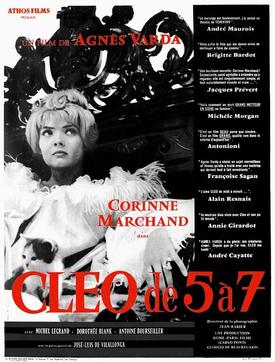
Agnès Varda is often filed under a useful but slightly dead category: the “grandmother” of the French New Wave. The label is not wrong. La Pointe Courte arrived in 1955, before the canonical New Wave boom; Cléo from 5 to 7 became one of the movement’s essential films; and Varda’s career eventually stretched from postwar black-and-white location shooting to digital essay cinema and late-life museum installation work.[1][2][3][8] But the category can make her seem more settled than she is.
What actually makes Varda feel alive across decades is not simply that she worked early, or that she moved between fiction and documentary, or that institutions later showered her with honors. It is that she turned looking into a reciprocal act. In her films, the camera does not master the world and then explain it from above. It drifts, notices, doubles back, gets surprised, and lets the people and objects in front of it change the argument. That is the common method linking Cléo from 5 to 7 (1962), Vagabond (1985), and The Gleaners and I (2000), three very different works that all ask what happens when cinema stops treating the world as raw material and starts meeting it as company.[1][2][4][5][6][7]
Before Varda became a legend, she was a photographer who trusted locations
That origin matters. Varda studied art history, worked as a photographer, and served as the official photographer of the Théâtre National Populaire before she made features.[1][2] When she moved into cinema, she did not come out of the same critic-to-director pipeline that defined the Cahiers wing of the New Wave. She belonged more naturally to the Left Bank current around Alain Resnais and Chris Marker, where documentary texture, essayistic intelligence, and a freer relation between fact and fiction were already central.[1][8]
You can feel that difference in La Pointe Courte, her 1955 debut. Britannica and later histories keep returning to the same point: the film looks ahead to the New Wave, but it does so through location shooting, nonprofessional presence, and an unusual braid of intimate relationship drama with the material life of a fishing village.[1][2] Varda’s authorship starts there in a revealing way. She is not trying to lock the world into a polished studio design. She wants the place to push back.
That photographic origin also helps explain why Varda’s films stay so alert to surfaces without becoming merely decorative. A face, a wall, a hand, a found object, or a stretch of weathered street can carry argument for her before anyone states the argument aloud.
That remains one of the best ways to describe her whole career. Varda was certainly a strong author, but she never made authorship feel like domination. In her films, personality arrives through arrangement: where the camera lingers, how long a walk is allowed to continue, when a face is given time, when a found object suddenly stops being background and becomes the scene’s true center of gravity.
Cléo from 5 to 7: real time becomes a machine for changing how a person sees
No Varda film states that method more cleanly than Cléo from 5 to 7. Released in 1962, the film follows a pop singer waiting between five o’clock and roughly six-thirty for medical results she fears will confirm cancer.[4][5] The premise sounds claustrophobic, but Varda uses it to open the city rather than close the heroine in on herself.
At the start, Cléo is trapped inside an image economy. She reads herself through mirrors, through clothes, through male attention, through superstition, and through the stage-managed surface of celebrity. Varda does not mock that vanity, but she does make it provisional. As Cléo moves through taxis, hat shops, cafés, rehearsal rooms, streets, a park, and finally the hospital garden, Paris stops functioning as décor and becomes an instrument that educates perception.[4][5]
That shift is the first major Varda signature. She is interested in subjectivity, but not as a sealed private chamber. Cléo becomes more real as she becomes more porous: to workers, strangers, radio chatter, war news, other women, and eventually Antoine, the soldier she meets in the park. The film’s formal elegance—the compressed time frame, the movement between self-display and street observation, the lightly essayistic feel of incidental detail—is exactly why critics still treat it as one of the indispensable films directed by a woman.[4][5]
The crucial point for a director profile is that Varda’s compassion is inseparable from structure. She does not simply “care about women’s inner lives.” She builds a cinematic route by which inner life is altered through contact with the world.
Vagabond: curiosity hardens into an ethics of not rescuing the subject
If Cléo shows Varda’s openness in lyrical form, Vagabond shows how severe that same method can become. The 1985 film begins with a dead young drifter, Mona, found in a ditch, then reconstructs her final weeks through flashbacks and direct-to-camera testimonies from people who crossed her path.[6] It won the Golden Lion at Venice, and it remains one of the hardest, clearest demonstrations that empathy in cinema does not have to arrive as redemption.[1][2][6]
What Varda refuses here is the fantasy that deeper access automatically means moral rescue. Mona is watched by employers, passersby, farmers, mechanics, academics, police, and fellow drifters; she is also watched by us. Yet all of that looking does not produce mastery. The testimonies only multiply partial views. Everyone thinks they have a piece of her. No one gets the final key.
That formal choice matters because it keeps the film from collapsing into either sociological diagnosis or sentimental martyrdom. Varda gives Mona weather, exhaustion, tobacco hunger, boredom, sex, dirt, brief hospitality, irritation, and refusal. She gives her texture without forcing nobility onto her. In other words, Varda’s curiosity has teeth. She is willing to remain with a life that resists explanation instead of sanding it down into a lesson.[6]
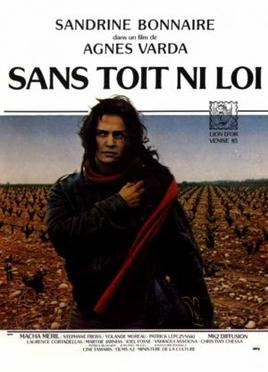
Seen next to Cléo, Vagabond reveals something essential about Varda’s authorship. The governing value is not sweetness. It is attentiveness without possession.
The Gleaners and I: self-insertion turns documentary into shared scavenging
By the time Varda made The Gleaners and I in 2000, she had entered another technological and personal phase. Cheap digital cameras let her work more lightly, more quickly, and more intimately; the film follows people who glean leftover potatoes, discarded produce, urban objects, and all kinds of social remainder.[1][2][7] But the miracle of the film is not merely that Varda documents marginal lives with warmth. It is that she quietly inserts herself into the same economy.
The camera finds misshapen potatoes, vineyards, market waste, truck traffic, legal definitions of gleaning, and people who recover what industrial distribution leaves behind. Then Varda turns the lens toward her own aging hand, her own pleasure in collecting, her own position as someone gathering images after others have passed over them.[7] The famous heart-shaped potato is not just a charming aside. It condenses Varda’s whole ethic: the castoff object, the amused observer, and the act of rescuing value from what an industrial system was prepared to leave behind.[7] Documentary here becomes essay without becoming lecture. The filmmaker is neither invisible observer nor domineering guide. She is another gleaner.
That is why the film feels so modern. Long before “personal documentary” became a casual branding phrase, Varda had already found a way to make self-presence ethically useful. She appears not to inflate the author but to mark the encounter honestly. The movie tells us that selection is happening, affection is happening, framing is happening—and that these acts can still remain open, curious, and generous.
Why calling Varda a humanist is still too soft
Varda is often praised for warmth, generosity, or curiosity, and those words are earned. But taken alone, they can blur what is formally difficult about her work. She is not simply kind to her subjects. She keeps redesigning the distance between filmmaker, subject, and viewer so that no one gets the comfort of full possession. Cléo from 5 to 7 loosens self-image through contact; Vagabond multiplies testimony while denying closure; The Gleaners and I lets self-insertion become a declaration of situated selection rather than a plea for innocence.[4][6][7]
That is why Varda’s cinema keeps escaping museum-language praise. The films do not merely celebrate attention; they test what attention costs when it refuses domination. Her lightness is built on structural discipline.
Why Varda still feels contemporary in 2026
The institutional record is secure. Varda became the first female director to receive an Honorary Palme d’Or at Cannes in 2015, then the first female director to receive an honorary Oscar in 2017.[1][3] Six of her films placed in the BBC Culture poll of the greatest films directed by women, with Cléo from 5 to 7 ranking second.[5][11] Those markers matter. They show how decisively the canon has moved toward her.
But prizes are not the real reason her work stays current. Varda lasts because she keeps offering a model of authorship that feels newly useful in an era saturated with extraction, hot takes, and overconfident explanation. She shows that a director can have a signature without forcing every subject into the same prefabricated conclusion. She shows that intellect can stay light on its feet. She shows that a film can be rigorously composed while still making room for accident, detour, and the dignity of things that do not at first look central.
Put more simply: Varda made curiosity look like a discipline.
That discipline runs from the fishing village textures of La Pointe Courte to Cléo’s drifting education, from Mona’s unknowable winter to the potato-shaped philosophy of The Gleaners and I. Across all of them, the strongest recurring Varda theme is not “femininity,” or “memory,” or even “the essay film,” though all of those matter. It is the belief that cinema becomes more truthful when it stops trying to own what it sees.
If you only have one evening, where to enter Varda
- Start with Cléo from 5 to 7 if you want the cleanest introduction to her method: real time, city wandering, and a heroine whose way of seeing keeps changing.
- Go to Vagabond if you want the hardest version of that method: the film is colder, rougher, and much less willing to rescue either the subject or the viewer.
- End with The Gleaners and I if you want to see why Varda still feels current: it shows how self-insertion, light digital shooting, and essayistic curiosity can stay playful without turning slack.
90-second rewatch drill
If you want to test this director profile against the films, look for three things:
- Watch how Varda turns movement into thought: a walk, a ride, a drift, a roadside stop, a turn into a park or field—these are rarely just transitions in her films.
- Notice when objects stop being props: mirrors, hats, potatoes, a broken bottle, a found tool, a wall image, a hand. Varda often lets material things carry the film’s hidden argument.
- Track how selfhood changes through encounter: Cléo becomes more open, Mona remains resistant, and Varda herself enters The Gleaners and I as a participant. In each case, identity is something the world presses on, not something the film merely reports.
Sources
- Wikipedia — Agnès Varda (biography, early photographic work, major films, awards)
- Encyclopaedia Britannica — Agnès Varda biography and career overview
- Festival de Cannes — Agnès Varda profile
- Wikipedia — Cléo from 5 to 7 (release, cast, structure, later poll rankings)
- BBC Culture — Why Agnès Varda’s Cléo from 5 to 7 deserves to be a classic
- Wikipedia — Vagabond (1985 film) (structure, awards, reception)
- Criterion Collection — The Gleaners and I: The Harvesters of Our Time
- Wikipedia — French New Wave (including Left Bank context)
- Wikipedia file page — original poster source used as hero image
- Wikipedia file page — Vagabond poster source used in-body
- BBC Culture — The 100 greatest films directed by women (poll list)