In Vicenza, a cook preparing bacalà alla vicentina can set aside the wooden spoon. If the fish needs moving during its long simmer in milk and olive oil, the local confraternity advises taking hold of the pan and rotating the whole thing. After several days spent coaxing a stiff length of dried cod to soften, it would be a shame to break up the pieces. The curious thing about this recipe is where the cook first has to allow for differences between one fish and the next. That job begins on a Norwegian island, months before dinner.[1][2]
A catch hung in pairs
On Værøy, in the Lofoten islands, the stockfish producer Brødrene Andreassen receives fresh skrei, the migratory cod of the winter fishery. Workers tie the fish together by their tails and sling each pair over a wooden rail. The knot holds them up. The spacing does some of the work of preserving them. Each fish needs moving air around it, a small consideration when you hang the first pair and a considerable one by the time you fill a rack.[2][3]
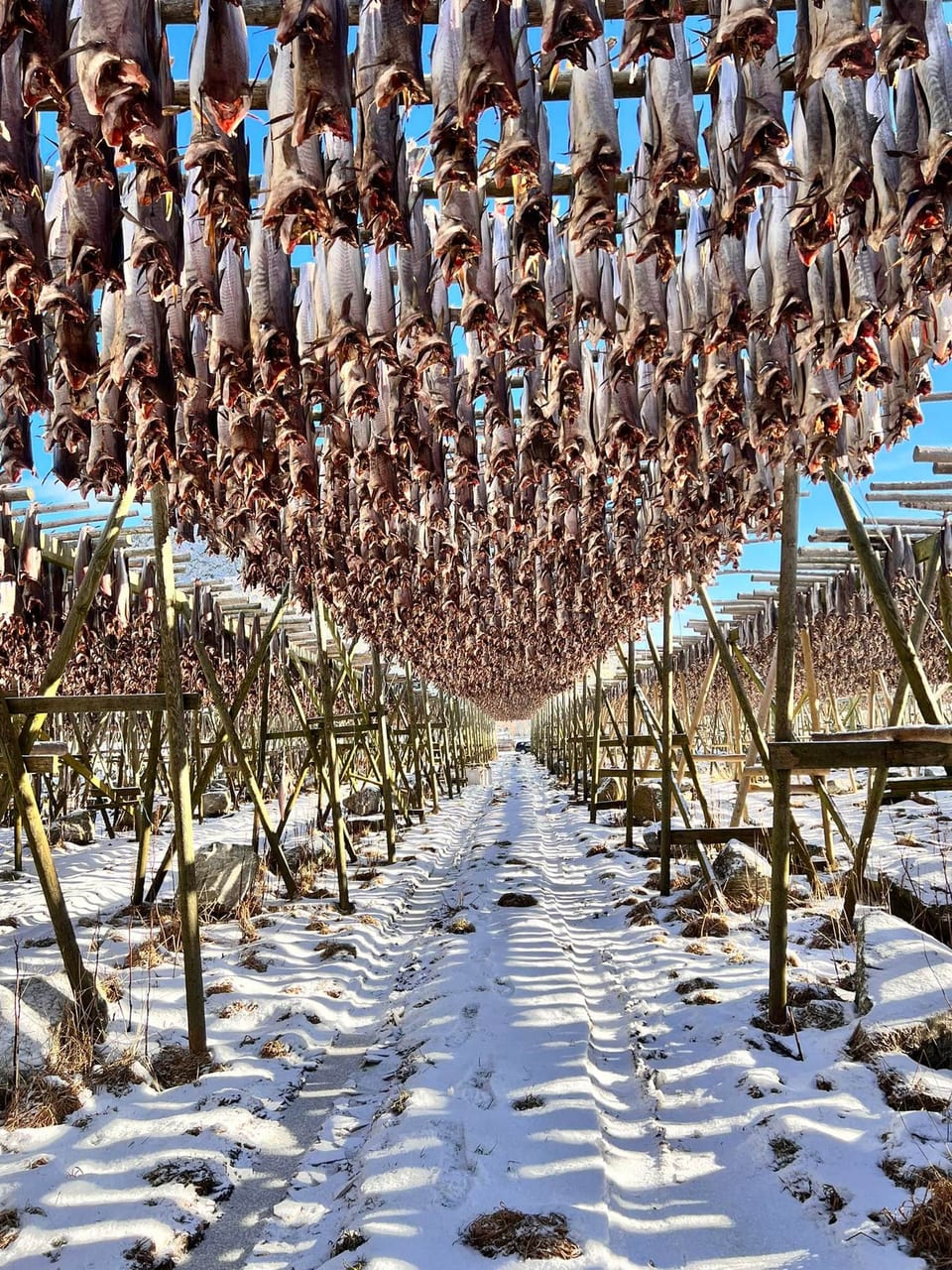
Salt plays no part in this cure. A second island producer, Lofoten Viking, puts its preferred drying temperature between freezing and five degrees Celsius. Fish hung in February or March come down around the beginning of June. By then they look ready to ship, but at this firm they spend another month stacked on pallets in a room where air can circulate. Only then does a selector pick up the first fish.[3][4]
What a buyer can ask for
A vraker, or grader, works fish by fish. Length and weight are easy enough to put on an invoice. Colour and smell take somebody standing over the catch. Brødrene Andreassen distinguishes around twenty categories, an impressive vocabulary for a commodity whose entire ingredient list is cod. A buyer can order much more precisely than a given weight of the winter catch.[2][3][4]
Some of the vocabulary amounts to a history of the customers. Bremer recalls Bremen and Hollender the Dutch market. Westre Ancona puts an Italian port into the language of a Norwegian sorting room. Read together, the names suggest how a winter fishery acquired such fine distinctions. People a long way from the racks had quite particular ideas about what they wanted to cook.[3]
The fish in the pan
In Vicenza the shopping list begins with stoccafisso secco, dried stockfish. The salted fish in the confraternity’s recipe are the three sardines that go into the onions. The cod, already beaten to loosen the flesh, spends two to three days in changes of cold water. Once it yields enough to open lengthwise, the cook can lift out the backbone, remove the smaller bones and cut pieces that will sit snugly beside one another.[1]
The confraternity arrived at its version by comparing what Vicenza’s restaurants and trattorias cooked between the 1930s and the 1950s. Its instructions allow about four and a half hours over very gentle heat. Milk, grated grana and onions settle around the pieces, with enough olive oil to cover them. The recipe leaves the exact finish to the cook because each fish softens a little differently. Even after a Norwegian grader has weighed it, examined it and found a name for it, there is one judgment left to make. It belongs to the person who tips the pan, sees how tender the pieces have become, and calls for the polenta.[1]
Sources
- Venerabile Confraternita del Bacalà alla Vicentina, “La Ricetta,” on the restaurant recipes, soaking and slow cooking.
- Brødrene Andreassen, “Quality & Production,” on hanging, grading and the producer’s drying-rack photograph.
- Destination Lofoten, “Skrei and Stockfish,” on the winter fishery, graders and historical market names.
- Lofoten Viking, “Stock fish,” on drying temperatures, indoor maturation and selection on Værøy.