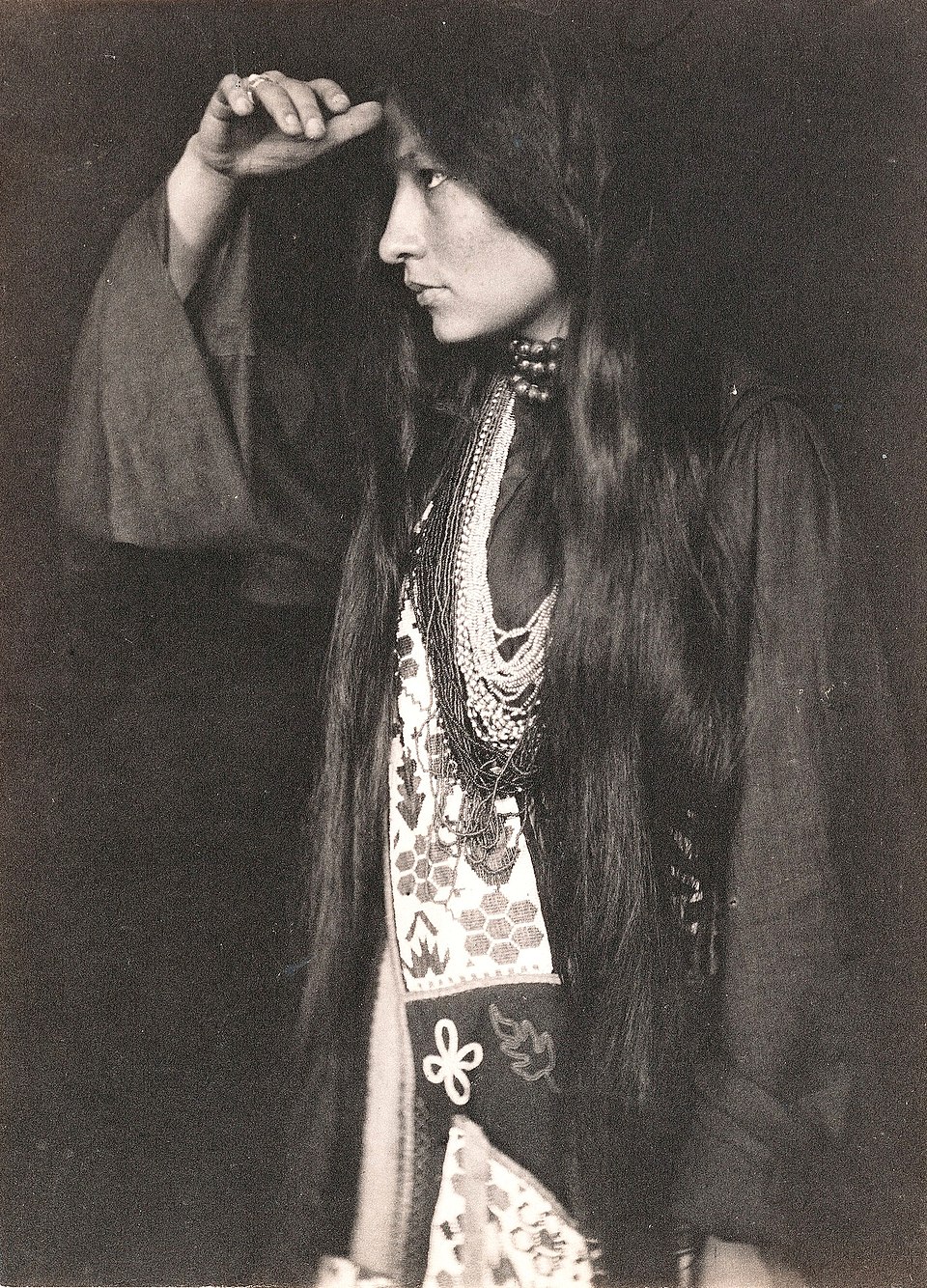
Zitkala-Sa's American Indian Stories is easy to mislabel if it is read only as memoir, folklore, or protest. The 1921 book is all three, but its force comes from refusing to let any one category keep the others quiet. Childhood scenes lead into boarding-school memory; Dakota stories sit beside allegorical fiction; a political essay closes the volume with a writer who has learned how to make personal injury answer in public.[1]
The book's reception history has often treated Zitkala-Sa as a recovered pioneer: Yankton Dakota writer, violinist, teacher, editor, librettist, and activist whose work helps make Indigenous women's writing visible inside U.S. literary history.[2][5] That recovery is necessary, but it can soften the book's craft if it turns her mainly into a symbol of firstness. American Indian Stories is sharper than a monument. It is a dossier assembled out of voice changes. The child remembers; the student resists; the storyteller preserves; the polemicist accuses; the public woman signs her own name.
Project Gutenberg's bibliographic record gives the plain shelf facts: American Indian Stories was published in 1921, and its subjects include Zitkala-Sa herself, Yankton women, Yankton social conditions, and government relations.[1] Those categories already show the book's problem. A life story cannot be separated from policy; a childhood cannot be separated from school systems; a literary collection cannot be separated from the pressure placed on Native peoples to become legible to white institutions.
Image context: the lead photograph is not decorative biography. Kasebier photographed Zitkala-Sa around 1898, often with a violin or book, in images that the Commons source describes as staging both Native dress and western-coded accomplishments.[6] That tension belongs to the article's argument. The book is about how a public Native woman makes imposed visibility serve her own testimony.
A Book Built From Rupture
The opening autobiographical sequence begins before school has done its damage. In "Impressions of an Indian Childhood," the child moves through home, river, mother, aunt, food, stories, and seasonal play.[1] The prose remembers a world of relation before it describes a world of extraction. This matters because the boarding school chapters are not framed as simple movement from ignorance into education. They are framed as a break in an existing order of knowledge.
One of the book's most devastating short sentences arrives after her hair is cut at school: "Then I lost my spirit."[1] The line is plain enough to be missed. It does not argue in legal terms; it reports an internal collapse caused by an outward act. Hair, clothing, language, silence, surveillance, and public shame become a system of literary evidence. Zitkala-Sa does not need to explain every detail of assimilation policy in the scene because the scene has already made the policy tactile.
Britannica's biographical summary places the episode in a wider educational path: as a child she was sent to White's Manual Labor Institute in Indiana, later studied at Earlham College, and taught for a period at the Carlisle Indian Industrial School before becoming deeply uncomfortable with the school's discipline and assimilationist curriculum.[4] The National Park Service gives the public-life continuation: writer, activist, teacher, intellectual, and musician, born on the Yankton Indian Reservation in 1876 and buried at Arlington National Cemetery after her death in 1938.[2] Read together, those facts make the book's structure clearer. The child taken east becomes the adult who writes back.
The School Story Is Also A Style Lesson
Zitkala-Sa's prose often works by letting a scene carry two kinds of knowledge at once. The child's understanding is immediate: she wants red apples, fears punishment, feels shame, misses home, misreads adult motives, and tries to survive the rules placed over her body.[1] The adult narrator understands the trap: the language of opportunity has been used to recruit a child into removal.
That double consciousness gives the book its style. The sentences can sound simple because the remembered child is young, but the arrangement is exact. Promises of abundance are followed by deprivation. Christian instruction is followed by spiritual injury. School order is followed by inner disorder. The effect is not nostalgia for innocence alone; it is a formal accusation. A system that calls itself education appears in the prose as a sequence of losses.
This is why American Indian Stories should not be filed only under autobiography. It is also a book about audience management. Zitkala-Sa wrote for readers who might have trusted missionary schooling, romanticized Native childhood, or treated Native stories as quaint survivals. The collection lets those readers enter through familiar forms, then changes the moral cost of staying there. Childhood reminiscence becomes testimony. Folklore becomes cultural continuity. The final essay makes belief and identity public rather than picturesque.
Folklore Is Not A Side Room
The Dakota stories in the volume are sometimes treated as an appendix to the autobiographical chapters, but the book's architecture resists that hierarchy. Storytelling is not a decorative survival after trauma. It is one of the forces the school story tries and fails to silence. The opening childhood world is filled with oral narration, and the later traditional tales keep that world active inside the printed book.[1]
The Academy of American Poets profile identifies Zitkala-Sa as poet, musician, librettist, short-story writer, essayist, activist, and co-creator of The Sun Dance Opera with William F. Hanson.[5] That range helps explain why the collection is so formally mixed. She is not merely preserving tales as museum specimens. She is moving among media and audiences: page, platform, song, lecture, policy work, and organizational life.
The National Park Service's "Places of Zitkala-Sa" article shows the activist extension in the 1910s and 1920s: she served as secretary-treasurer of the Society of American Indians, worked with the General Federation of Women's Clubs, helped expose exploitation of tribes, testified before Congress, and founded the National Council of American Indians in 1926.[3] That later record changes how the 1921 collection reads. The stories are not early literary artifacts sealed off from activism. They are part of a continuum in which narrative, performance, and political organization all become methods of survival.
Reception Should Preserve The Difficulty
Modern recovery of Zitkala-Sa often emphasizes her importance, and rightly so. But a strong reception dossier should preserve the discomfort in American Indian Stories. The book does not simply celebrate resilience. It asks what kind of world requires a child to become so articulate about harm. It asks why a writer must translate cultural injury into English prose for readers whose institutions helped produce it. It asks what is saved, and what cannot be restored, when memory becomes literature.
The collection's final movement toward public critique matters because it prevents the reader from consuming the school chapters as private sadness. Zitkala-Sa's career moved beyond the literary page into voting rights, citizenship, self-determination, cultural recognition, and reform politics.[2][3][5] Yet the book is not merely a preface to activism. It is activism in literary form: a record that makes policy visible in the grain of childhood experience.
That is the strongest reason to read American Indian Stories now. It refuses the comfort of a single genre because the history it records could not be contained by one. The book is memoir when it needs memory, story cycle when it needs continuity, fiction when it needs pressure, and argument when it needs a public answer. Its achievement is not only that Zitkala-Sa speaks after rupture. It is that she designs a form in which rupture, survivance, and accusation can stand in the same room.
Sources
- Zitkala-Sa, American Indian Stories, Project Gutenberg eBook no. 10376; source for the 1921 collection text, contents, metadata, and quoted passages.
- National Park Service, "Zitkala-Sa (Red Bird / Gertrude Simmons Bonnin)" biographical profile, including birth, death, public roles, and the 1898 violin photograph context.
- National Park Service, "The Places of Zitkala-Sa," for the activist geography, Society of American Indians role, GFWC work, congressional testimony, and National Council of American Indians context.
- Encyclopaedia Britannica, "Zitkala-Sa," last updated May 6, 2026, for biographical, educational, publication, and Carlisle context.
- Academy of American Poets, "Zitkala-Sa," for literary roles, birth context, opera collaboration, and National Council of American Indians summary.
- Wikimedia Commons, "File:Zitkala-Sa.jpg," source page for Gertrude Kasebier's circa-1898 archival photograph used as the article image.