Alfred Salteena introduces himself with a qualification: he is “not quite a gentleman,” though “you would hardly notice it.” In the first chapter of Daisy Ashford's The Young Visiters, the disclaimer sits inside a letter accepting a country-house invitation. Before he has arrived, he is negotiating how he should be received.[1]
The novel eventually needed an introduction of its own. Written in 1890, when Ashford was nine, it appeared in 1919 with a preface by J. M. Barrie. His name helped readers take notice; some then decided that he must have written the story himself. A book about entering the right company had acquired a peculiarly appropriate problem: its sponsor threatened to overshadow the person he was introducing.[2][3]
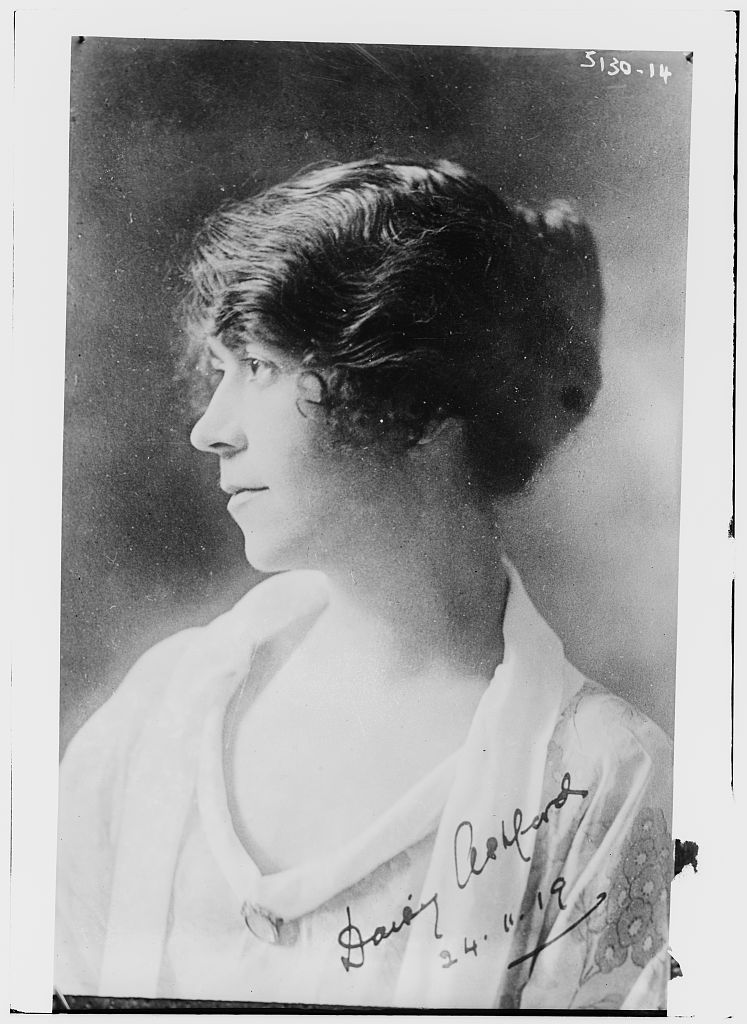
Barrie's preface opens by guaranteeing the child's authorship through the testimony of the adult who owns the copyright. He turns immediately to the book's childhood frontispiece, finding “careless power” in the young face. He also admits that the printed edition divides the manuscript's long paragraphs for readers' convenience.[1]
These details make the introduction more interesting than a certificate of authenticity. The child is already being presented, interpreted, and made readable. Barrie asks us to admire her confidence before we encounter her sentences. Even the photograph becomes something like an advance review: he reads accomplishment into an expression.
His delight is real, but its language has consequences. To praise effortless invention can make effort difficult to see. The reader is invited to meet a small prodigy whose book seems to have happened almost by itself. That invitation leaves a narrow space for an author who observed, selected, borrowed, and arranged—even if she could not have explained those activities in a critic's vocabulary.
Salteena's letter offers a useful test. Its qualification begins with a social defect and immediately tries to reduce its visibility. The word quite imagines gentility as something measurable: he has nearly enough. The reassurance that follows asks his host to overlook the shortfall. In a few words, the letter makes us hear both embarrassment and self-advertisement. That effect survives when the passage is read without the surrounding spelling mistakes.
It would be rash to infer a complete theory of class from a child's sentence. It would be equally reductive to explain the sentence's force entirely through the child's ignorance. Whatever Ashford intended, the printed words give Salteena a recognizable way of managing other people's judgment. A reader can describe that achievement without pretending to know exactly how consciously she produced it.
The first reception did not settle on a single answer. In her study of literary precocity, Roisín Laing records Katherine Mansfield's acceptance of the child author's authenticity in a May 1919 review. A Saturday Review notice that August attributed the book to Barrie, reasoning that a child could not have been sufficiently unpleasant to write it. The disagreement concerned what kind of mind readers were prepared to imagine behind the comedy.[3]
That last objection is revealing. It makes the reader's idea of childhood a test of the manuscript. If children are supposed to be innocent in a particular way, then observations that violate that expectation need another author. The work becomes suspect at precisely the point where it exceeds the role assigned to its maker.
A defense could be restrictive too. In his preface to the 1920 collection Daisy Ashford: Her Book, the American writer Irvin S. Cobb recalls publisher George H. Doran reporting the Barrie rumor and citing the old manuscript as evidence against it. Cobb himself argues that an adult could not have produced the same humor deliberately: its comedy depends on the child's seriousness.[2]
This protects the attribution while narrowing the achievement. On that account, Ashford succeeds because she does not fully know what she is doing. The skeptic and the defender can therefore arrive at surprisingly similar limits: one transfers the accomplishment to an adult; the other makes it inseparable from an absence of adult understanding. Neither position has much room for an uneven mixture of intention, imitation, perception, and surprise—the mixture we readily allow grown writers.
The 1920 volume also gives Ashford space to answer in her own voice. In her foreword, she thanks Barrie for bringing the earlier book an audience. She describes laughing at the seriousness of her childhood writing and feeling that its author was “almost another person.” Yet she judges a later childhood work, The Hangman's Daughter, her greatest youthful achievement because she worked harder at it.[2]
Her criterion quietly changes the conversation. The famous book's admirers celebrate a marvel; she remembers a practice. There were other stories, different ambitions, and degrees of labor. The child had preferences about her own work, and the adult does too. Neither has to coincide with the public's favorite explanation of her success.
Laing warns that attention to the child author's age can push the writing itself into the background.[3] The Young Visiters rewards the opposite movement: keep the circumstances of its publication in view, then return to the sentences. The spelling supplies some of the pleasure. Salteena's anxious little qualification supplies another kind, available to anyone who has wondered whether an invitation really means acceptance.
Barrie's preface remains part of that pleasure and part of the historical evidence. Reading it after the story changes its position. We can enjoy his welcome, question the assumptions inside it, and recognize the achievement he helped bring into print. By then, Ashford has already introduced herself.
Sources
- Daisy Ashford, The Young Visiters; or, Mr Salteena's Plan, with J. M. Barrie's preface (George H. Doran, 1919), Project Gutenberg — preface and Chapter 1, including Salteena's letter; original spelling retained in quotations.
- Daisy Ashford: Her Book (George H. Doran, 1920), Project Gutenberg — Irvin S. Cobb's preface, especially pp. vii–ix, and Ashford's Author's Foreword, pp. xxi–xxiv, dated March 1920.
- Roisín Laing, The Precocious Child in the Late Nineteenth Century (Durham University doctoral thesis, 2016), Chapter Eight, especially pp. 177–179 and note 4 — publication context, conflicting 1919 reviews, and the limits of reading chiefly for the author's age.
- Library of Congress, George Grantham Bain Collection, Daisy Ashford, LC-DIG-ggbain-30073 — direct archival photograph, bearing the signature and date 24/11/19; source of the image reproduced above.