Ambrose keeps the girl's notebook wrapped in paper, inside a bureau. He handles its faded green binding as a collector handles a treasure. Before lending it to his visitor, Cotgrave, he explains what it will prove. The girl who filled those pages has already become an illustration of his theory.[1]
Then she begins to speak, and the story becomes harder to contain.
Arthur Machen's “The White People” has three named sections: “Prologue,” “The Green Book,” and “Epilogue.” Two conversations surround a private manuscript. That arrangement seems to promise a guided tour of forbidden knowledge: an expert introduces the evidence, we examine it, and the expert supplies the conclusion. But the notebook changes what explanation can accomplish. Its wandering chronology and withheld meanings make the reader inhabit an experience that the closing conversation can classify only from outside.
This essay discusses the story's ending.
The explanation arrives first
In the “Prologue,” Ambrose distinguishes ordinary wrongdoing from what he considers spiritual evil. For him, true sin involves an attempt to enter a sphere beyond humanity's proper limits. His examples are unsettling because they disturb categories: a talking animal, singing flowers, stones that grow. Cotgrave's first response is amused disbelief. Gradually, he starts treating his eccentric host as a possible authority.[1]
This is a carefully staged apprenticeship. Before we encounter the manuscript, we watch someone learn how Ambrose wants it read. The supernatural has acquired a vocabulary and an interpreter. Yet the scene also keeps that interpreter visible as a person: a recluse pouring drinks, enjoying an argument, and reluctant to part with a prized possession.
His attachment matters. The notebook is evidence, but it is also something he owns. He knew its author; he knows a sequel; he controls when Cotgrave may hear it. By postponing that sequel until after the manuscript, Machen lets the girl's pleasure and fear reach us before the frame gives her experience its final label.
A memory that opens into another memory
The notebook starts with a distinction between mentioning a secret and transmitting it. “I may write something about all these things but not the way to do them,” the girl explains. Strange names accumulate, but definitions do not. The words suggest a working vocabulary already shared somewhere beyond the reader's reach.[1]
The effect depends on the document's private purpose. She is recording what matters to her, rather than preparing instructions for us. An unfamiliar term can therefore appear without explanation and still feel natural within her account. We have opened a book that was never addressed to us.
Time behaves similarly. “I can remember remembering,” she writes near the beginning. The doubled verb turns recollection into another event to be recalled. Later, a winter walk at thirteen leads her through thickets, rocks, and earthworks; a hollow in the ground brings back a story her nurse told her. We leave the walk and enter that remembered tale. Its consequences then alter how she behaves in the hollow.[1]
These interruptions have practical force. Stories teach the girl what a place might mean and what she should do there. When she later lies awake trying to understand her adventure, more of the nurse's tales return. The sequence makes it difficult to separate an experience from the inherited language through which she recognizes it.
That difficulty is present in her own thinking. She wonders whether what she saw was real or assembled from darkness, branches, moonlight, and remembered stories. The notebook allows conviction and doubt to alternate. A simple march from ignorance to revelation would lose that movement.
The second walk changes the first
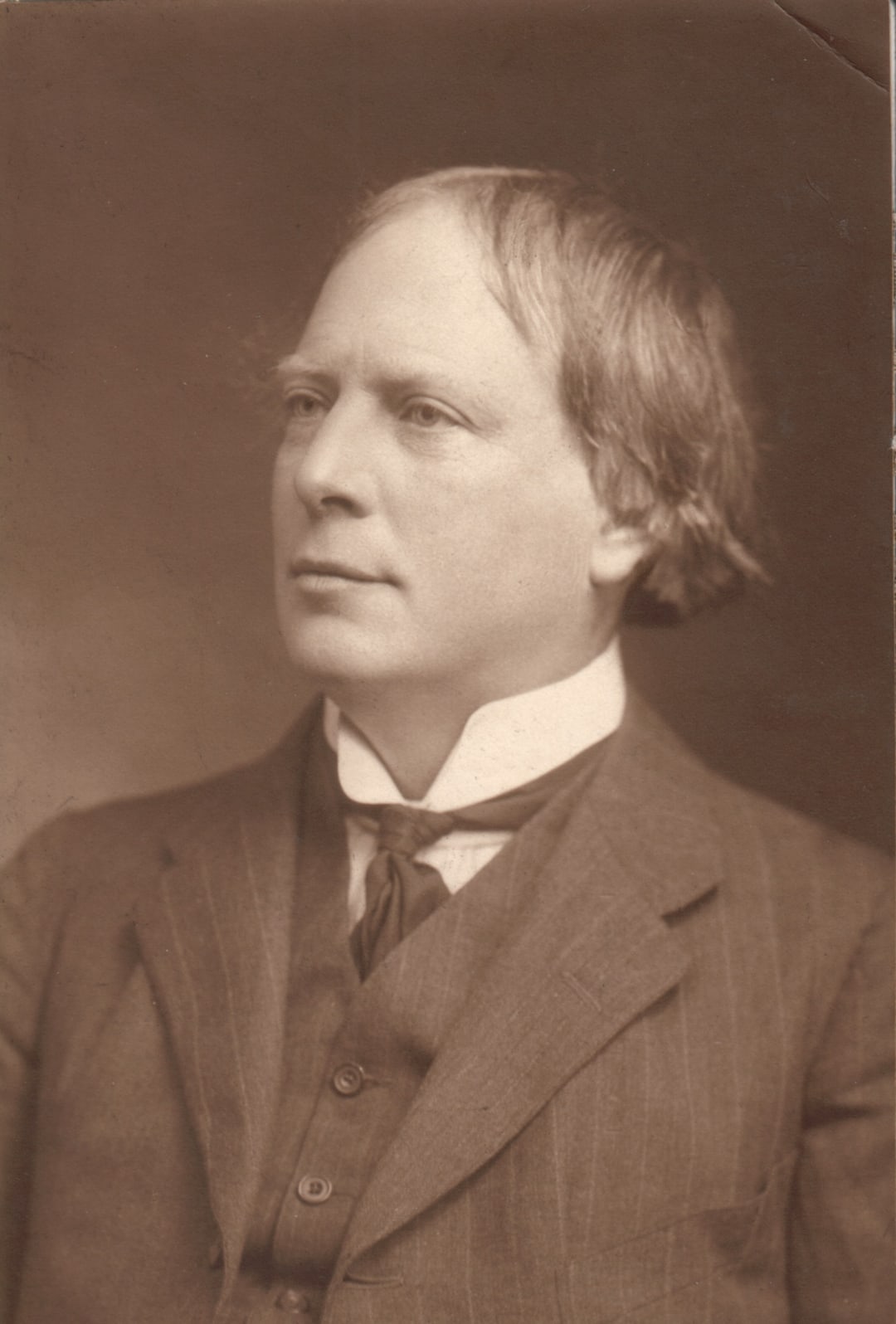
Machen spent his early years at Llanddewi Fach rectory, near Caerleon, according to the Dictionary of Welsh Biography. That gives the story's country of hills and secluded paths a biographical context, without turning its route into a recoverable map.[2]
On the first long walk, the girl repeatedly measures distance as “a long, long way.” The phrase returns as she pushes through vegetation and climbs across unfamiliar ground. It measures effort and estrangement more vividly than mileage could. Rocks initially frighten her; then she begins imitating their shapes and movements. The landscape gradually becomes something she participates in.[1]
Her second journey repeats much of the route. By now, however, she has prepared for it. She brings a towel for the well and a handkerchief to cover her eyes before entering the secret place. Repeated terrain carries changed expectations. What first unfolded as discovery has acquired a procedure.
The blindfold brings the reader's position into focus. She becomes more certain while the account gives us less to see. At a decisive moment, she reports that the story has proved true without describing the thing that confirms it. Her confidence cannot simply become ours: we receive the declaration and the surrounding sensations, while its object remains withheld.[1]
This is the structural source of much of the dread. Greater intimacy with the speaker does not produce greater access to everything she knows.
The frame closes; the question stays open
The manuscript ends with a pool transformed into fire. It does not narrate the girl's death. In the “Epilogue,” Ambrose places that death roughly a year after the writing, creating a gap the notebook cannot fill. He reports finding her body beside a luminous Roman image and having the image destroyed.[1]
Cotgrave asks for explanations, but Ambrose declines to provide the details that would establish his claims. “You must remain unconvinced,” he says. The expert who promised an illustrative case now sets a limit on what his listener may know.
This need not make Ambrose a fraud. The narrower point is that the story denies us an independent vantage from which to check him. The girl's account reaches us through his possession of it; the sequel reaches us through his speech. The object he says stood at the center of events has been broken into fragments. His explanation can complete a narrative without making its evidence fully available.
The story's afterlife shows how effective that withholding proved. In “Supernatural Horror in Literature,” H. P. Lovecraft praised its “skilful selectiveness and restraint,” locating its power in the accumulation of allusions and the vividness of the girl's journey.[3] His response recognizes how much the writing achieves through partial disclosure.
Machen's own introduction to The House of Souls offers a useful complication. He dates the story's composition to 1899 and describes it as a surviving piece of a larger, abandoned romance. He also recalls having to warn a folklore researcher that supposedly authentic ritual details were his inventions. The appearance of inherited knowledge was persuasive enough to escape the fiction.[1]
That history does not prove that every gap was planned from the start. It does sharpen our attention to the finished form. A fragment can make an imagined world feel larger than the available record; a frame can promise access while preserving the distance.
Ambrose gets the final words. The girl's notebook gets the long walk, the smells of plants, the returning memories, and the strange exhilaration of believing a story has come true. His voice closes the case. Hers leaves us inside the country.
Sources
- Arthur Machen, “The White People” and the author's introduction to The House of Souls, text of the 1922 edition reprinted by Project Gutenberg. References are to “Prologue,” “The Green Book,” and “Epilogue,” especially printed pages 123–140 and 159–166.
- Cecil John Layton Price, “Machen, Arthur (1863–1947).” Dictionary of Welsh Biography, 2001; childhood at Llanddewi Fach, near Caerleon.
- H. P. Lovecraft, “Supernatural Horror in Literature,” section X, “The Modern Masters.” The H. P. Lovecraft Archive; reception of “The White People” and its narrative restraint.
- “Arthur Machen — ImgID14891187.jpg.” Wikimedia Commons; archival photographic portrait, reproduced from the South Wales Argus. The file record does not establish the original photograph's date or photographer.