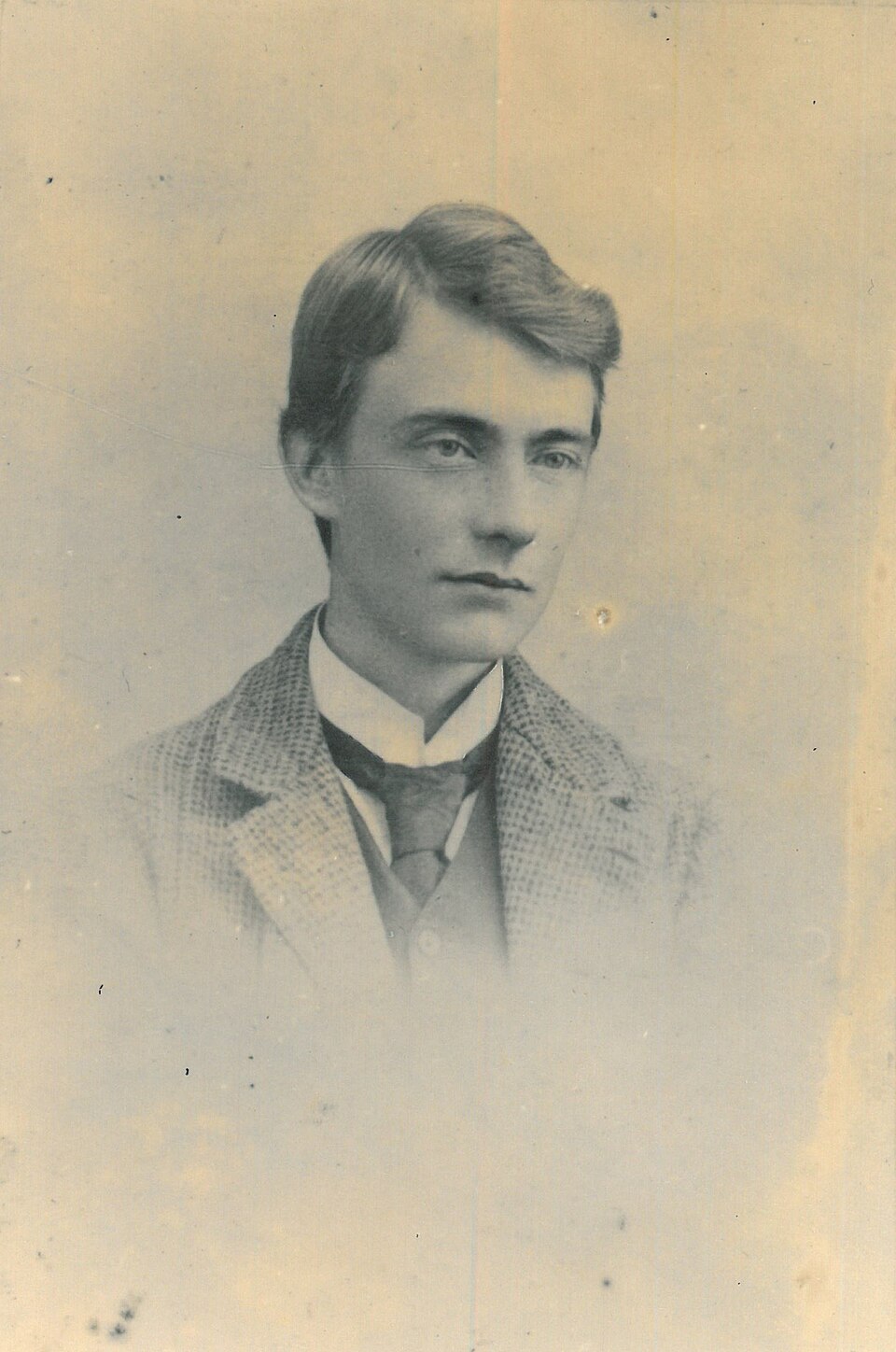
A traveler wants to know whether the climb will last all day. Another stands beside a signpost, able to read the directions and still unable to choose. Christina Rossetti’s “Up-Hill” and Edward Thomas’s “The Sign-Post” begin from an ordinary need: someone has to tell us how to go on. Both answer with voices. By their endings, however, they have made different things desirable. Rossetti offers a place where the journey can stop. Thomas makes the freedom to wonder about the journey seem precious.[1][2]
Put the poems beside each other and listen before decoding their symbols. Who gets to ask? How quickly does an answer arrive? Does another voice settle the matter, or change what the question means? Their roads become interesting through the conversations conducted on them.
An answer for every fear
“Up-Hill” first appeared in Macmillan’s Magazine in February 1861. The University of Toronto’s edition notes that the lyric helped draw favorable public attention to Rossetti; her collection Goblin Market and Other Poems followed in 1862 and established her wider reputation. Her religious lyrics and devotional prose give the road’s movement toward rest a recognizable Christian setting.[1][3]
Yet Rossetti keeps the speaking situation wonderfully spare. No named pilgrim, angel, or innkeeper stands before us. Across four quatrains, a question occupies each odd-numbered line and an answer each even-numbered one. The reader can hear an exchange between two people, or imagine someone rehearsing assurances against private fear. The poem gives the answering voice authority without supplying its credentials.[1]
Its first kindness is accuracy. The climb will continue; the day will have to be lived through. Consolation gains credibility by conceding the difficulty. Then the address “my friend,” in line 4, makes the same voice that has refused an easier route sound companionable. There is already a small shelter in being spoken to that way.[1]
The alternating rhyme lets each question wait for an answering rhyme in the next question, while each response finds its partner in the next response. Anxiety has a pattern of its own. So does reassurance. They move together without becoming identical. That is why the poem can feel steady even while its traveler keeps finding something else to worry about.
The concerns grow more intimate: endurance gives way to shelter, recognition, welcome, and room for others. This is a persuasive sequence for anyone who has arrived exhausted at an unfamiliar door. Knowing that a building exists does not yet mean knowing that someone will let you in.[1]
Even near the end, one answer resists instant comfort. Line 14 promises, “Of labour you shall find the sum.” A sum can suggest a reckoning as well as a reward. I hear a momentary weight in it: the labor will count, although the traveler cannot yet say exactly how. The last line then restores a plainer vocabulary of beds and welcome. Its assurance, “Yea, beds for all who come,” answers an anxiety that has expanded beyond the solitary self.[1]
The poem’s generosity is enacted through turn-taking. Every fear receives a reply. The traveler never has to compete for attention.
The answer that interrupts itself
Thomas gives his traveler a colder, more particular world. Frost whitens rough grass; a hazel leaf falls while the voices speak. The signpost supplies the practical equipment for choosing a direction. The problem exceeds what a sign can answer.[2]
In lines 7–10, the first voice invokes the traveler’s younger self as someone who would have chosen more readily. A second, “gentle with scorn,” corrects that flattering memory: youth had its own despair. The contradiction prevents age from becoming a simple story of lost confidence.[2]
Unlike Rossetti’s regular exchange, the dialogue is difficult to distribute among stable persons. Thomas gives us a first voice, another voice, a pronoun, and an “I” who joins the laughter. We can read these as divided thoughts, as an encounter, or as a scene deliberately suspended between the two. Assigning every line to a securely identified speaker would make the poem tidier than its wording allows.
The traveler’s question also changes scale. A choice of roads opens into the wish to know what being older at this same place would feel like. The answer turns toward death. “A mouthful of earth” will put an end to regret and desire. The apparent cure is brutally complete: it removes the person who needs relief.[2]
Then comes the conditional turn, in lines 20–22. If that final peace contained a “flaw,” it would be “freedom to wish.” The word flaw quietly changes sides. From the standpoint of perfect repose, wanting something is a defect. From the standpoint of a living person, it is an opening. Desire would let the traveler imagine being outside again, in conversation, exposed to weather and possibility.[2]
Thomas does not announce a doctrine of resurrection. His conditional grammar lets an imagined exception to death reveal an attachment to life. The speech runs onward through seasons and landscapes until it reaches another question. Its rhymes keep arriving, but the question they accompany remains open.
What the ending lets us want
Thomas began writing poetry in 1914 after years of prose work. He died at Arras in April 1917; Poems, containing “The Sign-Post,” appeared that October. That history makes the prospect of returning to the signpost in later life especially poignant. It also needs handling carefully: the poem’s questioning speaker cannot simply be treated as a biographical prediction.[2][4]
Nor does this pairing require a claim that Thomas was answering Rossetti directly. The comparison illuminates what their forms do. Rossetti’s promise of welcome makes continued effort bearable. Thomas’s imagined release from effort reveals how much a person might miss the power to choose, hesitate, and ask.
Each poem also puts company inside its consolation. Rossetti imagines fellow travelers and a welcome large enough to include them. Thomas’s final vision includes conversation with another person, across differences of rank. Their destinations differ, but neither makes peace a matter of solitary self-sufficiency.[1][2]
Read the endings aloud. Rossetti closes the exchange with an answer: there will be room. Thomas leaves a voice wondering where to go. After his glimpse of permanent stillness, that unanswered question sounds different. The traveler has acquired something more urgent than a direction: a reason to want another day in which directions matter.
Sources
- Christina Rossetti, “Up-hill,” lines 1–16 and publication note. Representative Poetry Online, University of Toronto Libraries; text from Poems (1890), first published in Macmillan’s Magazine, February 1861.
- Edward Thomas, Poems (Selwyn & Blount, 1917), “The Sign-Post,” lines 1–30, and title-page publication history. Project Gutenberg transcription.
- Academy of American Poets, “Christina Rossetti”: religious writing and the publication and reception of Goblin Market and Other Poems.
- National Library of Wales, “Edward and Helen Thomas manuscripts”: prose career, turn to poetry, death, and posthumous collections.
- Unknown photographer, Edward Thomas, as a student, front profile, 1899. Cardiff University Special Collections and Archives, via Wikimedia Commons; archival photograph, credited CC BY 4.0 on the file record.