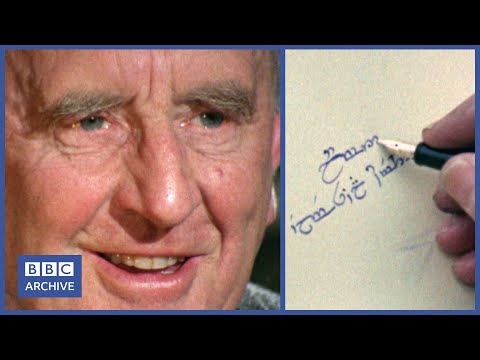
The BBC Archive's 1968 Tolkien interview is valuable because it catches J. R. R. Tolkien explaining his fiction without turning it into a theory lecture. He is not selling a franchise, diagramming lore, or offering a modern fantasy-writing checklist. He sounds, instead, like a philologist who has spent decades discovering that a made world becomes persuasive when its language behaves as if it had a past before the reader arrived.[1][2]
That distinction matters. Many fantasy books use invented words as surface texture: a strange place-name here, a ceremonial title there, a spell that signals distance from ordinary speech. Tolkien's method is stranger and more demanding. In Middle-earth, language is not decorative atmosphere added after plot. It is one of the engines that makes plot feel historically exposed. The reader meets ruins, songs, greetings, inscriptions, maps, and names whose full histories are not always explained, but whose pressure is felt everywhere.[2][3]
The archive record supports that impression. Marquette's Tolkien Collection holds original manuscripts and multiple working drafts for The Hobbit, Farmer Giles of Ham, and The Lord of the Rings, while the Morgan's Tolkien: Maker of Middle-earth exhibition described a display of photographs, memorabilia, illustrations, maps, draft manuscripts, and designs drawn from the Bodleian, Marquette, the Morgan, and private lenders.[4][5] Those holdings make the same point the interview makes in voice: Middle-earth was built through layers of revision, not merely through a finished plot summary.
Listen for the Philologist, Not the Explainer
The first thing to notice in the interview is Tolkien's resistance to flattening his own work into message. He does not present The Lord of the Rings as an allegory with a key hidden under the mat. The more useful cue is his comfort with the slow, historical life of words. A philologist is trained to hear language as evidence: sound shifts, borrowed forms, old names surviving in newer mouths, and meanings that carry traces of earlier use. Tolkien brings that habit into fiction.
That is why Middle-earth often feels older than the scene currently being narrated. The names do not behave like labels pinned onto a board. They behave like fragments of prior settlement, migration, loss, and memory. The Shire sounds provincial in one register; Gondor sounds ceremonial in another; Elvish songs arrive with a different dignity again. The reader may not know the grammar, but the tonal separation is legible. Language gives the world social depth before exposition fills it in.
Hostetter's Tolkien Estate essay makes the chronology especially clear: Tolkien had been developing Elvish languages for decades by the time Frodo's Quenya greeting, "Elen síla lúmenn' omentielvo," appeared in The Fellowship of the Ring.[2] The phrase matters not because every reader must parse Quenya, but because the narrative lets a greeting carry the weight of encounter. Frodo is not simply saying hello. The scene briefly opens into another cultural scale, one where courtesy, starlight, and ancientness meet in a single formal utterance.
The World Comes After the Language
The best-known Tolkien claim about his method is that the stories were made to give the languages a world rather than the other way around.[2] Read casually, that can sound like hobbyist eccentricity. In practice, it explains the books' unusual feel. A plot-first invented world often moves from event to geography: here is the quest, so here are the kingdoms and roads required to support it. Tolkien's deeper habit moves from word to history: if this name exists, what people spoke it, what sound changes shaped it, what older mythology does it imply, and what ruins remain after that history has receded?
That is why The Lord of the Rings can be both narratively direct and atmospherically dense. The central action is easy to state: a ring must be destroyed. But almost everything around that action suggests older structures. Songs interrupt urgency. Maps feel like inherited documents rather than navigation aids. The Book of Mazarbul, runes, genealogies, king lists, and place-names all create a sensation that the current war is only the latest visible layer of a much longer record.
Tolkien Estate's page on The Lord of the Rings repeats Tolkien's own later framing that the tale "grew in the telling," becoming a history with glimpses of older histories.[3] That sentence is not just a modest account of expansion. It names the structural pleasure of the book. Middle-earth keeps growing backward. The reader advances through the plot while repeatedly sensing that the ground underneath has already been written over by earlier ages.
The Interview Shows Scale Without Displaying the Workshop
Because the BBC clip is short, its value is not exhaustive explanation. It gives a public sound to a private method. Tolkien's pauses, verbal precision, and mild impatience with simplification all help a viewer understand why the fiction refuses the speed of pure synopsis. He is at his most revealing when he seems least interested in performing authorial charisma. The authority comes from exactness.
That exactness matters for reading the prose. Tolkien's style is sometimes described as archaic, but that word can hide more than it reveals. The strongest passages are not simply old-fashioned. They move between registers with care: homely speech, high ceremonial diction, plain travel description, elegiac song, legal memory, and battlefield address. The shifts are not accidental decoration. They mark contact between communities and historical layers. A hobbit can stand inside an Elvish song without fully possessing it. A rider of Rohan can speak in a mode that feels oral, martial, and inherited. A Gondorian name can carry the chill of archives and dynastic duty.
This is where the interview helps a modern reader. The temptation is to treat invented language as lore content, something to be mastered, indexed, or decoded. Tolkien's better invitation is literary rather than encyclopedic: listen for how language changes the pressure in a scene. When a name is left partially unexplained, it can preserve mystery. When a song arrives, it can slow plot into memory. When a formal greeting appears, it can make courtesy feel like contact with history.
Why This Still Feels Different
The Morgan exhibition's description of Tolkien's materials puts maps, draft manuscripts, designs, and languages in the same creative field.[5] That mixture is crucial. Tolkien's imagination was not only verbal, not only visual, and not only narrative. It was archival. Middle-earth persuades because it simulates the conditions under which cultures leave evidence: place-names, scripts, sketches, fragments, variant accounts, lost books, translated songs, and contested memories.
That archival quality is also what makes the BBC interview endure. It reminds us that Tolkien's achievement is not reducible to inventing a big fantasy setting. The achievement is making inventedness feel inherited. Middle-earth does not ask the reader to believe every detail because the author asserts it. It asks the reader to feel that every detail has passed through time before reaching the page.
Watch the interview, then return to the opening movements of The Fellowship of the Ring. The craft becomes easier to hear. The Shire's ordinariness is not the absence of depth; it is one register among many. Frodo's encounter with the Elves is not an exotic flourish; it is the first sharp proof that language can widen the visible world. The Ring's history is not backstory pasted onto adventure; it is the pressure that makes adventure morally consequential. Tolkien's invented languages are therefore not an appendix to the fiction. They are part of the fiction's way of making time audible.
Sources
- BBC Archive, "1968: TOLKIEN on LORD OF THE RINGS | Release | Writers and Wordsmiths" (official YouTube video).
- Carl F. Hostetter, "Tolkien's Invented Languages," Tolkien Estate scholarship page.
- Tolkien Estate, "The Lord of the Rings" (publication history and work overview).
- Marquette University Raynor Library, "J.R.R. Tolkien Collection" (manuscript and collection overview).
- The Morgan Library & Museum, "Tolkien: Maker of Middle-earth" (exhibition page and material-context overview).
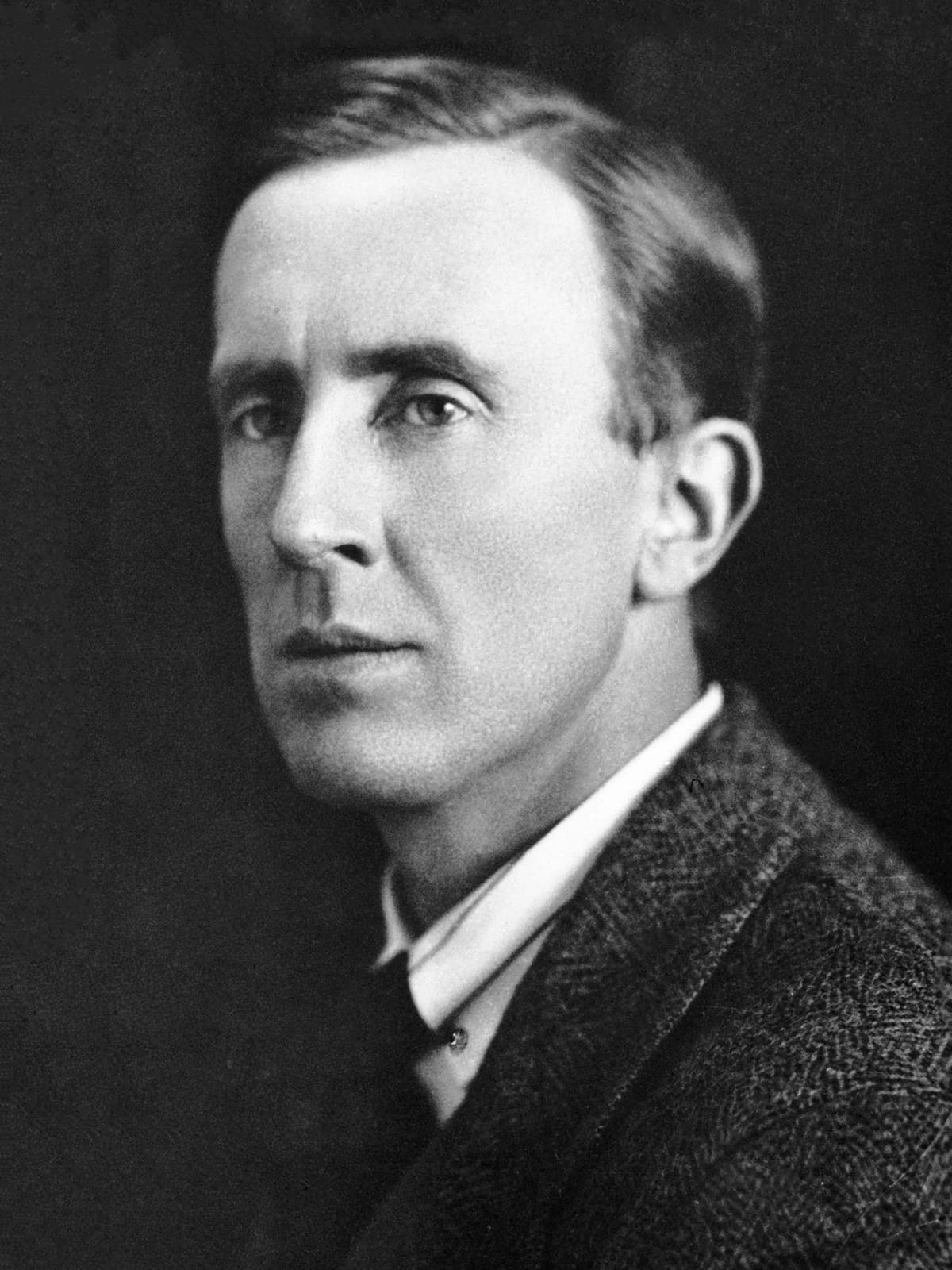
- Wikimedia Commons, "File:J. R. R. Tolkien, ca. 1925.jpg" (source page for the lead photograph).