The easiest way to flatten Herland is to treat it as one answer to one premise: what if there were a country with no men? That premise is real, and Charlotte Perkins Gilman lets the first rumor land plainly enough: the explorers hear of a place with "women and girl children."[1] But the sharper way into the novel is to read the country as an audit. Three men arrive with assumptions about sex, work, safety, romance, government, child-rearing, and power. Herland does not simply contradict them. It makes their habits visible.
That is why the book still reads with more snap than a tidy utopian summary suggests. Published in 1915 and preserved now as a public-domain text, Herland belongs to Gilman's larger career as a writer, lecturer, feminist thinker, magazine editor, and reformer; Library of America notes that from 1909 to 1916 she wrote, edited, and published The Forerunner, the monthly in which much of this reforming fiction appeared.[2][3] The novel's pleasure comes from watching a speculative premise become a reading test. If the reader enters only to admire the invented society, the book can feel schematic. If the reader enters to watch what the visitors misread, the machinery wakes up.
Start With The Men
Begin with the explorers, not the map. Van, the narrator, wants to understand. Jeff wants to idealize. Terry wants to conquer. Those three positions organize the whole book. Gilman does not give the reader a neutral documentary report from Herland itself. She gives a male account that keeps having to correct its own categories.
The chapter titles help. "A Not Unnatural Enterprise" sounds like adventure fiction, but the enterprise is already contaminated by entitlement.[1] "A Peculiar Imprisonment" looks like captivity, yet the men's captors teach them language, feed them well, and study them with unnerving patience.[1] "Our Growing Modesty" is almost a joke at the narrators' expense: the more they learn, the smaller their old confidence becomes.[1]
Read the first third as expedition satire. The men expect danger, flirtation, weakness, rivalry, and easy superiority. Instead, they meet athletic competence, social calm, technological order, and a culture that has no need to perform femininity for male approval. Terry is the most blatant failure because he keeps mistaking access for right. Jeff is a gentler failure because he turns women into angels before he understands them as citizens. Van is the useful guide because he is wrong often enough to be educable.
This matters for reading pleasure. Herland is funny when the men discover that their interpretive equipment is worse than their climbing gear. The country does not need to argue with patriarchy in the abstract. It can simply ask the visitors to explain themselves.
Treat Motherhood As Infrastructure
The second key is not to read motherhood as a soft halo. In Herland, motherhood is infrastructure. It organizes education, public health, agriculture, architecture, religion, ethics, and long-range planning. The origin story, in which an isolated population of women survives catastrophe and then reproduces parthenogenetically, is deliberately improbable. Its function is to isolate a question: what would a society build if children were treated as the central public responsibility rather than as private household property?[1]
Gilman makes the answer attractive before she makes it troubling. The country is clean, cultivated, strong, and rational. Its people have spent generations arranging work around the well-being of children. The old social categories of ornamental femininity have lost authority because there is no male gaze to reward them. Van eventually realizes that what his world calls "feminine charms" may be less natural essence than a performance shaped under pressure.[1]
The strongest passage to keep in mind is the society's compact set of ideals for children: "Beauty, Health, Strength, Intellect, Goodness."[1] On one level, this is the book's hope. Herland refuses the waste, poverty, ignorance, and coercion that Gilman saw in conventional gender arrangements. On another level, that same list is where modern readers should slow down. A society that plans human improvement with such serene confidence can become chilling as well as admirable.
Do Not Sand Off The Bad Edge
A good first reading should hold two truths at once. Herland is a fierce comic critique of male entitlement, domestic dependency, sexual double standards, and the laziness of calling an unjust arrangement "natural." It is also a reform utopia written by an author whose public legacy includes eugenicist and racist ideas that cannot be treated as incidental decoration. The National Library of Medicine's legacy account states this boundary directly, identifying Gilman as both an important feminist thinker and a eugenicist whose harmful ideas require attention.[4]
That context does not make Herland unreadable. It makes the reading more exact. The novel's child-centered planning is powerful because it imagines social care as a public art. It is uncomfortable because it can slide toward social sorting. Its women are not merely free from men; they are also intensely committed to collective standards of fitness, discipline, usefulness, and improvement.[1][4]
So do not rescue the book into purity. Do not prosecute it into uselessness either. Read it as a live specimen of reform imagination: brilliant at seeing how gender arrangements deform people, weaker and more dangerous when it imagines that a rational society could engineer away human mess without ethical cost. The best readerly stance is double vision.
Notice Work Before Romance
Many summaries hurry toward the gender premise, the parthenogenesis, or the marriages. The better route is to notice work. Herland is not idle paradise. Its beauty is maintained. Forests are tended. Food systems are planned. Children are educated with care. Even imprisonment becomes instruction. The country feels utopian less because labor disappears than because labor has been made legible, shared, and socially honored.[1]
That is one reason the visitors' questions keep backfiring. The women of Herland are calmly curious about everything the men take for granted: meat-eating, cattle, dogs, burial customs, war, competition, marriage, and the division of labor. Van calls them "inconveniently reasonable" during a discussion of cremation, and the phrase is a useful key to the whole book.[1] Their reasonableness is inconvenient because it exposes how many customs survive not because they are coherent, but because no one with authority has had to justify them.
Read these exchanges slowly. Gilman's prose can be blunt, but the bluntness has comic timing. A question that seems naive at first turns out to be devastating because it has escaped inherited excuses. Herland's women often sound least radical when they are most radical: they ask simple follow-up questions and let the visitors hear themselves.
Let Romance Become A Stress Test
The romances are not a reward for the plot. They are the stress test. Celis, Alima, and Ellador do not enter as prizes to be won after the explorers have learned enough vocabulary. They expose the different meanings the men attach to love.
Jeff sentimentalizes Herland so completely that he risks turning equality into worship. Terry cannot accept a relationship not built around possession. Van, paired with Ellador, becomes the novel's most flexible case because he learns through conversation rather than conquest. Ellador is not simply his beloved. She is his interpreter, critic, and final bridge between Herland and the world outside it.[1]
This is why the ending matters. The book does not close with a stable paradise. It closes with Terry's expulsion after attempted sexual violence, and with Van and Ellador leaving for the outside world.[1] The utopia has defended itself, but it has not solved the world. The reader is left with movement, translation, and risk rather than a sealed model society.
For a first reading, resist the temptation to ask whether Herland is "realistic." The better question is what each relationship reveals about the assumptions love often smuggles in. Does love mean protection, worship, access, education, companionship, possession, or mutual revision? Gilman gives each man a different answer and lets the answers be judged by behavior.
A Practical Reading Route
First, mark every imported assumption. When the men say what women are, what men need, what civilization requires, or what nature proves, treat the statement as evidence, not wisdom.
Second, enjoy the comedy. Herland is didactic, but it is not humorless. Its funniest moments often come from a custom being explained too plainly to survive.
Third, keep motherhood double. It is the engine of the society's care, continuity, and public ethics. It is also the place where the novel's social-engineering confidence becomes most ethically exposed.
Fourth, read Ellador carefully. She prevents the book from remaining a closed thought experiment. Through her, Herland has to meet another world, and Van has to learn that admiration is not the same as understanding.
Finally, do not ask the novel to be a perfect blueprint. Read it as an audit. Its enduring use is not that it offers a complete future. It teaches a sharper habit: whenever a society calls an arrangement natural, ask who benefits from that name, who has been trained to perform it, and what might become visible if the arrangement no longer needed to please its old audience.
Sources
- Charlotte Perkins Gilman, Herland, Project Gutenberg HTML text used for close reading.
- Public Domain Review, "Charlotte Perkins Gilman's Herland (1915)," collection page for the public-domain novel.
- Library of America, "Charlotte Perkins Gilman," writer page with biographical context and The Forerunner publication background.
- National Library of Medicine, "The Literature of Prescription: The Author's Legacy," context on Gilman's feminist importance and eugenicist legacy.
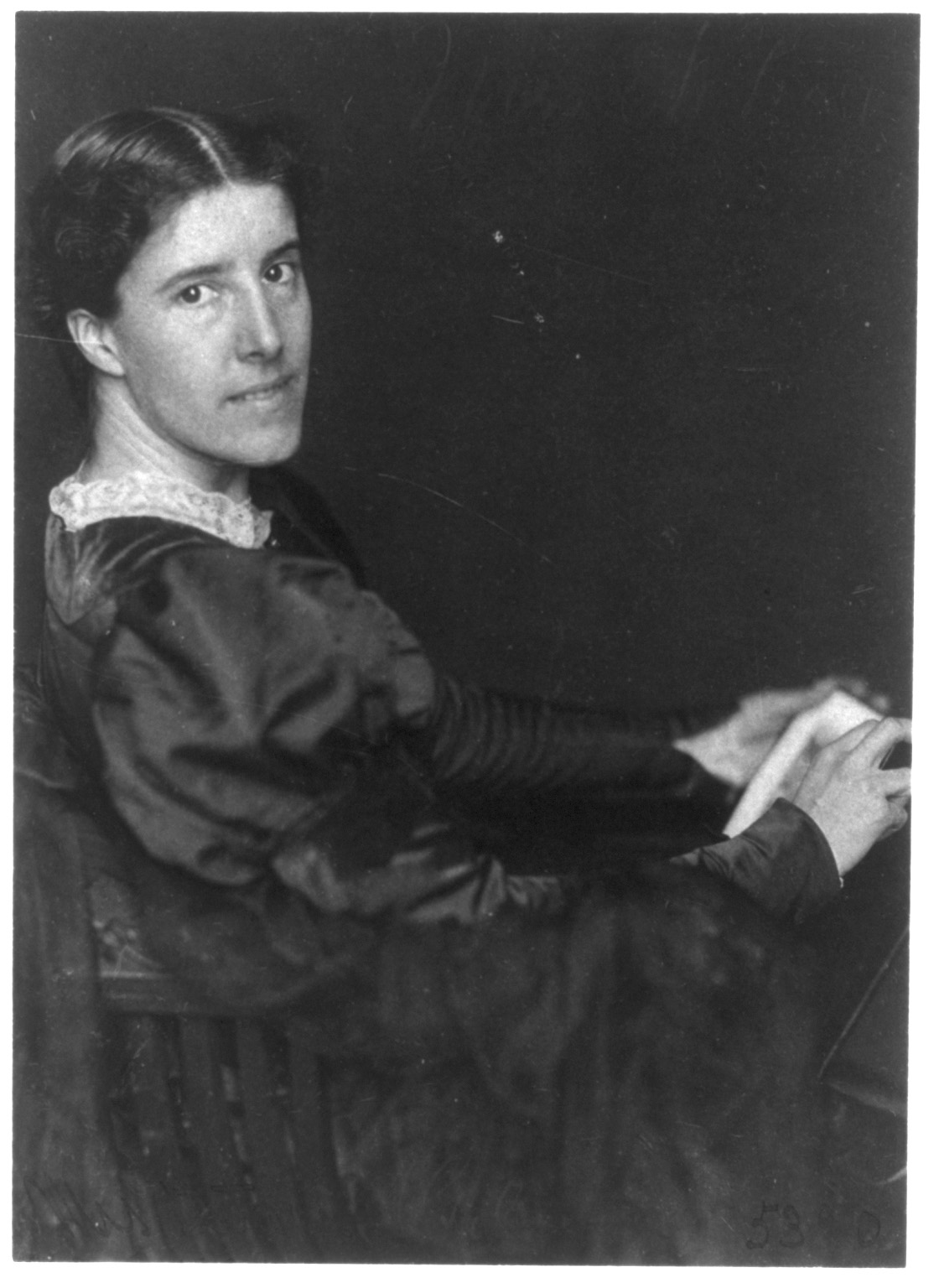
- Wikimedia Commons, "File:Charlotte Perkins Gilman by Frances Benjamin Johnston.jpg," source page for the archival portrait photograph used as the article image.