Their Eyes Were Watching God is often described through its destination: now it is canonical, now it is taught, now it is loved.[1][2][4] That summary is true and also too neat. The more interesting story is how the book got there. Hurston's 1937 novel did not survive because readers gradually forgot what once made it abrasive. It survived because later readers developed better tools for hearing what early critics kept misnaming: a Black Southern social world rendered through vernacular wit, porch talk, gossip, labor, weather, memory, and a woman's retrospective claim over her own life.[1][2][3]
That is why the reception history belongs inside the reading experience rather than in a separate museum case. Janie Crawford's story is not simply a romantic arc through three marriages. It is also an argument about who gets to narrate Black interior life, in what language, and for whose approval.[1][2][3] Once that argument comes into focus, the book's path from controversy to canon stops looking accidental.
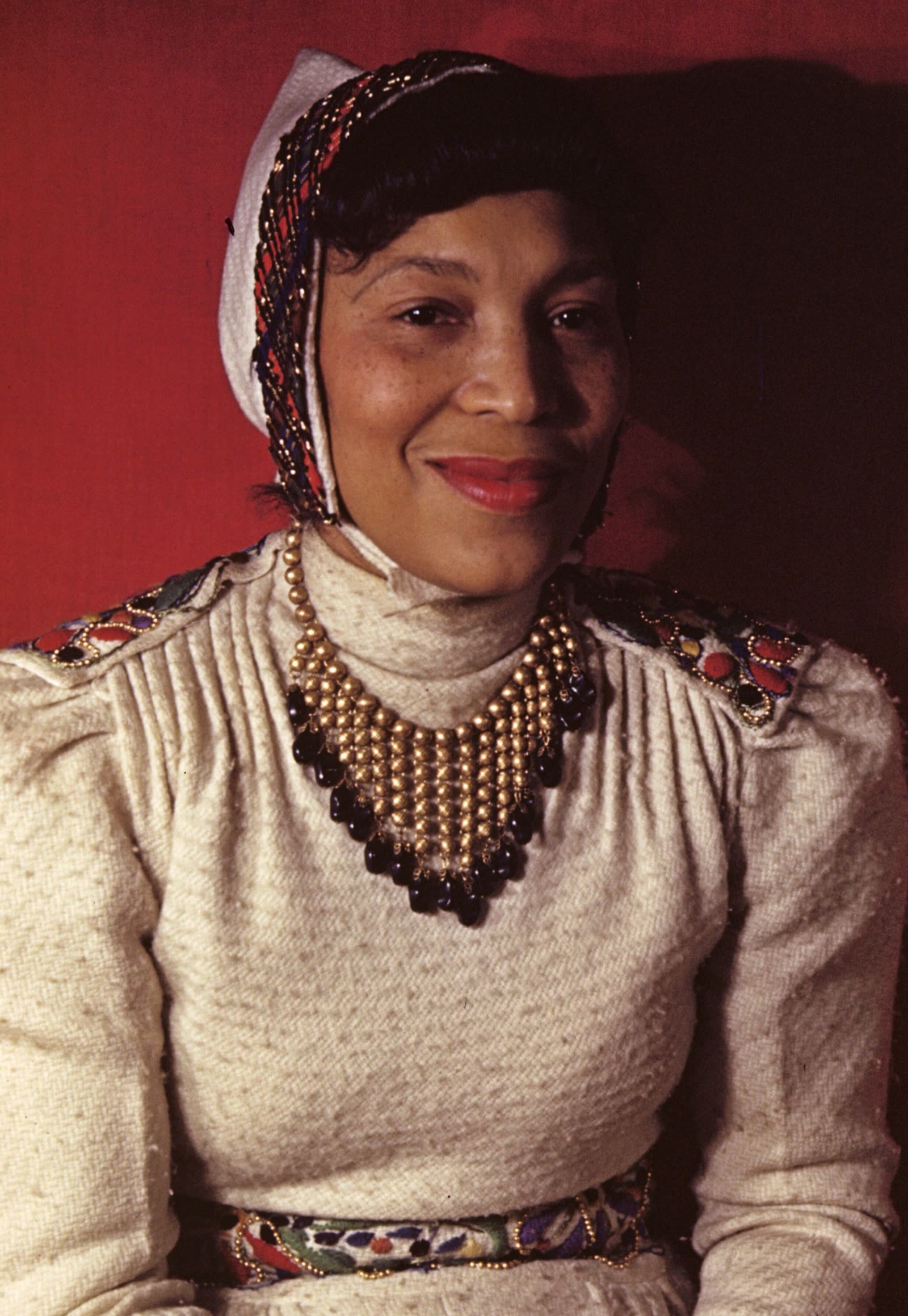
Image context: the lead image uses Carl Van Vechten's 1938 photographic portrait of Zora Neale Hurston, preserved through Library of Congress reference material and mirrored on Wikimedia Commons. It suits this piece because the novel's revival has always involved a second act of visibility for Hurston herself, whose work had to be brought back into view before Janie's voice could be heard on its full scale.[5][6]
1) In 1937, readers met a novel that refused the expected job description
The National Endowment for the Arts' Big Read guide gives the basic publication frame clearly: the novel appeared in New York on September 18, 1937, and Hurston wrote it in seven weeks while on a Guggenheim Fellowship in Haiti.[1] Even before critics reacted, the book was already oddly placed inside the literary expectations surrounding Black writing in the 1930s. It was not a protest novel in the most legible sense. It did not organize itself around courtroom injury, lynching reportage, or an uplift program built for white recognition. Instead it began with Janie returning to Eatonville after burying the dead and telling her story to Pheoby Watson, which means the novel's first formal commitment is neither explanation to hostile outsiders nor moral briefing to the state. It is Black female self-narration inside a Black community.[1][2]
That decision still matters. Britannica's account of the novel emphasizes voice and storytelling because the book's deepest movement is not merely what happens to Janie but how her life becomes narratable through hindsight, selection, and spoken relay.[2] Hurston turns narration into a structure of recovery. Janie comes home, sits down, and decides what the shape of her life has been. The frame makes memory social rather than solitary: Pheoby listens, then carries the story onward.[2]
Hurston's anthropological and folkloric training sits inside that form. The Library of Congress guide describes her as a folklorist, anthropologist, and writer, and the NEA guide stresses how much of her work depended on collecting and preserving everyday idiom.[1][5] That background helps explain why the novel sounds the way it does. It does not use folk speech as decoration around a more respectable literary center. The talk itself is part of the literary intelligence. The jokes, exaggerations, barbs, and story-swapping around Eatonville are not filler between major scenes. They are the medium through which value, humiliation, desire, and status become legible.
2) Early hostility came from a real disagreement about what Black fiction was supposed to do
The first wave of backlash did not happen because reviewers somehow failed to notice the novel's gifts. It happened because some of the most influential readers wanted a different kind of political instrument.[1][2] The NEA guide preserves the sharpest version of that dispute: Richard Wright attacked the book within two weeks of publication, faulting it for lacking political seriousness and accusing Hurston of entertaining white audiences, while Alain Locke publicly pushed her toward "social document fiction."[1] Britannica summarizes the same divide more compactly: the novel was initially controversial because its rendering of Black Southern life and its refusal of racial protest fiction did not match what many Harlem Renaissance critics expected literature to do.[2]
That disagreement is the book's first reception problem. If you expected fiction to announce racial crisis in a direct declarative mode, Hurston's novel could look evasive. It is funny where others were solemn. It is sensual, local, and idiomatic where others were programmatic. It spends long stretches on courtship, porch performance, verbal sparring, and the social weather of a town.[1][2][3] Early critics sometimes mistook those choices for softness.
The deeper issue, though, was authority. Hurston was insisting that Black life did not need to become legible through approved grievance formats before it counted as serious art. The NEA guide quotes her refusal to pander either to racist caricature or to internally policed respectability.[1] That position helps explain the novel's formal courage. Hurston does not strip away vernacular speech in order to make Janie respectable. She lets language keep its local grain and asks readers to rise to it.
3) What later readers learned to value was not just Janie as character, but Janie as a new narrative center
Library of America's Rafia Zafar puts the point beautifully when she describes Janie as a new model of Black selfhood and stresses how unusual such a heroine looked in the 1930s.[3] Janie is not built to serve as a thesis mascot. She is sensual, often uncertain, sometimes delayed in her own recognition, and still stubbornly oriented toward a life she can call her own.[2][3][4] The official Zora Neale Hurston site describes the novel as Janie's quest for identity and a journey through love, sorrow, and eventual return to herself in peace.[4] That summary is useful because it captures the book's true axis: not issue coverage, but selfhood under pressure.
This is also why the novel's language of storytelling matters so much. Britannica notes that Janie entrusts her story to Pheoby and treats narration as a communal act rather than a sealed confession.[2] The book keeps returning to who is allowed to speak, who is interrupted, whose talk counts as wisdom, and when silence becomes unbearable. Jody Starks does not simply dominate Janie materially. He regulates the conditions under which she can appear in language.[2][3] Tea Cake matters not because he solves Janie's life cleanly, but because the novel discovers in that third movement a looser, riskier field where her speech and desire can circulate differently.[1][2][4]
Seen from this angle, the book's long-term power becomes easier to understand. Later readers did not only rescue a neglected title. They recognized that Hurston had built a narrative system in which Black female consciousness could emerge through vernacular form without surrendering complexity. That system made room for comedy, erotic energy, social cruelty, weather terror, and reflective after-speech all at once.[1][2][3]
4) The revival was not automatic; it had to be staged through recovery work
Hurston did not live to see the novel become secure. The NEA guide is blunt about the severity of the fall: by the time she died in 1960, her books were out of print, she had died in poverty, and her grave remained unmarked until the 1970s.[1] The disappearance was therefore institutional as well as critical. A book can be excellent and still vanish if publishers, classrooms, and literary prestige systems do not keep renewing it.
The revival took concrete labor. Again the NEA guide provides the clearest skeleton: Alice Walker's encounter with Hurston's work, her trip to find Hurston's grave, her 1975 Ms. essay, Robert Hemenway's 1977 biography, and Walker's 1979 anthology all helped launch the Hurston resurgence that still shapes the novel's place now.[1] Britannica links that return to the broader reclamation of Black women's voices and to a larger historical recovery of neglected contributions to American culture.[2]
The crucial point is that canonization here did not mean taming the book. It meant changing the conditions of reading. Feminism, multicultural revision, Black studies, and new curricular habits gave later readers a different set of questions.[1][2] Once those questions changed, what had looked to some early reviewers like a failure of program began to read as a strength of design.
5) Why the novel still feels alive in 2026
The book stays alive because its deepest problem has not expired. Hurston asks what freedom feels like when speech, love, labor, dignity, and public judgment keep crossing each other in the same life.[1][2][4] Janie does not win by becoming abstractly modern. She wins, if that word can be used at all, by learning to gather the pieces of her life into a form she can speak without asking hostile authorities to certify it first.[2][3]
That is the reception lesson too. Their Eyes Were Watching God did not become durable because later readers forgot the argument around it. It became durable because the argument itself turned out to be central. What seemed unserious to some 1937 critics now looks like one of Hurston's strongest claims: that Black vernacular life, especially Black women's speech, is not side material waiting to be converted into a sanctioned "issue." It is already a site of theory, comedy, erotic intelligence, conflict, and self-making.[1][2][3]
So the novel's movement from controversy to canon is best understood not as a softening, but as a correction in literary hearing. Readers gradually learned that the book's politics were inseparable from its form. Janie's afterlife began the moment the culture became capable of listening to the life she was narrating.
Sources
- National Endowment for the Arts, "Their Eyes Were Watching God" (Big Read guide with publication, reception, and revival context).
- Encyclopaedia Britannica, "Their Eyes Were Watching God" (summary, themes, voice, and reception overview).
- Rafia Zafar, "A new 'model of black selfhood,' and a heroine ahead of her time, in Their Eyes Were Watching God." Library of America.
- Zora Neale Hurston Trust, "Their Eyes Were Watching God" (official book page and current framing).
- Library of Congress, "Zora Neale Hurston: A Resource Guide" (biographical context and links to digitized portrait materials).
- Wikimedia Commons, "File:Hurston, Zora Neale 4 (cropped).jpg" (lead-image source page).