
Sylvia Plath's recording of Daddy is one of those literary archives that can easily be mishandled by reverence. The poem already comes heavily framed: written in October 1962, published posthumously in Ariel in 1965, tied to Plath's late burst of work, and read again and again through biography, trauma, marriage, father-loss, and the history of confessional poetry.[2][3][4] The temptation is to treat the audio as a direct wire to psychic extremity, as if the voice simply proves the poem's violence. That misses the recording's more useful literary value. Heard closely, Plath's reading shows how deliberately made the poem is.
The embedded video below presents a 1962 recording of Plath reading Daddy, with an introductory note attached to the BBC Radio context.[1][5] Literary Hub identifies the occasion as an October 30 BBC Radio interview in which Plath read and discussed poems that would later help form the Ariel afterlife.[5] The YouTube upload is not an official BBC archive page; its value here is as a public access point to the surviving recording. The provenance still matters: this is not a modern dramatic recitation or an actor's performance. It is Plath's own public reading of a poem whose printed afterlife has often been flattened into a single story of rage.
That historical position is important because Daddy sits at the crossing of several pressures. Britannica's poem entry emphasizes its October 1962 composition, posthumous 1965 publication, nursery-rhyme simplicity, dark political imagery, and autobiographical material around Otto Plath's death when Sylvia Plath was eight.[2] The Academy of American Poets biography makes the larger pattern clear: Plath's work is often associated with confessional poetry, but it also couples disturbed or violent imagery with playful alliteration and rhyme.[4] The recording lets a reader hear that second half. The voice does not dissolve form into feeling. It makes form audible as the thing that carries feeling.
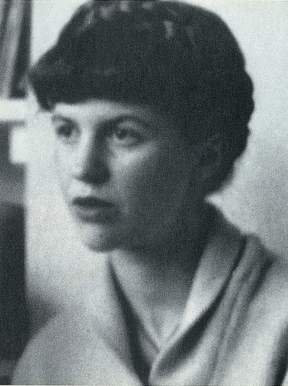
Image context: the cover portrait is not used as biographical proof. It is there because the recording asks us to think about Plath as a maker of public literary voice: a poet whose face and name have become iconic, but whose craft still needs to be heard as structure, timing, and choice rather than simplified into myth.[4][6]
Historical context: a late poem before a posthumous canon
By late 1962, Plath had already published The Colossus and had drafted the poems that would make her reputation expand radically after her death.[3][4] The Bell Jar would appear in 1963 under the pseudonym Victoria Lucas, and Ariel would arrive posthumously in 1965, with Daddy becoming one of the most discussed poems in the book's orbit.[3][4] That sequencing matters. The recording belongs to a narrow moment before the posthumous Plath had fully become "Plath": before the poem was permanently absorbed into classrooms, anthologies, biographical debate, and the shorthand of confessional extremity.
The poem's subject matter invites biographical reading, but the archive is more interesting when biography is treated as pressure rather than as explanation. Britannica notes the father's death, the poem's conflicting feelings toward that loss, and its imagery moving from domestic register toward demonic and historical intensification.[2] Poets.org likewise stresses how Plath's father's death and authoritarian force shaped later poems, while also describing the formal energy of alliteration and rhyme in her work.[4] Those two accounts should be held together. Daddy is not powerful because it is raw. It is powerful because raw materials have been placed under a severe formal machine.
That machine is easiest to underestimate on the page. The poem's small words, repeated sounds, and childlike address can look almost too obvious if read silently and quickly.[2] In the recording, those features become operational. Plath's pace exposes the poem's strange double scale: infantile address and adult indictment, singsong movement and historical grotesque, private wound and theatrical persona. The voice does not settle the poem into autobiography. It keeps showing how the poem performs autobiography until autobiography becomes a staged conflict.
The archival recording
The video below embeds the public YouTube upload of Plath's reading. It uses the privacy-enhanced youtube-nocookie.com embed domain and is included for the archival sound, not for its static visual presentation.[1]
What the voice preserves that print can hide
The first thing the recording corrects is the idea that intensity means looseness. Plath's delivery is forceful, but it is not uncontrolled.[1] The lines land with a hard forward motion, and the repeated childish sounds become more unsettling because she does not sentimentalize them. She lets the nursery-rhyme surface remain audible while keeping the tone cool enough for the listener to feel the mismatch. The result is not a private outburst accidentally preserved. It is a public performance of a poem that knows exactly how childish address can become accusation.
This is where the BBC provenance matters. Plath was not writing a diary entry into a microphone. She was reading for broadcast, inside a format that required presentation, introduction, and timing.[5] That setting gives the poem a formal threshold. The speaker of the poem may sound trapped inside a compulsive address, but Plath the reader is managing distance. She controls how much dramatic heat enters each turn. The archive therefore helps separate the poem's speaker from a simple author-confession model without denying that biographical pressure feeds the work.[2][4][5]
The second thing the recording preserves is pacing. On the page, readers can race through the poem's repeated rhymes and harsh images, turning it into a rapid blast. Plath's voice keeps the repetitions heavy enough to feel ritualized.[1] A repeated sound is not merely a sound-effect; it becomes a step in an exorcism. That is why the poem's childlike vocabulary is so dangerous. It does not soften the violence. It gives violence a counting rhythm, a pattern that can be repeated until the listener feels trapped inside it.
The third thing to notice is tonal restraint. The poem's images are extreme, and later criticism has often centered that extremity.[2][3] But Plath's reading does not behave like a scream. It works more like controlled theater. She lets the menace arrive through clarity, not through vocal collapse. That matters for literary interpretation because it keeps Daddy inside craft. The poem's political and familial imagery remains ethically difficult, and the recording does not solve those difficulties. It does, however, show that the difficulty is built into a made object whose sound patterns, persona, pacing, and address all intensify one another.
How the recording changes the reading
Reading Daddy only as personal confession makes the poem smaller than it is. Reading it only as rhetorical performance can also make it too cold. The archival recording presses against both mistakes.[1] Plath's voice confirms that the poem is embodied: breath, stress, timing, and attack all matter. At the same time, the steadiness of the delivery confirms that embodiment is not the same as unmediated self-exposure. The poem is voiced through a speaker who has been designed to sound childlike, furious, theatrical, wounded, comic, and punitive in unstable alternation.
That instability is part of the poem's afterlife. Britannica describes Daddy as one of Plath's most famous poems and places it in the posthumous Ariel context that made her late work central to twentieth-century poetry.[2][3] Poets.org describes the broader Plath signature as a coupling of violent imagery with playful sound.[4] The recording lets us hear why that coupling matters. If the playful sound is ignored, the poem becomes a document of suffering. If the violence is ignored, the sound becomes mere virtuosity. Plath's reading refuses both simplifications.
The archive also clarifies why Daddy remains teachable despite, and partly because of, its discomfort. It gives students and readers a way to ask formal questions before collapsing into biography. What is the effect of childish address in an adult accusation? How does repeated rhyme turn emotion into pressure? Why does the poem use theatrical persona instead of plain memoir? Why does the voice sound controlled when the imagery sounds so volatile? These questions do not make the poem safer. They make the encounter more exact.
That exactness is the reason to revisit this recording in 2026. Plath's public image has been made and remade by biography, estate history, criticism, popular fascination, and the tragic compression of her life.[3][4] The 1962 reading gives back something more precise: a writer using voice to reveal the architecture of a poem. Daddy still shocks, but the shock is not only thematic. It is technical. The archive lets us hear a poem that turns nursery music into accusation, address into ritual, and autobiographical pressure into a controlled performance whose danger lies in how carefully it has been built.[1][2][4][5]
Sources
- betapicts, "Sylvia Plath reads 'Daddy' (1962) with intro / cc English, Deutsch, Francais," YouTube video.
- Encyclopaedia Britannica, "Daddy" (poem by Sylvia Plath; composition, publication, themes, and form).
- Encyclopaedia Britannica, "Sylvia Plath" (biography, major works, publication context, and posthumous reception).
- Academy of American Poets, "About Sylvia Plath" (biographical context and formal description of Plath's poetry).
- Literary Hub, "Listen to a 1962 recording of Sylvia Plath reading 'Daddy'" (BBC Radio context for the recording).
- Wikimedia Commons, "File:Sylvia Plath.jpg" (source page for the lead photograph).