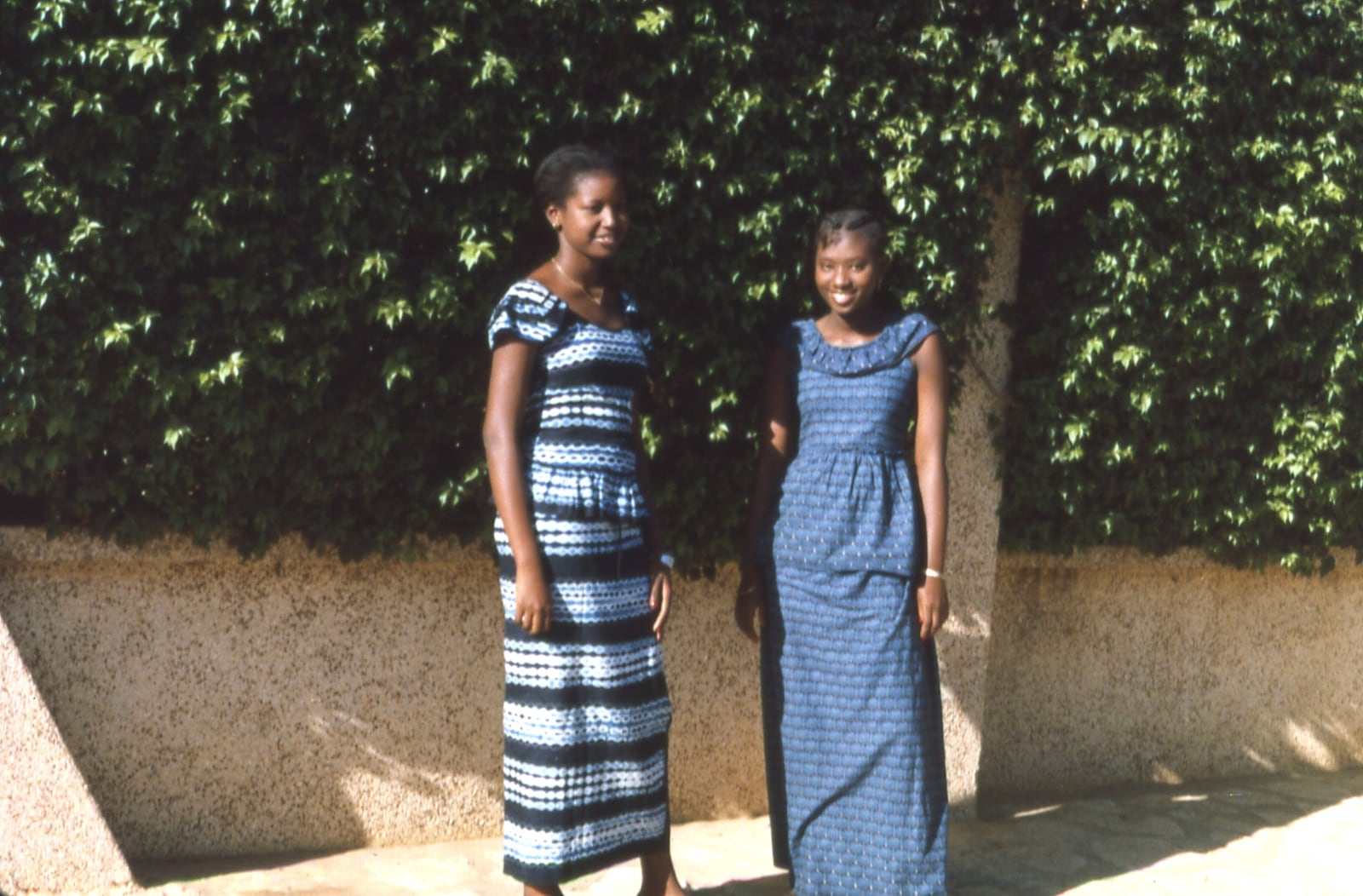
The most radical relationship in Mariama Bâ's So Long a Letter is not the marriage that breaks or the marriage that endures. It is the friendship that has room for both decisions.
Ramatoulaye writes from widowhood in Dakar to Aissatou, her oldest friend, now living abroad. Each woman has watched a husband take a second wife. Aissatou leaves Mawdo, continues her education, raises her sons, and builds a diplomatic career. Ramatoulaye remains married to Modou even after he marries her daughter's young friend Binetou; Modou then abandons his first household without formally ending it. The parallel seems designed to produce a verdict: one woman chose freedom, the other failed to.[1][2]
Bâ refuses that clean opposition. Aissatou's departure becomes an example without becoming an order. Ramatoulaye's staying is examined without being prettified. Their friendship survives because neither woman has to turn her life into the rule by which the other is condemned. That is the novel's most generous philosophical claim: solidarity need not mean identical answers. It can mean granting another person enough moral reality to make a choice you would not make—and then remaining present for what follows.
First published in French as Une si longue lettre in 1979, the novel received the inaugural Noma Award for Publishing in Africa in 1980; Modupé Bodé-Thomas's English translation appeared in 1981.[1][3][5][6] Its continued force lies partly in scale. Bâ fits marriage, religion, caste, education, motherhood, post-independence politics, and generational change inside one intimate address. In a 1979 interview, she described Ramatoulaye and Aissatou as women of different temperaments whose two lives open onto a portrait of Senegalese society.[5] Difference is present at the design stage, not introduced as a problem friendship must cure.
This essay quotes Bodé-Thomas's English wording, but translation is not a transparent window. Tobias Warner's reception study shows how the novel's international circulation made some versions of its feminist critique especially legible while obscuring its attention to law and other local arguments.[3] That warning matters here: “different choices” should not become a portable slogan detached from the Senegalese institutions that constrain them.
The friend is not an answer key
In section 12, Aissatou answers Mawdo's second marriage with a short letter of her own. His mother has rejected her daughter-in-law's caste background and raised young Nabou to be a more acceptable wife for her son. Mawdo defends the new marriage as filial duty while insisting that his deepest love remains with Aissatou. She refuses the division. Her farewell ends: “Clothed in my dignity, the only worthy garment, I go my way.”[1]
The sentence is decisive because Aissatou will not let Mawdo rename compliance as complexity. He asks her to accept a theory in which the heart remains faithful while the body, household, and future are divided. She answers at the level of the whole person. Love, name, and dignity cannot be itemized into separate accounts.
Ramatoulaye admires that clarity. But when Modou's second marriage arrives in sections 13–15, her own situation does not become a test of whether she can copy it. She weighs twenty-five years with one man, twelve children, practical responsibility, anger, memory, and a tenderness that has survived its justification. Her conclusion is only four words: “I chose to remain.”[1]
That sentence is neither triumphant nor passive. The active verb accepts ownership; the surrounding facts expose the cost. Ramatoulaye prepares herself for an equitable polygamous arrangement, but Modou offers no such thing. He withdraws from her and their children, directing money and attention toward Binetou's household. Staying does not preserve the marriage she remembers. It leaves Ramatoulaye to discover that loyalty cannot make another person behave loyally.
The philosophical difference between the friends is therefore not courage versus cowardice. Aissatou decides that dignity requires exit. Ramatoulaye cannot make desire, history, and responsibility line up behind the same decision, even when reason points toward it. Bâ lets that mismatch remain painful. A peer-reviewed study by Souad Ali places the novel's critique of polygamy beside its celebration of female bonding and emphasizes precisely these contrasting responses.[2] Friendship matters because contrast is not treated as betrayal.
The car changes the meaning of sympathy
The novel's strongest proof of friendship is not a declaration. It is a car.
After Modou's withdrawal, Ramatoulaye learns how much daily life had depended on access she did not control. She goes alone to the cinema under public scrutiny, manages a large household, and struggles with crowded transport. Section 16 repeatedly compresses those efforts into “I survived.” When Aissatou hears about the family's difficulty, she buys her friend a Fiat. Ramatoulaye learns to drive.[1]
This gift could have been written as rescue, with the independent friend solving the dependent friend's life. Bâ makes it subtler. Aissatou does not purchase a new ideology for Ramatoulaye. She purchases mobility. The car shortens errands, eases the children's journeys, and allows the family to meet Binetou's conspicuous luxury without the same bodily exhaustion. It does not erase abandonment. It changes what Ramatoulaye can do next.
Only after narrating that material intervention does Ramatoulaye write, “Friendship has splendours that love knows not.”[1] The placement keeps the thought from becoming a greeting-card maxim. Friendship surpasses romantic love here because it moves resources without demanding possession. Modou's money helps build a second household from which his first family is excluded. Aissatou's money crosses an ocean and expands another woman's room to act.
The car also complicates the supposed opposition between leaving and staying. Aissatou's departure gives her the means to help. Ramatoulaye's acceptance of help turns another woman's independence into shared capacity. Neither life remains sealed inside its original decision. Friendship becomes a small circulation system through which one choice can strengthen a different one.
A letter can hold an argument that a manifesto cannot
So Long a Letter is often described as epistolary, but its title names a productive imbalance: this is one extraordinarily long message. Aissatou sends replies, yet none of those present-tense letters is quoted directly. Her earlier farewell to Mawdo is reproduced, and her actions are remembered, but Ramatoulaye controls the present narration.
That asymmetry makes the form ethically interesting. Ramatoulaye is not recording a debate in which two positions receive equal time. She is thinking in the presence of someone whose judgment matters. Aissatou becomes the listener before whom Ramatoulaye can test grief, anger, faith, maternal anxiety, political hope, and the inconsistencies in her own conduct. The friend is neither a blank diary nor a disciplinary audience. She is a particular person whose contrary life prevents easy self-exoneration.
The letter therefore does more than report solidarity. It performs the labor of staying answerable across difference. When Ramatoulaye rejects Tamsir's assumption in section 18 that he can inherit his brother's widow, she speaks with a directness newly audible in her narration. When she considers and refuses Daouda Dieng in sections 19–21, she will not accept security without love or reproduce for his first wife the injury she knows herself. Staying with Modou did not freeze every later choice. Aissatou's example is present in those refusals, but not as a stencil.[1]
This is where Bâ avoids the shallow version of empowerment in which every woman must demonstrate freedom through the same visible gesture. A decision can be compromised and still generate knowledge. An admired example can alter a life without being repeated. Friendship preserves the interval in which that slower change becomes possible.
The generosity has limits—and the novel shows them
There is a danger in praising divergent choices too warmly. “Choice” can disguise unequal means. Both friends are educated professionals. Aissatou can train further, find work, and relocate with her sons. Ramatoulaye earns a salary and can sustain a household after Modou leaves. Binetou, pressed by her family to trade school for marriage, and young Nabou, shaped from childhood to satisfy an older woman's caste project, possess far narrower room to decide.
The novel also does not place Ramatoulaye beyond criticism. Rizwana Latha's study treats education in the novel as potentially empowering and disempowering, and insists on distinguishing Islamic principles from cultural practices that claim their authority.[4] That distinction sharpens rather than settles the friendship reading. A sympathetic narrator is not the same thing as an infallible one. Ramatoulaye can diagnose male privilege while remaining attached to class assumptions, romantic ideals, and forms of respectability that distribute sympathy unevenly.
Nor should friendship be asked to solve what law, money, kinship, and institutions enforce. A car helps one family; it does not reform inheritance, guarantee girls' education, or remove the social penalties attached to leaving a marriage. The novel's politics become smaller and more credible when the friendship is not mistaken for a complete program.
What it offers is a method of relation. Aissatou does not withdraw care because Ramatoulaye stayed. Ramatoulaye does not protect her decision by diminishing the friend who left. Across distance, they preserve a channel for candor, memory, resources, and revision. That channel cannot make their choices equal in consequence. It can keep either choice from becoming solitude.
The long letter ends by reopening the future
In section 27, Ramatoulaye is waiting for Aissatou to return. The entire book has moved toward an actual meeting: the absent reader will become present, and the monologue will presumably become conversation. Bâ wisely ends before that happens. The friendship is not certified by a final scene of total agreement. It remains expectant.[1]
That unfinished quality is the point. So Long a Letter does not ask which woman won the argument about how to live. It asks what kind of bond can survive when lives produce different answers. Its response is demanding: a friendship strong enough to judge without expelling, assist without governing, and change a person without turning her into a copy.
Sources
- Mariama Bâ, So Long a Letter, translated by Modupé Bodé-Thomas—Waveland Press edition page, used for the primary text, numbered-section references, and publication details.
- Souad Ali, “Feminism in Islam: A Critique of Polygamy in Mariama Bâ's Epistolary Novel So Long a Letter,” Hawwa 10, no. 3 (2012)—peer-reviewed account of polygamy, female bonding, and the friends' contrasting responses.
- Tobias Warner, “How Mariama Bâ Became World Literature: Translation and the Legibility of Feminist Critique,” PMLA 131, no. 5 (2016)—reception history and a caution about what English and Wolof translations foreground or obscure.
- Rizwana Latha, “Mariama Bâ's So Long a Letter and the Educational Empowerment of Muslim Women,” Acta Academica 36, no. 1 (2004)—study of empowering and disempowering education and the boundary between Islamic principles and cultural practice.
- Alioune Touré Dia, “Succès littéraire de Mariama Bâ pour son livre Une si longue lettre,” Amina 84 (November 1979), transcribed by the University of Western Australia's French program—contemporary author interview on the two friends, Senegalese society, and the novel's early reception.
- African Studies Centre Leiden, “Mariama Bâ,” Library Weekly (2024)—institutional bibliography and reception note identifying Une si longue lettre as the first Noma Award for Publishing in Africa winner in 1980.
- Wikimedia Commons, “1981 or 1982 Girls in Dakar, Senegal (West Africa)”—John Atherton's documentary photograph, with date, provenance, dimensions, and verified license record.