Joseph Conrad's The Secret Agent and G. K. Chesterton's The Man Who Was Thursday stand close together in calendar time and far apart in spiritual temperature. Conrad's novel appeared in 1907, after serialization, and Penguin's edition rightly calls it the only novel Conrad set in London, organized around an attack on the Greenwich Observatory inspired by the 1894 bombing attempt.[3] Chesterton's novel followed in 1908 with the subtitle A Nightmare, sending the poet-policeman Gabriel Syme into a secret council of anarchists whose names borrow the days of the week.[2][4] Both books begin in a city of cells, passwords, foreign agents, cafes, police files, and ideological performance. Yet they ask opposite questions about fear. Conrad asks what happens when public violence enters a household and finds the weakest body there. Chesterton asks what happens when conspiracy becomes so theatrical that every mask begins to look like a metaphysical test.
The comparison is useful because "anarchist novel" is too blunt a label for either work. In Conrad, anarchism is less a doctrine than a diseased traffic system. Embassy pressure, police ambition, shopkeeping, journalism, poverty, and domestic dependency all pass through Verloc's Soho parlor until a political command becomes a family catastrophe.[1][3] In Chesterton, anarchism is closer to scenery and provocation. Syme's recruitment into the Central Anarchist Council begins as counter-subversion, then keeps changing scale until the detective plot becomes a comic apocalypse.[2][4] One book tightens around consequence. The other expands toward allegory. Reading them together shows how early twentieth-century London could be imagined both as a machine that crushes ordinary people and as a stage on which reality itself keeps removing disguises.
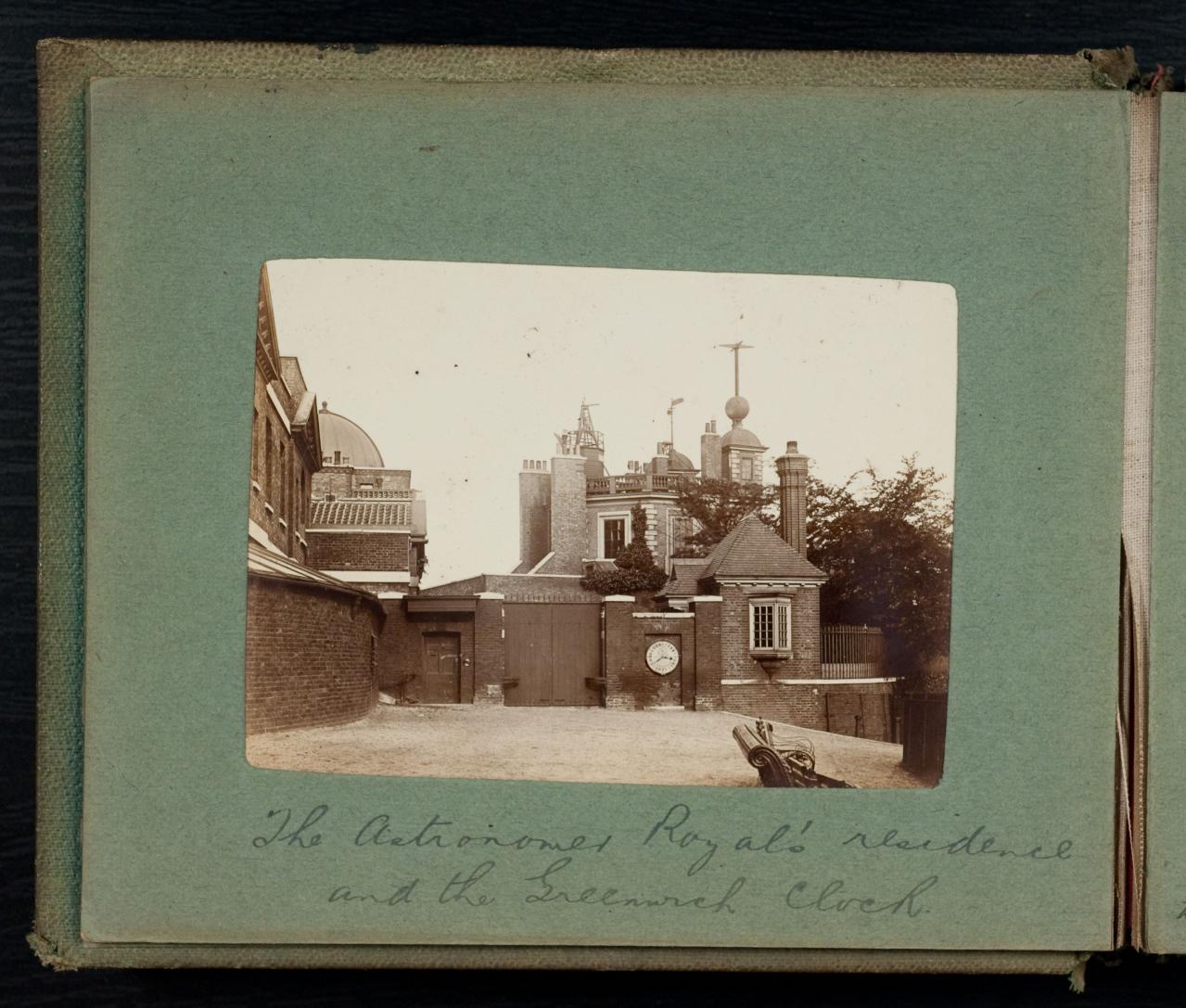
Image context: the cover photograph shows the Royal Observatory, Greenwich, around 1900. The image is documentary rather than illustrative: Conrad's plot turns on an attack aimed at the observatory as a public symbol of science, time, and state rationality, while Chesterton's London converts similar official surfaces into carnival and pursuit.[5]
The Target and the Stage
Conrad gives the Greenwich Observatory an almost absurd symbolic precision. The attack is meant to look like an assault on science, progress, and bourgeois confidence, a spectacle legible enough to frighten ministers and newspapers.[1][3] The plot's public logic depends on a line blunt enough to sound like propaganda: "the whole civilised world has heard of Greenwich."[1] That precision is also grotesque, because the actual act is botched, misrouted, and borne by Stevie, the vulnerable brother-in-law whose mind cannot safely carry adult schemes. The target belongs to modern abstraction: timekeeping, astronomy, imperial navigation, measurement. The victim belongs to domestic fragility. Conrad's cruelty lies in forcing the reader to hold both at once.
Chesterton's London is less materially exact, though it begins with recognizable urban cues: parks, meetings, restaurants, police interiors, trains, and Europe beyond the Channel.[2][4] His anarchist council is theatrical from the first. Its members have names that announce pattern before psychology; Sunday, Monday, Tuesday, and Thursday sound like a calendar turned into a conspiracy. The city becomes a launch ramp for chase, paradox, and revelation. Where Conrad uses Greenwich to puncture abstraction with flesh, Chesterton uses London to make abstraction visible as costume.
That difference controls the texture of each book. Conrad's prose is slow with irony, surveillance, and moral blockage. Verloc moves through rooms where people cannot fully read one another, though they depend on one another materially. Chesterton's prose is full of velocity: argument turns into duel, meal into pursuit, street into symbol. Chesterton names Syme's hinge exactly: he was "really a poet who had become a detective."[2] Conrad keeps asking who pays for an idea. Chesterton keeps asking whether the apparent enemy is really an enemy, a friend, a joke, or an angel of terror.
Domestic Consequence Against Comic Pursuit
The strongest difference between the novels appears in their treatment of consequence. The Secret Agent makes political language descend into the home. Verloc's work for a foreign embassy, his lazy cover as a shopkeeper, his connection to radicals, and his usefulness to police observation all matter because they expose Winnie and Stevie to a game they neither designed nor understood.[1] Conrad's subtitle, A Simple Tale, is bitter: the tale is "simple" only after institutions have arranged for damage to be passed downward.
Stevie is the moral pressure point. He is not a symbolic innocent in a clean sentimental sense. He is difficult, dependent, frightened by cruelty, and vulnerable to rhetoric he cannot sort. That makes him the novel's test of responsibility. The adults around him use language instrumentally: diplomatic pressure, revolutionary talk, police inference, journalistic appetite. Stevie receives language physically. Words about oppression, cruelty, and violent remedy do not remain ideas around him; they become agitation, obedience, and finally death.
Chesterton lets consequence behave differently. The Man Who Was Thursday has pursuit, danger, swordplay, exposure, and dread, yet its nightmare repeatedly turns threat into recognition.[2] The plot's famous reversals can feel like a refusal of the tragic. A man thought to be an anarchist may be another policeman; a villain may become a fellow sufferer; a chase may begin to resemble a pageant. This does not make the book weightless. It makes its fear theological rather than social. Syme is not primarily discovering how institutions sacrifice the weak. He is discovering how little he understands the order behind appearances.
In this sense Conrad's novel is downward and Chesterton's is outward. Conrad follows the blast wave into marriage, dependency, grief, and revenge. Chesterton follows the chase until it bursts the detective frame. Conrad's pressure is that nobody can escape the material bill. Chesterton's pressure is that nobody can stop meaning from multiplying.
Two Kinds of Irony
Both writers are ironists, but their irony works on different nerves. Conrad's irony is corrosive. It exposes the gap between public vocabulary and private cost. The embassy official who wants a spectacular outrage speaks in the language of state calculation; the radicals speak in formulas of destruction or emancipation; the police speak in professional caution; the newspapers stand ready to translate pain into sensation.[1][3] Around all of them, Winnie manages the shop, the household, and Stevie's safety. Conrad's irony keeps showing that the least theatrical labor is also the most morally serious.
Chesterton's irony is elastic. He delights in reversal because reversal becomes a route toward wonder. The policeman may sound like a poet; the anarchist may serve order; the grotesque council may contain less nihilism than expected; the terrifying Sunday may exceed the category of criminal.[2][4] This is why the book's subtitle matters. A nightmare does not follow the bookkeeping of realism. It follows emotional logic: fear enlarges faces, compresses distance, and turns ordinary pursuit into cosmic pressure.
The novels therefore disagree about masks. Conrad treats masks as social instruments. Cover identities, ideological labels, and official secrecy protect power while exposing the vulnerable. Verloc's mask is shabby and practical, and its collapse ruins the people nearest him.[1] Chesterton treats masks as metaphysical provocations. A disguise may deceive, but it may also reveal that the deceived person has been reading the world too narrowly. Conrad's unmasking leads to damage. Chesterton's leads to vertigo.
Why Greenwich Matters
The Royal Observatory gives Conrad's novel a center that is almost too neat: a bomb at the place associated with public time. The circa-1900 photograph used here shows a clock and residence, ordinary architecture carrying extraordinary symbolic work.[5] In the novel, that symbolic work is exactly why the target is chosen. It is not a military base or a palace. It is a site where modern confidence can be pictured: measurable, official, scientific, punctual.[1][3]
But Conrad refuses to let the symbol remain clean. The failed attack does not reveal the grandeur of revolutionary terror; it reveals the obscene mismatch between abstract target and human instrument. The observatory is legible. Stevie is not legible to the men who use him. They can read the public meaning of Greenwich more clearly than they can read the person carrying the bomb. That is the book's harshest intelligence.
Chesterton would recognize the appeal of such a symbol, but he would bend it differently. For him, public signs are never merely public. A street, a garden, a council room, a mask, a name, and a day of the week can all open into allegory.[2] His London is less a system of harm than a system of surprise. It keeps promising that reality has another layer, and that the next layer may be terrifying because it is more alive than the previous one.
The Reader's Aftertaste
The two novels leave opposite residues. After The Secret Agent, the reader remembers rooms: the shop, the kitchen, the parlor, the spaces where Winnie has tried to hold a life together under terms set by men who treat her household as background.[1] The political plot matters because it finally proves that no household is merely background when public violence needs carriers. Conrad's novel remains modern because it understands how systems outsource consequence to people with the fewest choices.
After The Man Who Was Thursday, the reader remembers motion and faces: the moving council, the chase, the reveal, the sense that identity has become unstable without becoming meaningless.[2] Chesterton's novel remains alive because it turns paranoia inside out. It begins with the fear that everything is secretly hostile, then makes the reader ask whether hostility itself has been misread. Its comedy is not comfort. It is an instrument for pushing dread past politics into metaphysical astonishment.
Put together, the books form a sharp double exposure of Edwardian anxiety. Conrad sees modern London as a place where ideology, policing, diplomacy, and media can turn a marginal household into expendable infrastructure. Chesterton sees modern London as a place where disbelief, secrecy, and fear can become a carnival of hidden order. One nightmare ends in blood because symbols demand bodies. The other races toward mystery because every body may be a symbol. Between them sits Greenwich: clock, observatory, public time, and the cold fact that literature can make the same city tell two radically different truths.
Sources
- Joseph Conrad, The Secret Agent, Project Gutenberg HTML edition (public-domain primary text).
- G. K. Chesterton, The Man Who Was Thursday, Project Gutenberg HTML edition (public-domain primary text).
- Penguin Classics, The Secret Agent by Joseph Conrad (publication context, London setting, and Greenwich plot summary).
- Penguin, The Man Who Was Thursday by G. K. Chesterton (subtitle, plot setup, and author context).
- Wikimedia Commons, "The Astronomer Royal's residence and the Greenwich Clock" - Royal Observatory Greenwich ca 1900 (lead-image source page).