Saki's "The Open Window" is often taught as a neat twist story, but its lasting bite comes from something colder than surprise. The story turns a country-house visit into an experiment in who controls evidence. Framton Nuttel arrives with letters of introduction, weak nerves, and the hope that polite society might be therapeutic. Vera, the fifteen-year-old niece who receives him before Mrs. Sappleton enters, sees the vulnerability at once and uses the room like a stage set.[1]
The plot is famously small. A visitor sits near a French window. A girl explains why it stays open. A hostess later behaves as if the girl's impossible story were ordinary household expectation. Three men appear outside. Framton bolts. Then Vera invents a second explanation just as efficiently as the first. The mechanism is comic, but the comedy depends on cruelty: Vera does not merely lie. She understands how little a stranger can verify inside another family's room.[1][3]
That is why a scene micro-essay is the right scale for the story. Its genius is not in plot complexity. It is in the pressure of one social interval: the few minutes before the official hostess arrives. Saki, whose Edwardian social satires often make manners look like predation, compresses a whole code of class politeness into that pause.[2][3] Framton cannot interrogate a teenage girl too aggressively. He cannot dismiss the household's grief without seeming brutal. He cannot know whether the room's objects are neutral furniture or signs of trauma. Vera wins before the hunters return because she has made ordinary civility serve her fiction.
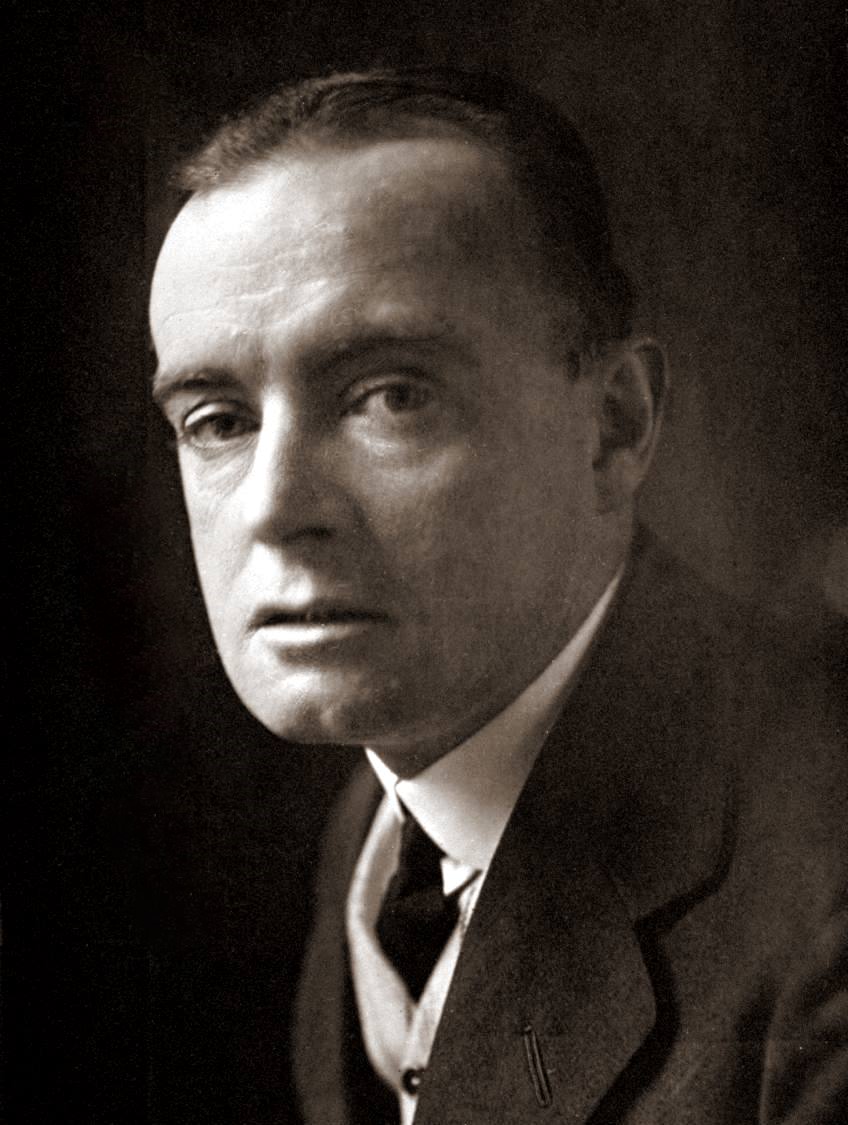
Image context: this archival portrait of Munro belongs here because "The Open Window" is not a wild tale told wildly. Its danger is controlled. Vera's invention works through a calm face, a respectable drawing room, and the reader's awareness that poise can be used as a weapon.[4]
The visit begins as a cure, which makes it usable
Framton's "nerve cure" is one of Saki's sharpest setup details.[1] It makes the visitor both socially legible and socially exposed. He has come to the country not as an adventurer but as a patient carrying instructions, introductions, and anxieties. The letters from his sister are supposed to protect him from isolation. Instead, they turn him into someone who must enter rooms where everyone else knows the rules and he knows almost nothing.
Saki wastes no time making the imbalance visible. Vera is described as "self-possessed," a small phrase that does enormous work.[1] She possesses herself; Framton does not. He is trying to perform the correct mixture of flattery, politeness, and conversational adequacy before he has enough information to judge the scene. His sentences have to be safe because he is a guest. Vera's sentences can be dangerous because she appears to be doing hospitality.
This is the first trick beneath the ghost trick. The story understands that good manners create information asymmetry. A guest is expected to accept the host's premises. A drawing room does not come with footnotes. When Vera asks whether Framton knows many people locally, she is not making small talk; she is testing the perimeter of the lie. Once she learns that he knows almost nothing about Mrs. Sappleton, she has a clean field in which to work.[1]
The open window becomes evidence before it becomes symbol
The title object is wonderfully literal. The window is open because, in the household's real routine, the men are out shooting and will return that way. But Vera makes the open window mean before Framton can see it function. She supplies a grief story in which the window remains open because Mrs. Sappleton expects the dead men to come back. By the time the hostess arrives, the physical fact has already been converted into evidence.[1][3]
That conversion is what makes the scene so efficient. Vera does not need shadows, thunder, or supernatural effects. She needs an ordinary object whose ordinary explanation has been delayed. The reader and Framton are placed in the same interim: we have the object and the story before we have the correction. Mrs. Sappleton's distracted attention then appears to confirm Vera's narrative because the hostess keeps looking toward the lawn and talking about the returning party.[1]
The brilliance is that Mrs. Sappleton never acts strangely from her own point of view. She is not performing a haunting. She is waiting for people who are alive. Saki's comedy comes from that double readability. Every natural line she speaks lands unnaturally in Framton's ears because Vera has already framed the room. The open window is not a symbol floating above the plot. It is a miscaptioned fact.
Vera knows that detail is more persuasive than drama
Vera's lie works because it has the right density of detail. She names the hunting party, the marsh, the spaniel, and the "white waterproof coat."[1] These details are not decorative. They give Framton's imagination handles. A vague claim about ghosts would invite skepticism; a precise story about the way people left the house invites picturing.
That is also why the returning men terrify him. They do not merely appear. They match. The visible details outside the window seem to redeem the invented details inside the room. Framton experiences not a ghostly atmosphere in general, but apparent corroboration. Saki's trick is a lesson in narrative forensics: once a false account predicts a later perception, the perception can feel like proof even when the prediction was built from ordinary knowledge.
The final sentence makes the method explicit without killing the joke. Vera's gift is "Romance at short notice."[1] The phrase is perfect because it refuses to present her as simply a liar. She is a maker of plots under time pressure. She reads an audience, chooses a genre, converts available props into evidence, and exits one fiction by producing another. When she explains Framton's flight by inventing a fear of dogs, she proves that the first story was not a lucky improvisation. It was a repeatable skill.
The cruelty sits inside the elegance
The story's pleasure is real, but so is its nastiness. Framton has not harmed Vera. His weakness is enough. Saki's world often lets cleverness outrank kindness, and "The Open Window" is one of his cleanest examples.[2][3] Vera's intelligence is dazzling because it is unburdened by moral hesitation. She does not need a motive proportionate to the damage she causes. Boredom, opportunity, and a stranger's vulnerability are sufficient.
That moral chill is easy to miss if the story is treated only as a punch line. Framton's panic is funny from the room's point of view, but it is also the collapse of a man already trying to manage anxiety. The joke depends on an etiquette trap: he cannot protect himself without violating the very social rules that brought him there. Vera weaponizes the guest's duty to trust.
This is why the ending still feels sharp more than a century after the story's 1914 collection publication in Beasts and Super-Beasts.[1][3] The supernatural explanation vanishes, but the social terror remains. The window was never haunted. The room was. It was haunted by the possibility that any calm surface might already have been narrated against you by someone quicker, cooler, and less kind.
Sources
- Saki, Beasts and Super-Beasts (Project Gutenberg HTML text; "The Open Window" and the author's note on first publication are cited).
- Encyclopaedia Britannica, "Saki" - biographical overview and account of Munro's Edwardian satire, fantastic invention, and atmosphere of horror.
- Encyclopedia.com, "'The Open Window'" - story context, setting, publication background, and critical framing.
- Wikimedia Commons, "File:Hector Hugh Munro aka Saki, by E O Hoppe, 1913.jpg" - source page for the archival portrait photograph used as the article image.